Shoulders and Plow

awkward_pose_3-001I am obedient by nature. I follow the yoga teacher’s instructions and execute every pose.  Sometimes I lag, since I flow slower than many, but I sequence through and catch up in downward dog. Teacher’s give permission for variation when they say, Do your own practice, but I prefer to be with the group.  That is why I attend class as opposed to doing yoga in my den.

However, I have started to do my own thing.  It began about a month ago; when just before savasana I felt the urge to activate my back. The class included a lot of hip work, and my back was itching for action. When everyone else lay flat, I hiked into shoulder stand, hung up there a minute, and then lowered into plow. I let my toes balance on the floor beyond my head. I drew a very long, very slow arc of straight legs into the air and lowered myself to the mat for savasana. I remembered this ending sequence from my first yoga classes, many years ago.

I’ve never had the shoulder / plow duo within a CorePower class. Too bad. Shoulder is my favorite inversion. It provides the advantages of reorienting my relationship to gravity, flushing my head with blood, stabilizing my core, and refining my equilibrium; without the anxiety of trying to get into headstands or the futility of handstands. Going upside down is difficult for me. Shoulder Stand offers benefits with stability.

Moving from shoulder into plow is a natural transition. It’s graceful. The back stretch feels wonderful, and delivers corresponding core strengthening without conscious effort. When my toes touch the floor far beyond my head, I feel simultaneously light and grounded and, if I’m in a metaphorical mind space, envision myself as a nautilus.

Following plow with a long ascent and descent into savasana is satisfying.  Knowing that this is the last stress of class, I unwind very slowly. Each abdominal clenches as I lift my legs. By the time my feet pike over my head, each vertebra grips the mat in succession.  When my entire back is on the mat, the stress returns to my front. I lower my straight legs as slow as possible to the floor.  It’s a game, to move in steady but tiny increments.

Perhaps it’s odd to have such a strenuous move as the final expression of a yoga class, but I like calling all of my resources to flow from plow, which has restful attributes, all the way to the other side of myself and into savasana, the fullest expression of rest.

imgres

Plow Pose

Posted in Uncategorized | Tagged , , , , | Leave a comment

Foot Chakras

awkward_pose_3-001In honor of Earth Day our yoga instructor Maureen led a class that emphasized our connection to the earth.  We began in Toe Squat Pose. Toe Squat is a yin pose, and like most yin poses, it looks easy but is not. Stand on your knees, tuck your toes under the balls of your feet and sit back on our heels.  Keep your torso long and your gaze straight.  It can be a challenge to get your weight out of your toes and on to the balls of your feet. Tuck all your toes – including the pinky toe – flat on the mat. Sit for three to five minutes.

Modifications include putting a block between your heels and your bum or placing a block on either side of your hips and putting some arm weight on the blocks.  Either modification relieves pressure in the balls of your feet and your toes.

Toe Squat taps into two related energy systems of yoga.  First, it activates all six energy meridians that go through the feet and release energy through the toes, the liver, gall bladder, kidney, urinary bladder, spleen, and stomach meridians. Second, Toe Squat triggers the feet chakras.

Our feet contain many minor chakras, but there are seven specific energy points that correspond to the seven main chakras that run from the base of our pelvis to the top of our head. These chakras are the conduits between the energy of the earth and the energy of our bodies. They run from the base of our heel (Root), along the inner ridge of our arch (Sacral, Solar Plexus), to the bottom edge of the ball of our foot (Heart), across the ball of our foot (Throat), to the base of our big toe (Third Eye), and the top of our big toe (Crown).  The foot chakras are organized in a semi-circular pattern around our instep. When we put our heels and toes together, we join the seven charkas of each foot into a full circle.

When I assumed Toe Squat I noticed increased connection to my breath, which is consistent with the high pressure this pose sends through the foot chakra that corresponds with the throat.

If you would like a more relaxing way to stimulate the foot chakras, I recommend the massage described in this video. How to Give a Wonderful Reflex Foot Rub

foot-chakras_Humanity-Healing-218x300reflexology-foot_Humanity-Healing


Posted in Yoga | Tagged , , , , , | 2 Comments

8 Movie Scenes that Shaped my Life

poppinsMary Poppins – 1964

Jane and Michael Banks leave their house with Bert and Mary. Michael slithers around the column in the front of their house.  That image is the genesis of my fascination with the intersection of architecture and play. It was directly responsible for my Master of Architecture thesis, Architecture that Affords Play.


oliverOliver! – 1968

Oliver stands on Mr. Brownlow’s porch and sings the refrain “who will buy this magical moment.” The vulnerable boy who finds a moment of peace is the image I conjure whenever I feel down.


cowboyMidnight Cowboy – 1969

Brenda Vaccaro taunts John Voigt when the hustler fails to deliver in bed and goads him into a sexual frenzy. The scene was my first awareness of human sexuality’s range and complexity.


CabaretCabaret – 1972

Liza Minnelli returns from the abortion doctor without her beloved fur coat. I realized how unsatisfying material objects are for our well being, yet how handy they can be in a fix.


gandhiGandi – 1982

The opening and closing shots of the film are Gandhi’s assassination.  The scenes reveal a truth of human nature – even a film about the twentieth century’s greatest pacifist depends on violence to sell. Was it necessary to show it twice?

heartPlaces in the Heart – 1984

The closing scene of family passing the communion plate in church moves from Sally Field to her family, and on to other characters, no longer alive. The scene is the most beautiful representation of life’s continuity.

fidelityHigh Fidelity – 2000

Rob (John Cusack) is connected and alive at the first concert he’s produced. Laura (Iben Hajele) says he’s finally participating in life, not just watching it. It doesn’t matter whether what we what we make in life is brings fortune or fame, it only matters that we are invested enough to create it.

lightsKeep the Lights On – 2012

Erik chases his crack-addicted lover Paul to a hotel suite. Paul calls Eric into the bedroom to hold his hand while a male prostitute penetrates him. The scene is incomprehensible at any rational level, which makes it a powerful statement to the extremes we will endure for love.


Posted in Personal | Tagged , , , , , , , , , , , , | Leave a comment

Chelsea Handler and the Nonagenarian Nun

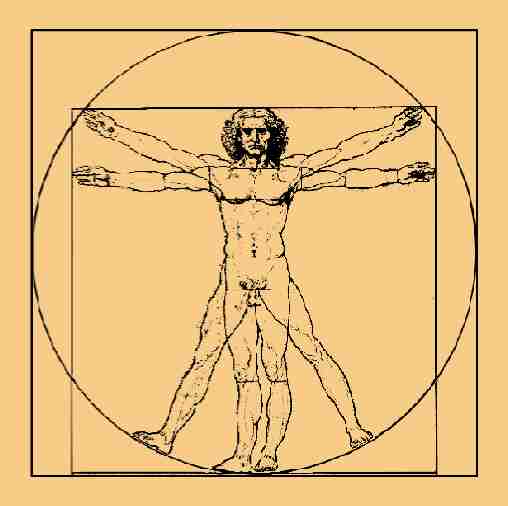
vitruvian_man-001Twice a year I drive out to Albany for lunch. It’s not an efficient trip. I drive three hours each way along the Mass Pike to spend two, maybe three, hours with my ninety-two year old aunt.

Aunt Fran is a nun.  When I was a child her cheeks bulged out of a starched wimple. Then Vatican Two liberated her theology and unclamped her face. For a few years she had short grey curls. But her natural hair withered in sunlight and for the past forty years she’s worn a Pat Nixon-style grey wig. Like many old people, Aunt Fran is shrinking.  My oldest living family member, who was standard size when I was a child, is now barely five feet tall, and weighs less than 100 pounds. Unfortunately the wig is the same size, which makes her a bobble head with a walker.

Since two-thirds of my time visiting Aunt Fran is driving, and since the Mass Pike is an over-familiar road with poor radio reception, I go to the library the day before to get a book on tape.  I like to listen to history.  During my years of long work trips I chewed through serious stuff: Nathanial Philbrook’s Mayflower; David McCollough’s 1776; Doris Kearn Goodwin’s Team of Rivals; Al Gore’s Assault on Reason. But long drives are rare these days. I wanted something fully digestible in six hours, so I lightened up and plucked My Horizontal Life off the library shelf.

I’d heard the name Chelsea Handler the way I know Ryan Seacrest and Jessica Simpson; representatives of popular culture who filter through the ether but don’t intersect with any sphere of my life. The jacket promised humorous short stories. Wary of hype, I also picked up a David Sedaris backup.

It rained so hard all way to Albany and all the way back I hydroplaned across the Berkshires. Chelsea proved to be good company, a blond Jewess with an eccentric father from a big New Jersey family. Except for observing religion on a different day, I felt right at home. Her stories, one-night-stand tales with a dental floss of narrative thread, were more funny than obscene though I winced when she turned scatological.

My aunt lives in a gigantic compound of 1960’s boxes on a hill, built at the height of America’s Kennedy clan / Sound of Music fascination with Catholicism and nuns. Built to accommodate over 600 novitiates and sisters, the Provincial House now shelters less than 100 women, almost all over 80. Dorm rooms have been repurposed for nursing home care.

Aunt Fran is among the lucky.  Her mind is sharp, her walker provides mobiity, and as long as you sit on her right side and talk very loud, she can hear. She’s not as feisty as she was back in her glory years with Dorothy Day and The Catholic Worker, but any of us would be grateful to have her faculties at age 92.

She’s sitting on one of the dozen or so plastic-covered sofas in the foyer when I enter.  We hug. I report on my children’s activities. I’ve brought slides of my trip to Cambodia. She’s interested, until she’s not. Aunt Fran’s always been inpatient and as we age, our peculiarities only grow stronger. Enough of that, she shouts in the overloud voice of the deaf, and we walk down to lunch where the smattering of old women fills a quarter of tables.  There is a crucifix on the end wall next to a garish Pepsi dispensing machine.  The juxtaposition makes me anxious.  The wounded, dying Jesus just a foot away from bubbly refreshment.

We visit for half an hour more after lunch until Aunt Fran announces she is tired. I escort her to her room and I depart. During the drive home Chelsea Handler succeeds in bedding a Vegas male stripper but fails to get under her hot gynecologist.  I wonder whether there’s purpose to Chelsea’s antics, I seek a parallel between the twenty-something hedonist and my ancient aunt who’ve consumed my day.  But there isn’t. I’m just another guy plodding through the years. Doing my duty to the generation before me and bewildered by the one coming up behind.

IMG_0605

Posted in Personal | Tagged , , , , , , , | 3 Comments

Giddy Yoga

awkward_pose_3-001I completed my RYT200 yoga Teacher Training yesterday. I’m a yoga teacher.  The class is organized as 200 hours of work over eight weeks but I channeled my inner geek and logged a lot more than that.  In addition to 96 hours of in-class time, 43 required classes, readings, and journal requirements, I tossed in another 26 classes and expanded my journal to include research and observations for potential articles. My 100+ pages looked more like a thesis than a diary. Like most theses, I’m banking no one will read it.

I didn’t learn as much content about history and anatomy as I would have liked, but that deficit was more than compensated by my unexpected insights into yoga philosophy and a solid foundation in how to structure a class. For years, yoga has been something I did every day. Now, it is something I live every day.

I also invented a new form of yoga.  Giddy yoga.  Not to be confused with Laughter Yoga or Giddy up, Giddy Yoga is the complement to serious yoga, precious yoga, or, in my case, just too darn much yoga.

I’ve experienced the emotional wallop some poses provide.  I’ve gotten dizzy coming out of Eagle, nauseous coming out of Camel, and weepy in Half-Pigeon. It passes. But Giddy Yoga doesn’t pass. It builds. When you get to the point that your muscles are so confused by eccentric and concentric flexion, your Ujjayi breath hyperventilates from oceanic swell to dragon’s roar, and you hang onto a balance because it’s simply too much effort to fall, you’re on the precipice of Giddy Yoga.  And once you start Giddy Yoga, you cannot stop.

I was on my tenth or eleventh class during Week Seven when I started laughing in Half Pigeon during a round robin practice. Unfortunately one of my fellow students decided to offer me an assist, a deep low back massage I usually enjoy.  But my pelvis, stifling guffaws, bucked against her good intention like a bull.

Some days I held off until Happy Baby.  It almost seemed appropriate to laugh during Happy Baby.  But then I couldn’t stop. I tired to choke it down in Supine Twist; it’s near impossible to breath in that posture anyway. Unfortunately, next came Savasana. One afternoon Daryl Ann was guiding us to serenity in solemn reverence. What was I doing?  Cracking up. Convulsing on my mat like I needed seizure meds. Kevin was next to me. He started laughing as well.  My new form of yoga is contagious!

We concluded yesterday’s graduation ceremony with a yoga class, which, if you think about it, is like MIT graduates tossing their tassels into the air and then all sitting down to do another problem set.  But, yoga’s not about such conscious thinking, so we were all excited to do more – yoga!

The class was lovely, beautiful really.  Our mentor lead us through a wonderful sequence, our teachers gave us encouraging assists. It was ritual worthy of our achievement. Several times during class I felt my heart heave and I wondered whether it was a tear or a chortle, but I kept everything in check. Until final Savasana.

Cat, one of our teachers, whispered in my ear if I wanted a cold clothe on my head.  No, I replied. I was in no rush to descend from 95 degrees and 60 % humidity.  Cat moved on to another student but Christina airplaned into my blind side and plunked an icy mass on my forehead. What could I do? 98% of my body was a steamy mass of internal heat, while 2% was freeze-dried.  Thermal confusion turned my brain numb.  My defenses dropped. I got giddy. I laughed. And couldn’t stop. Wouldn’t you know Kevin was next to me?  Which made me laugh. So he started to laugh. He squelched it. Which made me laugh even more. And, well, it just kept on like that until everyone wanted to put a bullet through my third eye center.

I’m not sure who will hire me to teach my form of yoga.  Maybe I’ll jet have to open my own Giddy Yoga Studio. Call me at 1-800- Gid-Yoga to open your own franchise.

Posted in Uncategorized | Tagged , , | 4 Comments

The Upside of Discriminatory Legislation

vitruvian_man-001Recent legislative actions aimed against gay people, such as Arizona’s failed attempt to allow businesses select discrimination or Uganda’s draconian anti-homosexuality law, might imply that gay rights are under siege as never before.  But that perspective is wrong. Gay rights are gaining traction throughout the world, albeit at different speeds. These recent measures – absurd in Arizona’s case, and tragic in Uganda’s – are desperate attempts by the fearful to delay the inevitable.

Human values change, but not all at once, everywhere. More than 150 years after abolishing slavery, American society is still stacked against many African-Americans.  People convinced of Negro inferiority managed to thwart Reconstruction, embrace Jim Crow, fight desegregation, deny votes, and combat Affirmative Action.  The process of full citizenship for Blacks has been too slow, yet progress has been real. A similar arc follows the rights of women, children, and immigrants. Whenever the status quo perceives an emerging group as a threat, their tactics are predictable. First, deny the minority’s existence. If they still make trouble, isolate and impoverish them into second-class citizens. Only resort to legislation when a group grows too strong to ignore. Legislation, even discriminatory, bestows acknowledgement, and acknowledgment is the precursor to acceptance.

The path toward gay rights is similar to that of other minorities, but differs because, unique among minority groups, we can be hard to see. Blacks, women, Hispanics are identifiable on sight. But gays can look like anyone; our neighbors, our children, even our brothers. It’s easy to hate the ‘other’ we never bother to know. It’s more complicated to denounce someone who could be our mirror image. For every heartwarming tale of a family transformed by embracing their gay child, there’s a tragic story of parents who abuse and abandon their own because their hatred transcends even blood.

Society’s attitudes about gays reflect our evolving cultural norms. One hundred years ago, while traditional minorities clawed for recognition – Blacks were lynched, women campaigned for the vote, Chinese immigrants were excluded from the United States – homosexuality was a simply a behavior.          The 1968 Stonewall Riot marks the date when gays chose to proclaim ourselves rather than hide; we became an identifiable group. Since then, every gay person creates a unique dance between his sexual identity and the rest of her world. My own process is representative. I grew up Catholic in the 1960’s, ignorant of Stonewall; attended college in the 1970’s, where my male fantasies were treated as a psychiatric disorder; married a woman and sired two children through the 1980’s, only to have my fantasy of nuclear family crumble in the 1990’s when the world had changed so much I could not longer pretend gay men were bikers or pansies I could disdain.  Gay men were everywhere; in mainstream advertisements and movies, they wore business suits, they looked like me. Divorce felt like a great failure, but proved to be a necessary step toward a healthy identity. I loved being married and never thought it could happen again. But in the 2010’s American society is evolving so fast that possibility exists for me again.

Once our attitudes change and we condone what was previously verbotim, we grow inpatient for the rest of the world to catch up. We are angry at Arizona’s mean-spiritedness, and pleased when influences well beyond the gay community bring their weight to squash such bigotry. We are heartbroken by the yoke our Ugandan brothers must bear to be human as God created them. We are conflicted by the morally correct stance to deny Uganda foreign aid as leverage for President Museveni to rescind his hateful legislation, because lost aid will deprive needy Ugandans.  Once we embrace that gays are entitled to the same rights and responsibilities of every other citizen, and believe that the world will benefit from that acceptance, we have no patience for more discrimination, more punishment, more death.

But change does not always occur as fast as we’d like. Uganda’s Anti-Homosexuality Act of 2014 is an ugly view of the world. It’s a setback for gay rights. But its very existence is a positive portend. Before this law, gays in Uganda were like gays in this country fifty years ago – invisible. Now, the world’s spotlight is upon them.  We empathize with their plight and condemn their egregious government. They have been acknowledged.  I believe that in time, they will be accepted.

imgres

Posted in Personal | Tagged , , , , , , | 4 Comments

Restorative Yin Yoga

awkward_pose_3-001Yin yoga is like making a feast out of nothing. The poses are easy, barely poses at all.  We hold them a long time; so long I forget I’m in a pose. When the tinkling bell goes off to change I am far removed from the body in the studio. Emily Peterson, the yin instructor at Om Namo, allows more time after the bell for us to find a neutral place than most teachers allocate to a complete sun salutation. The only thing fast about a yin class is the time – an hour and half goes by quick.

I recently took my second yin class from Emily, part of my exploration of yoga disciplines. It is appropriate that she teaches Sunday mornings, as there is a ritual church quality to our subdued movement, the calm music, the light filtering through the sheer studio curtains. My first class had been ninety minutes of yin; maybe twelve postures in all.  This time Emily did about half a dozen yin poses and then led us through a lugubrious flow of elegant, simple poses. The yin was all about hips and lower belly. Although each posture seemed easy, by the epitome pose we had one leg ninety degrees under our torso straight out – a position I could not achieve without such careful predecessors.

The slow flow was familiar postures, but she got us there in such grounded ways.  In chair we pushed our arms out straight, flexed our wrists and spread our fingers to the mirror; Bob Fosse-style dancers from Pippin. She built up to crescent lunge from the ground, none of that wavering I usually experience when lifting directly out of low lunge. She ended the sequenced with reverse Table Top. What could be easier than laying our your back with thighs and arms at ninety degrees? But when I actually created Table Top in reverse, I felt the relationship of my shoulders to my arms in a new way.

Class ended with a long mindfulness exercise.  I stared at the acoustical ceiling tiles, envisioned them as a white sky filled with infinite particles that not only absorbed sound, but drew me up and into them. I had trouble calming my mind on a beautiful spring morning when my energy meter was running high.  The thoughts came too fast and lingered too long to consider it a good mediation. Yin in the evening would better suit me.

I don’t see yin becoming the baseline of my practice, until maybe I hit age 75.  But I enjoy it as a soothing anecdote to power yoga.

images


We started in butterfly pose.

Posted in Yoga | Tagged , , | 3 Comments

Krishnamacharya: Lynchpin Between Ancient and Modern Yoga

awkward_pose_3-001Newton took the apple out of the Garden of Eden and used it to demonstrate gravity. Franklin sucked lightening out of the sky and channeled it to the earth.  Then Edison captured it in a bulb.

Over the past 500 years men and women have translated empirical, spiritual understanding into scientific truth. This is the defining difference between our modern world, the age of science, and those who lived before us.  We clamor to understand ‘what’ by pursuing ‘how’ in our search for ‘why’.

Krishnamacharya is yoga’s lynchpin character, the man who interpreted yoga’s ancient traditions in a modern light. As such, his story spans from fabled beginnings to evidence-based conclusions. Tirumalai Krishnamacharya’s conversion story, a near-starvation visit by three gurus who impart the essence of ancient yoga to him in a forest, is not so different in form from the battleground meeting between Arjuna and Krishna in the Bhagavad Gita or Patanjali’s birth from a snake. Yet by the time Krishnamacharya finished his life of teaching, and inspired every form of asana yoga in current vogue, his renown as a healer had the sheen of scientific validity.

When Krishnamacharya was born, in 1888, Britain ruled India and dampened Hindi traditions, such as yoga. Krishnamacharya’s study, mastery, and spreading of yoga paralleled the rise in Indian consciousness that eventually led to its independence.  Krishnamacharya struggled in his early attempts to make a living as a teacher, until he adopted ‘miracle’ showmanship tactics reminiscent of Harry Houdini’s feats in the West. Having captured people attention (something ancient yogi’s never bothered to do) Krishnamacharya settled into the serious work of teaching.  He was known to be brash and hyper-disciplined, but could afford to be so during the 1920’s and 30’s when he was fully supported by the royal family in Mysore. He developed what is now known as Ashtanga yoga, which emphasized asanas and introduced specific posture series.  His most famous pupils from this time – Pattabhi Jois, Indra Devi, and B.K.S. Iyengar – were all taught by a severe master.

Ironically, Indian independence in 1947 made Krishnamacharya’s life more challenging.  Without a royal family to support him, he was forced to soften his approach in order to win students. Whether it was due to his compromised circumstances, or whether it is natural for a man of sixty to grow more gentle, Krishnamacharya’s teaching evolved to be more accommodating of physical variety, and encourage greater integration between physical and spiritual practice. For example, he would vary his instruction on how to perform Paschimottanasana (Seated Forward Bend): knees straight to stretch the hamstrings for one student, knees bent with more focus on the back for a stiffer student.

Krishnamacharya’s evolution as a teacher correlates with how he described the three components of yoga practice throughout a person’s life. The first phase is youth, in which we develop muscular power and flexibility. Yoga maintains that through the middle years of working and raising a family.  In our old age, we transcend the physical practice to focus on god.

Today, Krishnamacharya’s son, T.K.V. Desikachar, continues his father’s teachings at the Krishnamacharya Yoga Mandiram in Chennai, India. But his influence is in every asana each of us performs every day.

images

Krishnamacharya

Posted in Uncategorized | Tagged , , , | Leave a comment

Barbara Trachtenberg: Photos of Cuba

vitruvian_man-001I met Barbara through a novelist writers group.  While I moved from fiction to narrative non-fiction and essays, Barbara evolved into photography, painting, and poetry.  This weekend Barbara will present her photo series about Cuba at Newton Open Studios. Here is her Artist Statement and a short essay I wrote about an image I admire.

Newton Open Studios, Leventhal-Sidman Jewish Community Center, Saturday and Sunday, April 5-6; 11am-5pm; 333 Nahanton St, Newton, MA 02459

Barbra Trachtenberg:

As a self-taught street photographer, I explore the relationships between people and their neighborhoods. I photograph a story in a person’s face. I imagine the interiors of people and am drawn to the vulnerabilities I see in strangers. Greys and ambiguity attract me—people alone in a crowd, a slice of life. In 40s and 50s Camden, NJ, my parents sent us out to play until dinner. There were niches to hide and experiment in, family-owned stores, my father’s drugstore and alleyways, neighbors raking who were willing to lend an egg. I look for those settings today—in the US and abroad. I was 14 when my grandfather died and relatives were just arriving from the 1956 Hungarian uprising. An older cousin sat in our kitchenette shelling walnuts with my mother for the family celebration. When I asked her about the blue numbers on his arm, she asked me to polish the silver. They told me of the relatives who hadn’t come and I decided to hitchhike in Europe: I learned to be comfortable with strangers. I hitched through Europe and started a travel journal. That led me to writing seriously about stories I saw in the outside world and within my own emotional world. As a young mother on a writing fellowship to MacDowell Colony, I met the American photographer, Ruth Orkin. We shared our love of visual poetry in ordinary, workaday worlds of people alone and together—spontaneous street scenes, melodramas, funny, moody and intimate moments. I lived in Mexico in 1988. The storytelling seemed to enter my photography. I returned from Mexico to train as an ethnographer. This is my evolution as a narrative photographer attracted to ordinary people in daily lives and to scenes that raise questions.

TheStreet

The Street

Paul Fallon’s response to The Street:

I see three young men leaning against a wall. I see three individuals teetering between autonomy and connection. I see three neighbors who don’t quite touch, caught in the push-pull of attraction and repulsion.

The man on the left, looking away and around the corner from the others, appears independent, but the force of his shoe on the wall and his cocked elbow reveal the energy line flowing to his opposite. The man in the center balances that energy with the same ease he balances the iron-grilled window and heavy sill upon his head. His attention is to the right where the third man shrugs—in question or indifference.

On first glance, the men personify three uncomfortable neighbors—the United States, Cuba, and Haiti. Countries who pretend their watery borders are more distant than reality measures. Each man could represent any of those nations since we alternatively ignore, doubt, and miscommunicate with each other.

But the immediacy of the scene ratchets me to a more personal view. Couldn’t I be any of these men? Don’t I feign autonomy, claim the center, and become exasperated daily, explaining what is clear to me yet foreign to others? The Street is the image of three discrete men who, through word and gesture, create fragile community.


Posted in Uncategorized | 2 Comments

Politics: Will I Play the Money Game?

usa-001This essay was published by WBUR Cognoscenti, on March 26, 2014. http://cognoscenti.wbur.org/2014/03/26/elizabeth-warren-jeanne-shaheen-scott-brown-paul-e-fallon

The buzz about Scott Brown running for the U.S. Senate seat in New Hampshire struck closer when an email from Elizabeth Warren showed up in my inbox. Her missive applauded raising over $40,000 in one weekend to support Jeanne Shaheen, decried Karl Rove’s intention to spend $600,000 against her, and asked us to fight back by donating more money to Shaheen’s cause.

I moved the email to Trash. But the following morning Senator Warren’s message festered in my mind until I puzzled out the paradox of her request. If I donate money to Senator Shaheen in order to chip away Super PAC clout, I participate in the game that big money determines election outcomes. If I don’t contribute my two cents, I abdicate my ability to influence. Neither position is palatable to a person who believes votes should not be equated with dollars.

Whenever I am confounded by the discrepancies between true democracy and the political realities of these United States, I turn to my Founding Father of choice, John Adams, for perspective. After serving eight years as Vice-President to the universally loved George Washington, John Adams became the reluctant participant in our nation’s first politicized election. Mr. Adams believed he’d earned the Office of the Presidency, but Thomas Jefferson mounted an opposing campaign. Although Mr. Adams recognized democracy’s frailty (“Remember, democracy never lasts long.  It soon wastes, exhausts, and murders itself.”), he was dismayed by the trivial issues and grotesque hucksterism that marked the election of 1796. This lover of democracy, in theory, didn’t anticipate the chaos of free elections. Adams prevailed; he served one term, and then lost to Jefferson in 1800. John Adams remained publicly optimistic about our country, if not about Mr. Jefferson, although in the closing year of his life, Mr. Adams acknowledged, “Our American Chivalry is the worst in the world. It has no Laws, no bounds, no definitions; it seems to be all a Caprice.”

Two hundred eighteen years later, nothing has changed and everything has changed. Our democracy has endured, though our government is far from true democracy. The right to vote is broader, than it was in Adam’s time, though still imperfect, while an individual’s voice is harder to be heard. And our elections are more capricious than ever. Political parties and political bosses have lost clout. Money is king of politics, just as it is in all avenues of America life. Debate has been coopted by grandstanding; the most audacious proclamations command the largest audience share.

As a result, our political debate is defined by the minority who – uninhibited by the actual need to govern – can stake the most outlandish positions; and single interests who stand to gain from particular policies. There is no place for reasoned discussion, no benefit in compromise, no forum for the voice of balance or reason.

Which brings me back to the paradox of Senator Warren’s email. Do I heed her call to battle against Karl Rove’s Super PAC, or do I keep my wallet in my pocket in the naive belief that elections should be determined by the will of the people rather than the power of the purse.  Neither option is palatable. I wish to have a voice in my country’s affairs, but I want that voice to spring from an informed intellectual contribution, not a financial one. Ultimately, I return to John Adams to guide my actions, and found solace in his son, John Quincy Adams. “Always vote for principle, though you may vote alone, and you may cherish the sweetest reflection that your vote is never lost.”

Sorry, Senator Warren, I refuse to try to beat the likes of Karl Rove by playing at his game. Let’s create a different, truly representative, game instead.

Posted in United States | Tagged , , , , , | Leave a comment