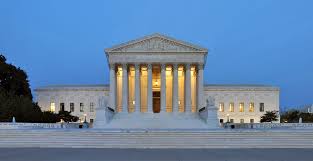
Affirmative Action Admissions

If you’re interested in what’s happening at Harvard these days (as everyone in Cambridge is) I suggest you read Hua Hsu’s recent article, ‘School Colors: The Fight About Who Gets into the Ivy League,’ in The New Yorker, October 15, 2018. It’s all there. How affirmative action evolved from being a strategy aimed at leveling the playing field of every stratum in America to becoming a lightening rod in elite education. How it’s more difficult for Asian-American applicants to get into top schools than any other race (including whites). How the conservative right champions this case as a means to permanently topple affirmative action; ultimately helping white kids. And how Harvard defends its admissions process.

The article is thorough. Yet it contains one hilarious bit of irony, and one glaring omission.

Irony first.


The case dates back to 2012, when a Bay Area high school senior named Michael Wang with a 4.67 GPA got shut out of all the Ivies plus Stanford. He is the named plaintiff. But since legal time passes at a much slower rate than even academic time, Michael has already graduated from college. Williams. Not too shabby. Towards the end of the article, Mr. Wang confides to the author, “The education I got at Williams was incomparable to what I would get at Harvard. I still would have gone to Williams, even if I had gotten into those other schools, now that I’ve been to Williams.”

Mr. Wang’s comment doesn’t really make sense, confirming that a 24-year-old’s hubris is scarcely more refined than that of an eighteen-year-old. If Harvard is a Rolls Royce, perhaps Williams is a Bentley; it’s certainly not a Prius. But an education is not a car that you can test drive and compare. Every person extracts something different from the experience. Mr. Wang did not attend Harvard; he cannot compare his William’s education with the education he did not receive.

Even more ironic is the twisted comment about going to Williams, now that he’s been there. Isn’t the whole point of this lawsuit that Harvard is better than Williams? That if Mr. Wang had been admitted to Harvard, he would have chosen it? If Harvard is not preferred to Williams, then where’s the so-called discrimination? Truth is, few of us, at age eighteen, know what’s ‘best’ for us. I am happy for Mr. Wang that Williams turned out to be so good for him. I wish he would realize his good fortune is reason enough to drop this suit.

Which leads to the glaring omission.

Nothing in this article, or the extensive media coverage this case gets in my adopted hometown, states the most obvious aspect of the case: many, many more students are capable of succeeding at Harvard than get the opportunity. For all the angst over the fact that Harvard admits Black and Brown students with lower measurable criteria (offset by qualitative attributes such as life experience or Harvard’s desire for diversity among its student body), no one argues that these Black or Brown students are unsuccessful at Harvard. They are successful. They can do the work. Perhaps not with the same élan as a 4.67 GPA Asian American whiz kid. But they get it done.

I know this because, skin color notwithstanding, I was one of them. In 1973, I was admitted to MIT (not exactly Harvard, but pretty darn close). I accepted, showed up at the introductory picnic, guitar in hand, and realized by nightfall that I was the dubious occupant of the one percentile. In a school where numbers mean everything, trading SAT scores is common as shaking hands. After I met Ben 1560 and Alicia 1520, Tommy 1440, and Kate 1480, not to mention a trio of perfect 1600’s, I knew my measly 1280 combined SAT score was the rock bottom. In four years at MIT I never—I mean never—met another student with lower SAT scores.

So what was I doing there? I graduated from high school in Oklahoma, and MIT wants students from every state. I was demonstratively motivated (I’d already worked in an architectural firm) and, by Tech standards, quite personable.

Did I crash and burn? No. I worked harder than many because I didn’t have as much grey matter. Still, I managed to graduate, with honors, continued to graduate school, became a contributing professional, and valuable alumni.

Did going to MIT change my life? Probably more than any single event I have experienced.


Was MIT wrong to tip the scale of geography and accept me over someone with more quantifiable attributes? I don’t think so. In my forty years around Cambridge, I’ve confounded hundreds of New Englanders with the marvels of my fly-over state: an immeasurable contribution to a community cloaked in Puritan snobbery.

Do I feel bad about the ‘more qualified’ applicant whose place I took at MIT? Not really. I figure she probably liked Williams more than I would.

Harvard University exerts outsize influence in our world. Their admissions policies need to be uniform and transparent because a Harvard education is a scare resource that, by design, grows more exclusive, since it’s class size does not expand with our population, while a Harvard degree bestows privilege beyond a mere diploma. Justified or not, Harvard graduates enter adulthood on a higher rung. Harvard admissions also warrant scrutiny due to its chequered record of discrimination against women, Blacks, and Jews, as well as its collusion among fellow Ivies.

But I do not believe the way to monitor Harvard is to abolish an admissions process that includes both qualitative and quantitative measures. Because Harvard is the incubator of our future leaders, it ought to represent our society as best it can. Their process is making strides with regards to race, even as it falls short in other areas (Harvard should admit fewer legacies, more veterans). We can take a blunt ax to Harvard’s qualitative admissions criteria and kill affirmative action. And cripple the aspirations our universities represent: to reflect whom we are, and enlighten who we want to be.


Posted in Personal | Tagged , , , , , | Leave a comment

A Soft Landing: Conundrum of the States

This is the fourth in the series, A Soft Landing, which explores how we might achieve a more just, equitable society without violent revolution.

The Achilles’ heel of our present government is the idiosyncratic status of our fifty States. They vary widely in breadth (Alaska claims 17% of our total land area; Rhode Island a mere 0.03%), population (12% of us live in California, only 0.18% in Wyoming) and income (Maryland’s median household income of $75K+ is almost twice that of Mississippi’s $40K). They have to the power to legislate, litigate, and tax, oftentimes contrary to the Federal government (consider today’s havoc about marijuana). In theory, state and federal governments address different aspects of our society. In truth, ever since we abandoned the Articles of Confederation in favor of a stronger national government, the Feds have selectively absorbed more and more functions. Whether under the guise of fairness, equity, or simply to expand power; whether labeled the New Deal, the New Frontier, or the New Federalism, today’s Federal government has its fingers in every aspect of local life.

In a world of increased interdependence, there’s logic to Federal ascendency. Despite the current vogue of tribal and nationalist sentiment; centralized government, corporate business, and mass communication is spreading all over the earth. The trend is inevitable: we will become more and more technologically, economically, and politically interconnected until we collapse under our own weight and trigger the next Dark Age.

In the meantime, the United States is saddled with historical states that guarantee outsize influence to our rural populace and white people. I can’t foresee how we create a new Constitution that doesn’t continue, in some form, this hodgepodge of states. For starters, states are the mechanism for assembling a Constitutional Convention, as well as the vehicle of ratification. Perhaps others can envision a way to transition states out of active governance—let them be cultural and historical artifacts—but I just don’t see them voting themselves out of existence.

I can, however, suggest a simple yet potent way to counter the influence of states. Not by diminishing their power, but by giving them more.

Our current Constitution outlines how a state can join the Union. Yet it is silent on whether and how a state might partition itself or even leave the U.S. Typical human hubris: proclaiming a path to growth without even conceiving that we might wish to shrink. Our bloodiest war centered on this oversight. Our new Constitution ought to enable it.


Becoming one of the United States should not be easy; partitioning a state or exiting the country should be even harder. The criteria should be rigorous, involving multiple ballot initiatives over time, maybe even super majorities. But secession should be feasible, and the Constitution should spell out how.

Why would a libertarian liberal like me espouse an idea so often attributed to the deep right? First, because it’s the kind of bold idea that can trigger meaningful discussion across ideological bounds. Second, because if we are to be a nation of states that choose to come together for our common good, we ought to allow states to leave if our common good is exhausted. Third, in the era of 50% divorce rates and the age of Brexit, we must acknowledge that sometimes, parting ways is for the best.

The most important reason, however, to grant states the right to partition or secede, is that it will enable us all to get along better. I’ve spent enough time in enough outposts of our nation to hear all variety of arguments for states rights, most often in the form of bile spewed against the Federal government. I’ve heard folks in economically exhausted areas pine for greater autonomy, even independence, and I’ve come to the conclusion that we ought to give them what they desire—the chance to go it on their own—with the certainty that once that right is available, they will think better of the idea.

If we give the passionate citizens of rural Northern California the right to actually create the State of Jefferson, they will quickly calculate the lost aid that flows north to them and change their mind. If we allow South Carolina, the birthplace of state’s rights, to become an independent nation, it won’t take long to factor the economic impact that independence will wreck on the state that receives the most federal dollars per dollar of federal tax paid ($7.87 to $1 according to The Atlantic WalletHub.)

A few places within the United States could probably function as independent nations, yet they are among the least likely to secede. Could California be an independent country? For sure. Texas? Probably, though they already tried it and they asked us to let them in. New England may be wealthy and geographically distinct enough to function autonomously. But the South? It would certainly become poorer.


As long as we deny states the right to secede, they fester an easy complaint against the national government. But if we create a Constitution that provides a right and process for secession, I’m confident those complaints will cease, and we’ll realize that we’re all better off if we hang together

Posted in A Soft Landing | Tagged , , | 2 Comments

Craigslist: For Sale By Owner / Free Stuff

There are thousands, millions, of ways to describe our world as opposing dualities: ‘Can’t do’ folks versus ‘Can do’ folks; foodies versus refuelers; Patriots fans versus the other 98% of Americans. It’s fun to figure out which camp I occupy (Can do, refueler, Pats fan). But even more, I enjoy discovering new ways to characterize our bizarre society, and get a glimpse at how the other side, however defined, operates.

Lately I’ve clicked into a fascinating corner of Craigslist: For Sale by Owner / Free Stuff. It’s a whole world of peeps that want to give stuff away, and peeps that flock after it.

I find garage sales tedious exercises in sorting, labeling, and bargaining over a quarter; I extract no joy in squeezing out a final tidbit of value from something that’s exhausted its value to me; yet my recycling gene rebels against tossing anything in a garbage can. All of which makes me the ideal candidate to offer up leftovers on Craigslist: For Sale by Owner / Free Stuff. Although I make no money on these transactions, interacting with the folks seeking free stuff offers a profitable study in human nature.

First thing to understand: whatever you don’t want, somebody else does. I have given away scrap wood, rotten wood, old magazines, rusty saws, and all manner of broken appliances. True, I could not find a taker for plaster ceiling debris, but that’s a mighty low threshold of utility.

Second thing to realize: how many people troll this stuff. I found four tires in my tenants’ basement. I know nothing about automobile tires, so I posted pics of the detailed data embossed on the sides. Within hours, dozens of people wanted my Bridgestone Studless / Tubeless Steel Belted Radials Blizzak WS-15 195/60 R15 8800 / K9304. If so many people want such a specific item in so short a time, how many people are spending their days noodling through Craigslist? Apparently quite a few.


Third, the stuff goes fast. Post an old lawnmower, tracks for ceiling lights, and cross-country skis: gone within an hour.

The most challenging thing about Craigslist is this: when you have a hot item—i.e. anything more substantial than plaster dust—how do you actually give it away? If I put it on the curb and post, ‘First come, first serve’ I incite a parade of vehicles along Fountain Terrace and generate more environmental damage than I avert by giving my excess away. It’s wasteful; it’s rude. If I offer it to the first person that responds and then pull the ad, more often than not the bloke won’t show. Free stuff ain’t worth much, and once a guy’s promised a free hacksaw, he’s in no rush to claim it.

Here’s what I do. First person to request something gets sole privilege to pick it up, for a period of three to four hours. Forget about the Wednesday afternoon gent who swears he’ll collect that table saw on Saturday morning; I’d be a chump to hold it that long. Being first in line carries some privilege, but there are statutes of limitations on the prize.

Once I’ve offered the item to someone, all other inquiries receive a standard email response that the has been claimed, but if it’s not picked up in agreed time, I will offer it to the next person in the order requests are received.

Time passes. The first, or second, or maybe even the third responder swings by to pick up that electric air pump. When it’s gone, I delete the ad and send every respondent a follow-up message: Thank you for your interest, the item has been claimed.

All this correspondence takes a bit of work, but in the game of Craigslist, I try to be fair. Folks appreciate it. I get follow-up emails from the woman who didn’t respond fast enough to claim those Nalgene bottles and the guy who missed out on the toaster oven, thanking me for being informative and fair. Because even though we can divvy up the world between those who post on Craigslist: For Sale by Owner / Free Stuff and those who seek what’s offered, everyone appreciates being treated as if our time and our pursuits warrant respect.

Posted in Personal | 3 Comments

A Soft Landing: Federal, State, and Local

This is the third in the series, A Soft Landing, which explores how we might achieve a more just, equitable society without violent revolution.

Red. Yellow. Blue. With only three buckets of paint, we can create every color. Mix them carefully and we produce incredible hues. Over stir and everything turns brown.

Our government is currently organized along three distinct levels: Federal, State and Local. The logic in this hearkens back to Colonial charters and reflects a geographically large nation with a wide range of identities. In theory, our three levels of government are distinct as primary colors. In fact, they bleed into one another. Sometimes, they coordinate smoothly to provide equitable services across our broad land. More often, they get mangled over competing interests, pork, time, and politics.

If our new Constitution maintains the divisions of federal, state, and local authority, it should better clarify the responsibilities of each level of government to create clear pathways for implementation and administration. What do I mean by this? Let’s consider the most egregious obfuscation of authority in our current Constitution: voting.

Elections for Federal offices are based on districts established by fifty different states with fifty different sets of rules. This is not just inefficient; it enables inequality that undermines our stated principal of one person, one vote. Motor voter registration, exact signature match, felon eligibility: why do the rules vary so much from state to state? Because our present Constitution gives states the right to determine district boundaries and voter requirements for Federal elections. This is wrong.

The Federal government should draw the districts of its elected representatives, according to clear and consistently applied guidelines. Similarly, the requirements for individuals to vote in any Federal election should be the same for all citizens in our nation.

Our new Constitution should establish uniform, nation-wide criteria to define how Federal elections are held. It should also allow states to establish their own means of administering state elections. True, complications could arise from having different voting rules for different types of elections. But those complications are preferable to our present condition of having different voting rules for the same election.

We should strive to keep our respective levels of government operating as independent from each other as possible. To guide our nation toward functioning equitably, and to prevent primary colors from running to mud.


Posted in A Soft Landing | Tagged , , | 2 Comments

A New Constitution

This is the second in the series, A Soft Landing, which explores how we might achieve a more just, equitable society without violent revolution.

Coryton, Indiana

Our Founding Fathers chafed under the capricious rule of King George III, had the audacity to declare independence, fought and won the ensuing war, formed a coalition of autonomous states under the Articles of Confederation, and when they didn’t work out, came together to write a Constitution that established a stronger Federal government. They even made provisions to amend that Constitution as circumstances changed.

Milford, Delaware

230+ years later the majority of our populace is chafing under capricious rule. Yet, instead of rising up to create a government that better reflects our people and our needs, we all too often force fit the issues of our day to a fixed, ‘originalist’ interpretation of our Constitution. Applying our Founding Fathers’ specific words to issues they never anticipated is not reverence; it’s reactionary. Sometimes, the best way to honor democracy is to raise our voices in protest. Similarly, the best way to honor our Founding Fathers is not to be pinned down by their words, but to imitate their spirit and actions. It is time for us to create a new Constitution, one that better serves more of our people.

In theory, we ought to be able to amend the Constitution we have. The white male property owners who governed a million souls scattered across a limitless expanse of continent included a mechanism to do just that in our present document. Unfortunately, as our nation has expanded to over 300 million people of all colors and genders pressed against the extents of our borders, we also appear to have hit the limit of Constitutional change. The 27th amendment was ratified over 25 years ago: it only took 202 years to defer Congressional pay raises to the start of the next session. It’s been almost fifty years since the previous amendment lowered the voting age to 18 in 1971. In our divisive era, the consensus required to pass any particular amendment seems beyond us.

Abington, Massachusetts

Why, if we cannot make a single change to the existing Constitution, do I think we can create an entirely new one? The success of the undertaking lies in its very scope. Assemble a truly representative cross-section of our citizens, authorize them to be bold, and I believe we will rise to the task. The negotiation, the compromise required to move our nation towards cooperation and interdependence will actually be easier to achieve if we stop fiddling around the edges and form a comprehensive vision.


Most discussion of a new Constitution comes from what’s referred to as ‘the far right.’ Although I’m not a fan of political labels, few would ascribe that one to me. So why am I advocating a new Constitution? Because it holds promise for every political persuasion. I don’t have to be a states rights crusader to acknowledge that we need clearer separation of federal and state authority, consistent election rules at the Federal level, and more discretion locally. I don’t have to be a contortionist to realize that we can find a balanced way to draw our electoral districts. I do, however, have to be fair-minded, a rare commodity in our present politics.

National Cemetery Vicksburg, Mississippi

I don’t have a prescribed list of clauses the new Constitution should contain, though I will postulate ideas in the coming months. I offer this idea up to generate discussion. Is it something that will happen any time soon? Probably not. But if we want to work towards justice and equity without violence, we have to change the basic premises of our money-obsessed society. And what’s more fundamental to our society than our Constitution? Let’s create one that reflects who we really are and proclaims our best selves.

Posted in A Soft Landing | 1 Comment

A Soft Landing

This is the first in the series, A Soft Landing, which explores how we might achieve a more just, equitable society without violent revolution.

San Marcos, Texas

It’s been almost eight years since I started this blog, ostensibly about yoga, though in fact about balancing tension in every aspect of life; almost five years since I completed my work in Haiti; almost two since I stopped pedaling all over the continental United States. Since returning home, I chronicled that journey in blog, book and on stage. Then I took a summer hiatus. The most frequent question folks ask me is: What next? Same question I’ve asked myself.

While I explored our world in unconventional ways, the world itself changed. Climate change is no longer theoretical, #BlackLivesMatter, so does #MeToo, and Donald Trump flipped our politics on its head. While I enjoyed sharing my talents and ideas with generous souls throughout Haiti and the Untied States, our nation took a sharp turn against the rest of the world. We no longer want ‘your tired, your poor, your huddled masses yearning to be free.’ We are mean.

Hale County, Alabama

And so, what’s next for me is, in my own small way, to counter the monumental meanness of our government, our economy, and our institutions; to dispel the media’s centrifugal spin that separates us into constituent parts; to voice the fundamental goodness of our people.

Revolution is in the air. Not the hotheaded, inner city, college campus, 1960’s revolution of my adolescence that never managed to infect Nixon’s ‘silent majority.’ The seeds of revolution today are wider spread. Minorities and majority alike are unrepresented and disenfranchised. Trump’s ascendance is a peculiar, though necessary step in that revolution: a heaving gasp by white men of power to maintain control by throttling down on everyone else.


There are only two fundamental questions regarding the upcoming revolution.

First, how long before it takes hold? Will it take a mere election cycle, stretch over a generation, or maybe even take a century? As the demographics of power and money continue to shrink, their insistence for influence will ever expand. I don’t pretend to predict when the tipping point will occur.

Montgomery, Alabama

Second, and more important, is whether this revolution will mark an evolutionary milestone in the human species. Will women and people of color simply invert the traditional power paradigm, as white guys in the colonies did over England’s King George III, or Germany’s National Socialists did over the Weimar Republic, or Cambodia’s Khmer Rouge did over Marshall Non Lol? Can this revolution transcend a mere power flip, can it mark the turning point that allocates power in a broader way than history has ever known?

As a Steven Pinker devotee (Angels of Our Better Nature) I believe that humans are, in aggregate, becoming less violent, more cooperative over time. However, I’m afraid Professor Pinker’s hyper-rational approach shortchanges the idiosyncrasies of human behavior; our incessant thirst for drama, even chaos. Despite our prayers for peace, we clamor for war. Can humans calmly shift power to a wider array? Can we actually spread resources and influence across such a broad spectrum that everyone feels empowered? Can we emerge from these turbulent times with a soft landing.

Phoenix, Arizona

A soft landing will require new political, economic, and social perspectives. It will begin by recognizing that 300 years of technological development and selective democracy have created adequate resources and wealth for all humans, even as we have failed to distribute that wealth with equity or justice. It will acknowledge that the challenges facing our planet cross national boundaries, and so we must share responsibilities across those boundaries. Yet, a soft landing will also support our tribal identities: the families, communities, languages, and customs that define the full spectrum of humanity. It will find a way to celebrate ‘us’ without denigrating ‘them.’

Human nature bends towards each individual’s self interest. A soft landing does not deny that nature. Rather, it expands it. Only after we can operate beyond the security of the next paycheck, the quarterly statement, and the annual dividend, can we define our self-interest in the longest possible timeframe. Only at that distance, can we understand that our self-interest aligns with our neighbor next door, and our neighbor beyond the sea.

This will not be easy. History is littered with noble ideals twisted beyond recognition in their execution: France’s Reign of Terror, China’s Cultural Revolution. We will not get it right this round, or the next, or the next. Which is fine. Humans are better at striving than arriving.

Charleston, South Carolina


Over the next year I will toss out ideas about how we might achieve a soft landing. As a guy who’s graduated from day-to-day concerns, the ideas are long-range and intentionally provocative. We need a new Constitution, impact taxes, economic measures rooted in balance, and revamped education. I’m not concerned about ‘why’ we need a revolution: the inequities of our world mandate it. Nor am I concerned about the ‘how’ of implementation. I want to spark dialogue about ‘what’ we ought to do to transform the existing order, skewed to the few, into a new world that benefits the many.


Posted in A Soft Landing | 4 Comments

The N-word Comes to Emerson

I’m excited. Invited to ArtsEmerson Play Reading Book Club for The Peculiar Patriot, a one-women show by poet and activist Liza Kessie Peterson.

Excitement wavers. The assembled include fourteen middle-aged white women, three grey-haired white men, and a trio of young women of color: a cross-section of the Boston theater community, to be sure, but hardly the cross-section of this city I had hoped for. Nametags. Introductions. Snacks. Vandy, our graduate-student facilitator, introduces the play. She delivers what I suppose is a trigger warning: the N-word is used extensively. Then she tells us that we must substitute the term, ‘N-word’ wherever the actual word appears because, “we don’t possess the agency to use that term.”

Perplexed. We have gathered to read aloud and discuss a script about people of color in the prison system in order to better appreciate the actual performance later this month. We will read another character’s words, not express ourselves. Yet we are directed to substitute one particular, potent word every time it occurs.

Perturbed. F-word, B-word, the script is littered with words I do not say or write in my own life. The street grammar is likely foreign to most of us, yet I appreciate how readers sustain a cadence, seek the art in the words. Until, of course, the N-word pops up, and rhythm falters. One woman inadvertently reads through it, and then feels compelled to apologize. Prohibition exaggerates the power of the word we are forbidden to say.

Angry. Who is this facilitator to declare we lack agency, and then unilaterally remove our agency? The power of live theater is the visceral connection between actors and audience; more immediate, more intimate, than anything filtered by a screen. Paul Fallon has no business uttering the N-word, but am I Paul Fallon when I’m reading a part? Can I only read lines that mirror my actual life? I cannot be complicit; I don’t volunteer to read.

Heartbeat settles. The vignettes of the play slip past; I’m preoccupied, anticipating the next N-word. My neighbor possesses a silver voice. Every syllable, whether sanctioned or verboten, flows smooth off her tongue. I wonder what she thinks: that a White facilitator forbid her Black lips from pronouncing a noun she is clearly allowed to say.

Break time. “May I ask you a question?” I turn to my neighbor. She nods. “What do you think of the facilitator’s position on the N-word?” I try to phrase it without judgment. “I was surprised that she didn’t give us the option of saying it.” Turns out, this woman has participated in similar sessions before. She waves over Kevin Becerra, Artistic Engagement Manager. He clarifies that Emerson College made this decision in response to concerns raised during discussions of last year’s, The White Card. Yes, Liza Kessie Peterson is aware that reading groups are discussing her script. No, she did not dictate that they edit the N-word.

Meditation. I appreciate that groups of people—identities—want to ‘own’ specific elements of their culture, even though, as a white guy, I don’t share that need. The dominant culture is mine. However, as a gay man, I value the power of claiming something denied others. I am allowed to say ‘faggot’; straight people cannot. I don’t pretend to know what it feels like to be Liza Kessie Peterson, or any of her characters. That’s why I’m here: to explore the chasm, to respect our differences, to seek our commonality.

The hostilities I encounter as a gay man cannot compare with those endured by Black people; my identity does not envelop my exterior. Nevertheless, when I write the word ‘faggot’ I trust the reader will absorb that word as best she can. He will lean toward my perspective. If she reads my words out loud, I expect he will pronounce every one. Not because she owns them. But because, in scribing my words, I loan them to him. We enter a tacit agreement that she can try, however insufficiently, however fleeting, to feel the pain, as well as the power. What a shame that ArtsEmerson decided to invite readers to explore a play deeply, and censure us.


Posted in A Soft Landing, Personal | Tagged , , , | 4 Comments

Big Box Ethics

Caveat Emptor: Buyer Beware.

Responsible consumers are supposed to always make sure they got the true deal. That’s why I watch Star Market cashiers with a keen eye: markdown prices taped to the peanut butter or dry bean shelf rarely correlate with the register amounts; whereas I rest easy at grocery Nirvana: tasty morsels, Hawaiian shirts, consistent pricing, and hipster geniality all align at Trader Joe’s.

The bigger the box store, the more carefully I keep an eye on the tab. But at my most frequent haunt, Home Depot, sloppy errors more often occur in my favor. Which leaves me to ponder: what is my ethical responsibility to call out mistakes made by the orange clad serfs of a faceless corporation?


A recent example of Home Depot oversight is a doozy.

I’m overhauling the dark, dank basement of my rental apartments; space I own yet rarely enter. My initial idea—clean out and hang new lights—quickly morphed into removing a dilapidated plaster ceiling, repointing the foundation, insulating the floor plenum, ditto the heating ducts, constructing workshop shelves, adding service receptacles, and installing counters next to the washer and dryer. Oh yeah, I also replaced the lights.

I decided to staple house wrap to the underside of the joists to create a clean ceiling plane and keep the insulation in place, all on the cheap.

A major trip to Home Depot requires several hours. Finding a rolling cart, finding the merchandise, finding a salesperson, getting stuff unloaded from up high, scribing a special order or two, and then checking out: it’s remarkably difficult amidst the gaggle of aproned guys whose bestest skill is avoiding eye contact. I loiter patiently until eventually they wait on me.

The store has everything I need this round, except for the house wrap, which I order. Thirty coils of batt insulation will require three round trips between home and Home Depot. The manager waves the first load through; half an hour later, the second; then, the third. I shake my sheath of papers toward him, “Do we need to check anything off?” “No, I’ve got ya.”

A week later I am e-notified that Home Depot has my house wrap. I return to the store. The display has several rolls of Tyvek (165 feet for $63.00) but none of the generic Everbuilt brand I ordered (100 feet for $28.00). I track down a sales guy, show him my paperwork, he walks me to the display, points to the Tyvek, and says, “Take these.”

What is my ethical responsibility here? Do I tell this guy that I ordered the shorter, cheaper house wrap, or just take four rolls he offers? Expedience governs. Although I would be happy with the $100 worth of house wrap I ordered, I exit the store with $250 of product instead. I don’t feel good about it, but neither am I responsible to monitor Home Depot’s own orders.

The following week, I get another email from Home Depot, announcing that my entire order is ready for pick-up: the insulation, the house wrap, the lumber, everything; $2800 worth of material. Apparently the manager never checked anything off during three round trips of loading goods, and so I am invited to pick it all again, gratis. I am tempted: free is a very good price.

Another week goes by. I get a personal phone call entreating me to pick up my order. When I tell the sales guy I have already taken all my merchandise, he is perplexed. What perplexes me: how does Home Depot stay in business?


Posted in Uncategorized | Tagged , , , , | Leave a comment

Statutes of Limitations

Does criminal behavior carry an expiration date?

I recently wrote, in regards to Brett Kavanaugh’s Supreme Court nomination hearings, “I have reservations about how we apply 2018 standards to 1980’s adolescent behavior.” A reader who objected to that statement (“…young men in the 80’s knew when they were crossing the line…the white male privilege was unbounded. Every woman…has a story…about being assaulted or bullied or coerced or manipulated sexually…”) inadvertently proved my point. I am not condoning the behavior, nor denying its criminality. I am simply stating it was common at that time and rarely held consequences for the perpetrators.

Since then, some laws may have changed, but social standards have changed even more. Although the past week has illustrated that we are far from parity with regards to sexual dynamics, we are trending in that direction. Regardless what guys got away with in the past, I’d like to think that today harassment is not tolerated, that assault is prosecuted.

But what is our responsibility to address the past? Three imperfectly aligned forces are at play: law; social custom; and moral truth.

Our legal system prescribes statues of limitations that restrict how far back one can reach to bring charges against another. There’s merit to this idea; people’s memories are fallible, evidence fades, evildoers reform. But there are also problems. The statue of limitations often expires before victims most traumatized by sexual crimes of power can gather the strength to accuse.


Societal norms usually evolve ahead of the law. There was a time when it was okay, in certain societies, to burn accused witches, chop off heads at public executions, define women as property, lynch Black men, gas Jews, taunt homosexuals, spank children. Although these actions may still occur, they are no longer socially acceptable.

Moral truths offer the most steadfast barometers of our species. When transgressed, they supersede mere statutes. Nazi war criminals were extradited, tried, and convicted decades after their atrocities; their crimes so horrific they eclipsed legal time limits. More recently is the movement to remove the statue of limitations in cases of sexual abuse by priests. Advocates argue that since the victims were young and the Catholic Church devoted so much time and money to covering up the crimes, time limits should be set aside.

People in power determine the laws, and how those laws get applied. When the power dynamic shifts, either abruptly—as in the case of Nazi Germany—or gradually—as in the ascendance of women’s rights—behavior that was once tolerated becomes unacceptable, illegal, even punishable. Yet we have no consistent way to punish the perpetrators or alleviate the victims. Admitting guilt and asking forgiveness is a logical starting point, although in our era of deny, deny, deny; even that is difficult to obtain. Reparations are an option; I’ve heard cogent arguments from African-Americans advocating that means to redress slavery. But making the grandson of the slave owner pay the grandchild of the slave flies in the face of the Biblical admonition that “the son shall not suffer the iniquity of the father” (Ezekiel 18:19-20). But perhaps it should … since the father’s sin established the social and economic advantages that the son enjoys.

The legal statute of limitations to try Brett Kavanaugh in a court of law for his accused harassment is long passed. Instead, he has been tried in the court of public opinion where, because he aspired to a position of exalted authority, behavior that was ‘common’ despite being illegal should not be overlooked. Was this fair? I think so. Supreme Court justices make judgment over us all: they are exempt from any statute of limitations. We can demand of them a higher standard.

But the court of public opinion cannot convey clear verdicts, and its results satisfy no one. Brett Kavanaugh has been damaged, a bit. Some will consider his punishment insufficient, others will portray him as the victim.

Because 1980’s society dismissed harassment and assault as ‘boys being boys’, especially among privileged white boys, and 2018 society confirms that the most effective response to any past allegation is denial, Justice Kavanaugh will never receive a conclusive judgment, his accusers will never receive even an apology, and society will never shape a unified story of these events.

I am certain that, even in 1980, the boys in question knew this behavior was wrong. But they also knew they could get away with it, well past the statute of limitations, all the way to the Supreme Court. It is too late to convict them of their crimes. But in elevating Brett Kavanaugh, Jeff Flake, Susan Collins, and others missed a key opportunity to set a higher standard; one that the highest court in our land deserves.


Posted in Uncategorized | Leave a comment

A Chink in the Wall of Deny, Deny, Deny

Democracy creates strange bedfellows. This morning our precarious system of justice got a one-week reprieve thanks to Dr. Christine Blasey Ford, a soft-spoken, earnest professional woman; two strident protestors who blocked a US Senator in an elevator; and a lame duck Mormon with five children and a shred of conscience. Their actions motivated a one-week delay in the once-speeding Brett Kavanagh Supreme Court approval train.

As the #METOO movement has unfolded, one pattern has held true: men who apologize are pilloried (bye-bye: Al Franken); men who deny remain in power (still here: Donald Trump). But this morning despite Kavanaugh’s testimony, loud and angry as any white man who, methinks protesteth too much, we have hit the pause button. We’re going to try to dig a bit deeper than the usual he-said, she-said.

Life was so much simpler when our nation began. White men got to vote. White women didn’t. At least they got counted as 100% human. Slaves were a mere 3/5 of a person. The world’s self-proclaimed ‘most noble’ government has always been rigged, but at least back then the calculus was clear.

Now—in theory—women vote, slaves are free, and #BlackLivesMatter, but more than two centuries into our democratic experiment, white men still yield outsize influence. So much, in fact, that as long as they repeat a mantra of deny, deny, deny they hold on to power, regardless how many allegations pile up against them.

Perhaps, the FBI probe will demonstrate nothing. Kavanaugh will be appointed to the Supreme Court, and all that Dr. Blasey Ford and the elevator doorstops and a recalcitrant Mormon will have achieved is a short delay. That result would not alter the direction of the highest court in our land; merely tarnish its conceit to represent all. Still, delaying the ‘business as usual’ of the white guy juggernaut is a victory in and of itself, and the week delay will leech through other veins of our septic politics: to elections, protests, and greater civic engagement by people who have been shunted aside.

Possibly, and more likely every day, Kavanaugh will step down; or our President, quick to turn on anyone he considers a loser, will withdraw the nomination. In that event, the chink in the wall of deny, deny, deny, will be big enough to undermine the foundation of the white guys in charge.

I am a white guy. I have reservations about how we apply 2018 standards to 1980’s adolescent behavior. I dislike the politicizing of our Supreme Court, though from Robert Bork to FDR both parties have dirty hands. I disdain the haphazard, accelerated process Mitch McConnell has pursed to appoint Brett Kavanaugh, especially in light of his obstruction to Merrick Garland.


Still, these reservations evaporate in the face of Dr. Blasey Ford’s testimony versus Judge Kavanaugh’s. Two perfect exemplars of the fundamental conflict in our nation. Regardless of your politics, in our hearts, we all know who spoke with the highest authority. A calm and responsible woman with nothing to gain called to question an angry white man with everything to lose. Amen to that.

Posted in Uncategorized | 6 Comments