What’s Your Narrative?

Divorced white male, retired from a career in construction industry, spends most days at the gym or taking solitary walks, evenings watching old movies or PBS American Experience.

What have we here; a psychopath in training.


Successful architect who left the profession at the peak of his career to pursue activist agenda that includes international service, advocacy writing, and conscious engagement across societal boundaries.

Sounds exhausting before we ever reach dessert.



Middle-aged son of an alcoholic with long history of depression can be immobilized in the morning, especially if he doesn’t have mandatory activity plans.

Quick, someone hand this guy a pistol so he can end his misery.


Late blooming gay man, still single after all these years.

Hard to feel sorry for a bloke who channels Paul Simon.


It’s that time of year again: New Year. Time to invent yourself, reinvent yourself, rip out your guts and reinvent yourself again. Once upon a time, so I hear, New Year was an inflection point, a moment of reflection and projection. Where have we been? Where are we going?
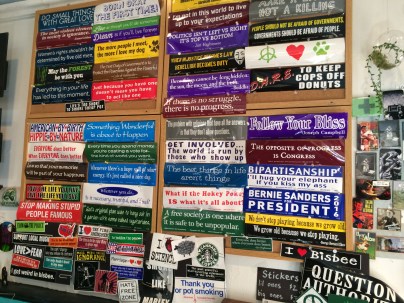
Who has time for that posh now? Our era of accelerating speed, relative truth, and endless spin demands that we tweet and tinder personal narratives spiced with ever-bolder claims on a logarithmically shrinking timeframe. These self-descriptions shape the way the world sees us; then they reinforce our own self-image and identity; until they become our self-image and identity.

It’s all just a simple tangent on the relative-truth, alt-truth, pick-your-own-truth-and-stick-to-it-despite-any-conflicting-facts-truth. Those bubbles of skewed reality that each of us inhabit.

How did all this come about? I blame science. Back in the day of objective truth, an apple hit Newton on the head and gravity became a thing. We loved it. Three indisputable laws of mechanics described everything we needed to know. Then the Twentieth Century arrived. Instead attending to regular haircuts, Einstein postulated relativity. Heisenberg codified uncertainty. Once science went squishy, everything else caved.

Only nineteen years in, the guiding precept of the twenty-first century is selective reality. Colin Powell kicked it off in 2003 with his weapons of mass destruction mantra at the UN; the textbook example of ‘if you say it loud enough, often enough, it will become true. We actually went to war—and killed people—over weapons whose incendiary capacity was mere insistence.

Since then, we are inundated by the media echo chamber of shouting and over shouting. The dominant truth at any moment is nothing more, or less, than the one proclaimed at highest volume. It defines our politics, it stokes our fears, it cons us into believing that who we want to be is who we say we are. Forget sweat and toil, suffering or direct experience. I am what I proclaim. If Amy Schumer can say, I Feel Pretty, so can I.

Dashing millionaire with waterfront mansion and limousine fleet likes to sun himself on native grasses and lap in his private pool.

I consider that an accurate description of a guy with patches of grey hair, steep property taxes, a winter-only reservoir view, a bus stop at the corner, and a slab of sunlight on the bamboo floor in the yoga studio, who occasionally lands an empty lane in the gym swimming pool. If you don’t agree, go make your own narrative.


Posted in Personal | Tagged , , , , | Leave a comment

New Year’s Wish

In January I watched a man die. I had never witnessed death in real time before. Thus began 2018, my year of gloom. Harry, a longtime friend, drained away before my eyes. His breath crescendoed in torment, until it eased into quiet serenity. Lover, daughters, friend stood around his bedside. Solace speckled our grief; Harry exited our world in peace.

Beyond that intimate circle, anguish rippled wise across the earth like a radioactive boulder shattering a tranquil sea. We devoted more time in postulating how humanity would end—environmental catastrophe, nuclear annihilation, biological contagion, toxic incivility—than envisioning how our species might thrive.


Despair informed my reading. Elizabeth Kolbert’s The Sixth Extinction: a grim curiosity shop of creatures we’ve shoveled out of existence. James Suzman’s Affluence without Abundance: a Bushmen hunter-gatherer society, stable for over 100,000 years, unhinged within a few generations. Joseph Conrad’s Heart of Darkness: tapping the root of our deadened soul. Tales that traverse millions of years of evolution even as they excavate our unconscious now.


We are specks spinning on a rock. The rock’s a mere dot in the universe. Our universe is nothing more than a cosmic dust mite. We do not matter; we don’t even know what it might mean to matter, in any galactic way. And yet within each of us lies a universe complete onto itself. Our feelings, our movements, our very breath, constitute an all consuming whole.

In this, man’s essential duality, I find hope for the New Year. We are simultaneously insignificant and omnipotent. We do not know how or when we will end, as individuals or as a species. We just know that our end is ordained by the greater powers of god, science, and myth. Yet we believe, thanks to the gift of projection, that our spirit will transcend physical reality.

“Enough!” I declared one morning, to no one but me. Exhausted from dreams of destruction, I sought a path to balance, to nurture humanity’s time here on earth without being numbed by our inevitable demise. Our problems are monstrous; our responses to them are inadequate, actually absurd. What one man can do is miniscule. Yet within my personal universe, action connotes power. And so I carry my bags to the market, wear a sweater and turn the thermostat down. I write my legislators and attend rallies. I vote. I volunteer. I operate outside of the news cycle, the business cycle, every kind of societal mousetrap except maybe the bi-cycle. I post far-flung ideas up to the cloud and don’t sweat meager reader stats. What’s good and lasting is not breaking news. It’s aged. Seasoned. It infiltrates our essence and lodges in our conscience. It awaits a viral future.

Most of all, I greet every person I encounter with equanimity. I try to be kind. I try to keep my breath moderate as my politics and my temper. I try to be kind. I try to see the world through seven billion different eyes, and when I fail, I try to be kind.


And so, here is my trio of New Year wishes to you and yours.

Acknowledge the gloom of our age, but don’t succumb to it.

Harness the energy of action for equity and justice.

And most important, be kind to those you love, and especially to those you don’t.

Let 2019 be the year we shirk our gloom. Let us act like we care for ourselves, and each other. When the time comes for each of us—eventually all of us—to cease this planet for good, let us rage, rage against the dying of the light. And then inhale our inevitable last breath in quiet serenity. May we all resolve in peace.

Posted in Personal | Tagged , , , | 3 Comments

There Goes the Neighborhood

Change happens continuously. But we humans only notice it episodically. I’ve lived in the same neighborhood for more than 25 years, a few crooked blocks separated from the rest of Cambridge by Route 2. I call it the suburbs of Cambridge. Like Tottenville is to New York City and San Pedro to LA, Strawberry Hill is within Cambridge’s physical boundaries, but psychically distinct and totally foreign to the hipsters clicking around the newsstand in Harvard Square.

Strawberry Hill residents live further from the Red Line than anyone else in our fair city. In exchange, we have yards, driveways, even a few garages. Our mostly two-family houses were built a hundred years ago or so, at the limit of streetcar tracks. Three blocks east, houses are tucked tighter and priced higher. Three blocks west lies Belmont: Leave-it-to-Beaverville.

Strawberry Hill is Cambridge’s statistical outlier as well. We are more white, more moderately income, more domestically stable than other parts of Cambridge. At least we were when my young family moved here in 1992. In 1996, when I served on our neighborhood study group, I learned exactly how vanilla we are. In a city where most domiciles flip every five years or less, Strawberry Hill residents stay put for over twenty. Why would anyone leave? It’s convenient, it’s safe. We’ve got our own little public library, a cute elementary school, acres of woods at Fresh Pond Reservation, and our nation’s premier garden cemetery (Mount Auburn, 1831, designed by Frederick Law Olmstead). Besides, so many city workers live in this perennially affordable neighborhood: our streets are the first to be plowed, our trash is picked up early. My house is a 121-year-old granddaddy of the neighborhood; I’m only the third owner.

So forgive me if I didn’t notice twenty-six years of change until—boom—it hit me in the face. Or rather, it parked in my neighbor’s driveway.

When I moved into this traditionally Italian neighborhood, neighbors in every direction were named Frank and Marie. Their children lived upstairs, or across the street. Their cousins lived down the block. One Frank told me his family lived far away; Malden’s ten miles from here. Over time, the lucky ones died in their beds, others were ambulanced to nursing homes. Their kids moved to Arlington, maybe Bedford. One by one, houses changed hands, often without even a For Sale sign. The new people were white or brown or yellow, few blacks, even fewer Italians. Strawberry Hill might not so diverse as we proclaim, but we’re still basically middle class, right?

About eight years ago, Marie-in-the-white-house-across-the-street (every Frank and Marie requires a subtitle) died. The house that Marie had lived in since 1926 went on the market. It was an urban treasure, solid construction without a single update, original gumwood trim intact. A nice family bought it, mom, dad, two girls. They renovated it lovingly, adhered to LEED energy standards, installed native landscaping. He’s South Asian; she’s Eastern European. Their children go to the local school, they decorate at holidays, they raise chickens. They’re great, maybe even fabulous.

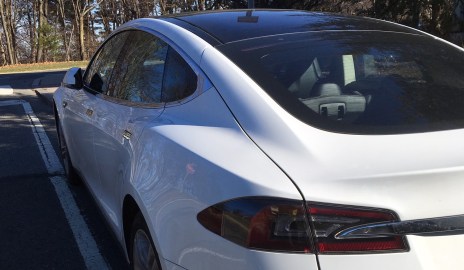
And then, one day this fall, a Tesla arrives. Not a Prius, not a Lexus, not even an Audi: a full-on Tesla. In their driveway. Sometimes they even park it on the street! My fantasy of a cozy working class neighborhood: blown to smithereens in a single stroke of left-leaning affluence. The academics, the professionals, the technocrats, the learned liberals who’ve replaced Cambridge’s working class in neighborhood after neighborhood, have finally invaded Strawberry Hill. My face burrowed. Then I looked in the mirror. Who the heck am I? A triple-diploma threat, an architect rather than building inspector, let alone a tradesman, I don’t possess a drop of Italian blood or a cousin within miles. I’m nothing more than an early adaptor in Strawberry Hill’s gentrification.

Ever since the Tesla arrived, I’ve been despondent, pining for a neighborhood that probably never existed anyway, bemoaning my role in the transformation even as I’m quietly smug to have gotten into the game so early on.

But this week, everything turned bright once more. A few doors down from the Tesla, a larger than life Santa, garish and inflated, popped up on the front lawn where a firefighter still lives (I know this because a fire truck clangs to his children’s birthday parties). It is a tacky counterpoint to the little white lights more and more prevalent here. But it makes me so happy. For at least one more holiday season, Strawberry Hill will not completely succumb to the yawning standards of gentrified good taste.

Happy Holidays to all.


Posted in Personal, Uncategorized | Tagged , , , , | 5 Comments

A Soft Landing: Universal Service

This is the eighth in the series, A Soft Landing, which explores how we might achieve a more just, equitable society without violent revolution.

Americans are quick to claim our rights and we are slow to fulfill our responsibilities.

That’s my logline for the state of our nation, an imbalance that permeates every level of our culture, our economy, and our government.


We are hasty to proclaim micro-aggressions, yet slow to bestow the benefit of the doubt; swift at making a buck, while tardy in owning the full cost of our excess; agile at legislating benefits, yet allergic to paying for them.

This dissonance is, I believe, a logical outcome of an affluent, consumption-based society addicted to the myth of individualism. It’s also the root of our social isolation, income inequality, and disdain for government.

The more our affluence and technology allow us to communicate, interact, and live in closed bubbles, the deeper our divisions. In order to achieve a soft landing, we have to bridge these divides. One important way to do this is through universal service.

What do I mean by ‘universal service’?

Universal means everyone participates. Everyone: every American between the ages of 18 and 24, for two years, with no exceptions. Girl genius, developmentally disabled youth, youthful felon, or son of a Senator; no one is exempt.

Service means interaction beyond our comfort zone. I envision a variety of options from which people can choose: the military, Peace Corps, and Americorps to start; additional varieties will evolve in time. Every youth has to reside in a new place and engage in new activities, preferably among people with different perspectives.


Our closest precedent for universal service is the Works Progress Administration within FDR’s New Deal. Like the WPA, universal service may offer benefits not bestowed by the private sector (CCC’s hiking trails). It may offer artistic and cultural opportunities (FSA photography). It may even offer direct economic benefits (rooftop solar could be our new Cooley dam).

But the primary aim of universal service will not be economic output; rather it will be social cohesion. Universal service will set different types of Americans side-by-side in a conscious effort to illustrate our differences as a route to helping us appreciate them. Universal service will create better-informed, engaged, empathetic citizens.

Patriots earn our rights when we step up to our responsibilities.

Posted in A Soft Landing | Tagged , , , , , | 2 Comments

Paterson

I like to watch movies. This is not to say I am a movie buff; rather watching movies is my preferred form of downtime. At this point in my life, my energy level sags around 7:00 PM. It’s too early to go to bed and I don’t want to commit to a television series, even a mini-series. A two hour movie is the perfect bridge from engaged daytime to dream-filled sleep.

I watch pretty much anything: blockbuster, indie, documentary. I keep a list (of course) of movies I read about or hear about, reserve CD’s from the library, and always have a stack on the side table. Any evening I have no fixed plans—which is most—I watch a movie.

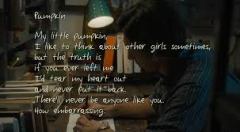
Last night I watched Paterson, a movie set in the mill city of my mother’s birth, a city with a spectacular set of falls over granite cliffs, a downtown of second hand shops, and streets littered with aluminum-clad houses anchored by corner bars. Adam Driver plays a bus driver named Paterson. Driver, driver. Paterson, Paterson. Alliteration is welcome here because Paterson is also a poet. A lovely poet. Who pens lines in his notebook: between bus runs across his native city; while eating lunch from an old-school lunch box, a picture of wife wedged into its curved lid; at the workbench in his cramped basement.

The cinematography is beautiful; Paterson’s inner life is beautiful. Paterson’s wife is beautiful. Their squat 1960’s house is bland outside, beautiful within. This is a man nested in sanctuaries that buffet him from the tedium and danger of the external world.

The movie takes place over one week in which, dramatically, nothing happens. To be sure, there are all kinds of potential dangers. Paterson overhears fraught conversations on the bus, Black hoodies in a low-rider make threatening overtures to his dog, a deranged actor draws a gun in a bar, Paterson’s wife serves up awful dinners, while the bar tender’s wife discovers her man has raided the cookie jar. We keep waiting to find out which thread will fray into drama. None do. Ultimately the movie turns on the worn out story of the dog eating the homework.

Watching Paterson, I began to think, “This movie is about nothing. So what does that make me, watching a movie about nothing?” After it was over, I went to bed and slept solid. Woke up today, thinking about Paterson. Over breakfast, I happened upon an essay that quoted Pascal, “All of humanity’s problems stem from man’s inability to sit quietly in a room alone.” Which brought the art of Paterson to the fore.

The dramatic arts: books, play, movies; are almost always about becoming. The fairy tale ends at the wedding. Paterson is about being. We have no idea how this seemingly ordinary met and fell in love with his quirky, lively wife. We see photos of Paterson in a military uniform, but have no idea what he did in the service, or how it shaped his psyche. We never see extended family; no outside forces impinge on his tiny domesticity. Whether his life is boring or rich is a matter of degree.

For a week we dip into Paterson’s life. He goes about his business, treats everyone with respect, always does the right thing, and survives with his serenity intact. Paterson is not a conventional hero. But the world could use more like him.

Posted in Uncategorized | Tagged , , | Leave a comment

A Soft Landing: Universal Basic Income

This is the seventh in the series, A Soft Landing, which explores how we might achieve a more just, equitable society without violent revolution.

The idea of universal basic income is not new; the theory’s been around for decades. Small-scale distributions have been explored in Canada and India. Finland recently provided a basic income of $687 per month to 2,000 unemployed people for two years. The city of Stockton, California gave $500 per month to a hundred residents for eighteen months. The results of these experiments are easily applauded or denounced depending upon one’s politics, but realistically these trials are so miniscule they cannot tap the true potential of providing folks with a universal basic income for an open-ended period of time.

If everyone—everyone—received a basic minimum income simply for being a citizen of this country, the effects would be transformational. From a liberal perspective, we could provide fiscal security for all citizens. From a conservative perspective, we could dismantle much of the welfare state. From an individual perspective, we could value people for our inherent qualities rather than our economic potential.

At the extreme, universal basic income eliminates social programs. No more food stamps, goodbye TANF, farewell unemployment compensation, adios Section 8 housing vouchers. When we give people actual cash, we give them agency, lift their self-respect, and eliminate social service bureaucracy. Universal basic income unchains us from our jobs. We can take an extended leave to pursue a personal project, or just sit at home. So long as one is copasetic with a very modest standard of living, economic participation is optional. As a matter of equity, even rich people would receive a universal basic income, although the extra money ninetieth percentilers receive would likely be offset by revised taxes to fund distributions.

So why would anybody work? Because many of us enjoy our work, and most of us want more than a basic standard of income. Nonetheless, the nature of work would change. It will become more difficult to find people to perform low echelon tasks. Automation will boom. We won’t worry about robots eliminating our jobs; we’ll welcome them. It will be more difficult to find guys willing to pick up our trash, but I’m confident there’ll still be folks keen to design and build automated trash-picking systems.

The nature of our cities, our development patterns, will change as well. A single person will not be able to live in a high-priced city like San Francisco or Boston on universal basic income. People who opt out of the economic system will either live differently by pooling their basic incomes, or they will move to less expensive areas of the country. Much like developments in Arizona and Florida today cater to retired people, I anticipate that individuals who want to live solely on universal basic income will relocate to inexpensive places. Non-economic communities might thrive in low cost states like South Carolina and Kansas. This is really not so different from existing welfare pockets in Arkansas and Appalachia, although preferable for being explicit and shameless.

To be sure, universal basic income will not function as purely as described above. Some people—developmentally disabled, addicts, mentally ill—will not survive on a modest direct payment, either due to exorbitant maintenance costs or inability to make reasoned choices. The libertarian in me says, give everyone enough and give him the right to blow it as well. Realistically, we will still need some additional safety net, though beyond a direct payment for every individual, that net ought to be pretty shallow.
What would all this cost? Let’s suppose every adult gets $800 per month, and every woman’s first two children get $400 per month (nothing for additional children in our overpopulated world). That’s an annual income of $28,800 for a family of four (Eureka! We’ve already extinguished the current welfare conundrum that penalizes a woman with children from ‘acknowledging’ fathers and partners). The United States has about 75 million children (0-18) and 200 million adults (18-64). Total cost: about $2.4 trillion dollars per year. That’s 12% of our current $19.4 trillion economy. When we factor in the end of existing transfer payments, etc. that total will shrink. For ten, maybe twelve percent of our total economy, every person can enjoy a threshold income. We can afford to do this.

Since the invention of the loom and the plough, a person’s value has been judged by how much they contribute to our economic system. But our economic system is both antiquated and broken. A system that values a boss at a hundred times more than a laborer is unfair; a system that values a professional baseball player at a thousand times more than a farm worker is unjust; a system that values a money-shifting suit at a million times more than a guy who actually makes something is unethical. We have the resources, affluence, and technology to free us from the system. Let’s start by recognizing that if you’re here, you matter, regardless of how successfully you navigate our stilted form of capitalism.

However, the reason for providing universal basic income transcends economics. It’s an important step toward truly free enterprise: a world in which everyone is free to engage in the enterprise that sparks his or her passion.

Once we all receive enough money to maintain a modest living, participating in our economic system will be a matter of choice, not necessity. Our economy will operate more efficiently; our personal lives will be enriched even more.


Posted in A Soft Landing | Tagged , , , | 2 Comments

The Women Who Mapped the Stars

The pivotal scene in last season’s Nora Theater Company production of The Women Who Mapped the Stars takes place around a dinner table in the year 1900. Or maybe it’s 1910. Or perhaps 1923.

Whatever.

Four nineteenth century women scientists from Harvard’s Observatory (Williamina Fleming, Henrietta Swan Leavitt, Annie Jump Cannon, and Antonia Maury, though few called them ‘scientist’ in those days) are celebrating the New Year, the new century, and imagining new possibilities for women. Cecilia Payne, a British woman who studied at Cambridge (though could not earn a degree), who’s crossed the Atlantic to pursue a PhD. at Harvard, crashes her mentor’s party. It’s a wonderful scene, layered in scientific irony. Bending time confounds the Victorians who, though deep thinkers, know nothing of Einstein. Yet collecting generations of female scientists in a singular place across time confirms a central fact of Cecilia’s reality: relativity.

Satisfying as that scene is, the purest nugget of wisdom in The Women Who Mapped The Stars occurs later. Cecilia is frustrated by observations and calculations that consistently indicate stars are composed primarily of hydrogen; when everyone ‘knows’ they are primarily metals. She craves to see something fresh, new, to be the first, the ‘discoverer.’ Annie Jump Cannon appears at her side and offers a completely opposite perspective; how every time she looks at the night sky, she feels a connection, a unity, with every other creature enjoying that very same view.


Although Cecilia is most definitely female, her 1920’s garb and short bob, render her masculine beside her nineteenth century forebears. Similarly, her desire to stand out, rather than fit in, conforms to our traditional notions of male versus female behavior.

The charm and depth of The Woman Who Mapped the Stars is how it confounds our ideas of women, of science, of progress without hitting us over the head with it (except maybe in the too long finale). The play’s message—a feminist call to enable curiosity and creativity wherever it’s found—lingers well beyond the play’s end.

I don’t what the future holds for this intriguing piece of theater. Although it was developed at MIT and Harvard and caters to Cambridge’s uber rationality, it warrants a wide audience. If you get a chance to see it, grab the opportunity. Like relativity, what The Women Who Mapped the Stars reveals applies to all of us, everywhere.


Posted in Uncategorized | Leave a comment

A Soft Landing: Impact Taxes

This is the sixth in the series, A Soft Landing, which explores how we might achieve a more just, equitable society without violent revolution.

Taxes are a most effective form of behavior modification. Every kind of tax, no matter how seemingly universal, affects our actions. When we tax a product, a service, a piece of land, we shrink its net value by jacking up its opportunity costs, thus driving people to either pay more, find alternatives, or do without.

A simple example. For five bucks and change in tolls, I can drive from Cambridge to Albany in three hours on the Mass Pike. Or, I can drive Route 2 for free. Route 2 is more scenic, but the journey takes over four hours. Which route I follow depends on how much time I have. If my time is worth more than five dollars an hour, I take the Pike, correct? Actually, it’s not so simple. A deeper level analysis changes the calculation. If the weather is bad, the Mass Pike is safer. In addition, Route 2 requires more gas and vehicle wear, so that route actually costs more than the Pike, despite the toll. However, like most humans, I am more sensitive to direct pay costs (a toll) than deferred costs (maintenance), so I don’t properly factor the real cost of my trip. As this simple tax example grows complex, we see that although taxes modify our behavior, the causation is neither linear nor direct.

A more extreme example. The State of Colorado extracts a 39% cumulative tax on recreational marijuana. That’s a lot. If I live in Colorado, I have three options: buy pot legally and pay the tax, purchase it illegally, or forgo getting high. For many, the third choice is not an option, and so Colorado collects an impressive amount of tax on marijuana because the other alternative, the black market, comes with significant downsides.

Similarly, tax credits and deductions modify behavior by reducing opportunity costs, thereby increasing economic activity accordingly. When Massachusetts offered credits for installing residential solar panels, we became a national leader in residential solar, despite our cold and grey weather. When the credits expired, the solar market shrank, as reduced utility bills alone were insufficient incentive for many people to convert.

How government distributes tax revenue also affects behavior. The Mass Pike is essentially a do-loop. Tolls are used to maintain the Pike, which keeps it the premier highway in our state, thus promoting more use. Colorado’s marijuana taxes are more complicated. Some revenue is recycled into drug rehab and prevention programs, but more goes to education, building schools and affordable housing. People who do not participate in the legal marijuana market benefit from its proceeds, which contributes to Coloradan’s overwhelming support of legalized marijuana.

There are so many ways we get taxed, but most of us confront three forms on a regular basis: property tax, sales tax, and income tax. All three are general levies assessed across a broad population, and though there is some inherent behavior modification (tobacco is taxed at a higher rate than milk), we are wary of using taxes to guide behavior. Witness the uproar against New York Mayor Bloomberg’s proposed soda tax.

This fear is wrongheaded. First, because our existing tax structure already encourages specific behaviors. It promotes consuming over saving, driving cars over public transit, purchasing a house over renting. Only when we acknowledge how deeply taxes influence behavior, can we restructure them to promote the kind of long-term objectives that are so difficult for us short-term humans to apply (why we bristle at tolls yet dismiss costs like maintenance and deprecation). We need to move beyond taxing income, property, or goods. We need to tax impact; to use taxes to encourage our better natures.

In America, the so-called land of opportunity, every person ought to be able to do whatever he wants and buy whatever she can afford, so long as it does not impinge directly on others. We cannot abide ‘Thou shalt not…’ However, the more expansive, intrusive, and unsustainable thing a person wants to do or own, the higher he or she should be taxed for the privilege.

A 5,000 square foot house on five acres should be taxed at a much higher rate than a 2,000 square foot house on a two-acre lot, which should be taxed at a higher rate than a 1400 square foot townhouse on a transit line. There might even be certain forms of housing (maybe less than 1200 square foot, net-zero, in urban areas) that are not taxed at all. A second house ought to be taxed at a higher rate than a primary residence. The tax rate on a foreign-owned condo that sells for $4000 per square foot (all too common in New York, and San Francisco; coming soon to Boston) should be taxed higher still.

We can reframe property taxes to reflect the true impact of development. Similar shifts can also occur for sales taxes, maybe even income tax.

Is this a practical idea? Not yet. A country that can’t grapple with carbon cap and trade (a straightforward impact tax) is far from being able to assess people’s private consumption in a balanced manner. It will be fractious, it will be complicated, but if we decide that we want our taxes to do more than fund our government, they can also reflect our values, promote long-term interests, and extend our habitation on this planet.

Posted in Uncategorized | 2 Comments

F.A.T. Chain Reaction

On the day after Thanksgiving, a non-shopper like me has time on his hands. I stumbled upon a satisfying Big Box alternative: the F.A.T. Chain Reaction (F.A.T. = Friday After Thanksgiving).

For 21 years, the MIT Museum has sponsored a team-build chain reaction event, though I’d never heard of it until last week, when an invite to volunteer showed up in my inbox. As always, when I say ‘yes’ to something, I get more out of it than I anticipate. In this case, donating a wintry afternoon rewarded me with an inspiring snapshot of humanity.

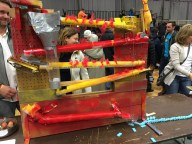
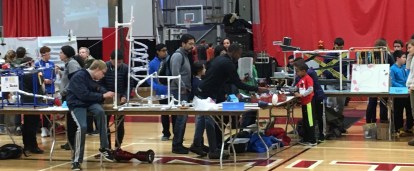
Here’s how F.A.T. Chain Reaction works. Teams of people—some families, some clubs, some ad hoc geeks—sign up to design and build a segment of a chain reaction. Each team gets one folding tabletop, upon which to construct something that will move a force (a tug of string) from one end of their table to the other end, and impart an equal force onto a string connected to the next table. The force can be transmitted by string: but also ping-pong ball, metal washer, marble, domino, magnetic motor, whatever.

On Friday morning, teams gather and assemble their gizmos on tables lined up in MIT’s field house. The public begins to arrive at one o’clock. They check out the entries while Arthur Ganson, a kinetic sculptor, interviews each team and projects their creations on large screens. The crowd grows. By 3:30 p.m. over 1500 people cram the bleachers and spill out onto the floor. Mr. Ganson makes everyone feel welcome. “These constructions illustrate principles of physics. Sometimes, they may need an extra push, or an external hand. These other forces of spirit are welcome.” A poetic way of saying, don’t sweat a glitch.

The countdown. The initial pull. The chain reaction begins. Two nimble guys with microphones trace the cacophony each contraption makes; two cameramen project the progress of the force on monumental screens. The crowd gasps at each dramatic explosion. We can’t help but pick favorites when three plush animals mounted on photovoltaics teeter along parallel labyrinths, jockeying for the lead until one finally reaches the far end of the table and releases its string. Further on, a ball tethered to the end of a string mounted on a pole winds into a spiral. It unwinds. We can see that the ball must knock against a wooden spoon in order to trigger a row of dominoes. The string winds back upon itself. Unwinds again. Will the ball hit the spoon? A third spin tight to the pole. We hold our breath. The third unspooling. The ball hitting the spoon seems to be the most pressing concern in the world. It just misses. The string spools onto the pole yet again. Unwinds. Voila! The ball nudges the spoon, the spoon pivots against a domino, dominoes fall until the final one triggers the string. The chain continues.

The force moves through 27 constructions, hundreds of pulleys, wheels, labyrinths, musical instruments, and cannons. For me, F.A.T. Chain Reaction is an ideal metaphor for our world: an exercise in collaboration as well as trust. Each group believes in their own concoction, and also harbors faith that their fellow engineers will transmit the force across their respective tables.


Everybody works hard; everybody revels in each other’s success. When an external hand is required, it represents a complementary force rather than a failure. The resulting chain reaction is greater than any constituent part.


Twenty-two minutes and four seconds after it starts, the chain reaction runs its course. The crowd applauds. The tinkerers pack up. Other volunteers and I dismantle their tables. There are no trophies, no losers; just bright-eyed kids dissembling their contraptions, already conceiving ideas for how they will make them better—next year.


Posted in Uncategorized | 4 Comments

The Balance Economy

This is the fifth in the series, A Soft Landing, which explores how we might achieve a more just, equitable society without violent revolution.

A new Constitution, discussed in the last three essays of ‘A Soft Landing,’ is insufficient alone to ensure a peaceful transition to a more equitable society. We will need tidal change in our economic, social, political, and educational perspectives as well. Perhaps the most challenging shift will be dialing back our fixation on economic growth to embrace economic balance. The American mantra of ‘economic growth’ is universal. It transcends ideology, party, race, and class. It even transcends our boundaries: the entire world aspires to accelerated consumption. We proclaim that economic growth is essential to our wellbeing. On the contrary, it hastens our doom.

For the first ten thousand years or so of human existence, as we evolved from hunter-gatherers to agriculturalists, economic activity was minimal; our needs were basic and we provided them for ourselves. Great civilizations rose and fell based on their military/security apparatus more than their facility in production or trade. The vast majority of people built their own houses, wove their own clothes, and grew their own food.

Then, a few hundred years ago, capitalism sparked. Sturdier ships, steam engines, emerging cities, division of labor, financial markets, fossil fuels, mass production, military industrial complex, hyper-specialization, increased affluence. Each economic advance created new problems: pubic health crises, mass immigration, income inequality. Yet, for most of us, life improved. Sustained economic growth led to longer, healthier lives.

But that trajectory is stalling. Escalating consumption, far beyond adequate food, shelter, and security, delivers diminishing satisfaction. So much stuff enables autonomy, and weakens our human connections. The collateral damage of our excess—accelerating climate change and environmental degradation—creates new health hazards and ecological imbalance that undermine the very foundation of human existence.


Economic activity is fueled by the incentives we supply, and those incentives yield specific consequences. When cheap land and gasoline promote building 3,000 square foot houses on two-acre lots, the consequences are strained water supplies, sprawl development, and increased carbon emissions. If our incentives promote 1400 square foot net-zero townhouses on public transit lines, the global consequences are more benign.

In order to evolve from a society premised on economic growth to one centered on economic balance, we must shift incentives to better achieve sustainable consequences. This will entail revising our social safety net, our tax strategies, and our regulatory structure (to be addressed in later posts). But there’s one fundamental shift in economic thought that underlies all other changes. We need to start assessing real cost to the natural resources we use.

All economic activity includes three principle attributes: raw materials, human manipulation, and capital. When we build a car, we determine the cost of the steel, glass, and vinyl based on the cost of extraction; design, fabrication and assembly are manipulation costs, and capital keeps everything greased. What we don’t do, at present, is ascribe a value to the actual materials themselves. As a result, we underestimate the consequences of everything we take from the earth. Ore, sand, and oil are plentiful, but they are not infinite. When we remove them, we tinker with the natural order. We create repercussions among fellow creatures and in our environment that are woefully underacccounted in our current economy. Acknowledging and ascribing value to every component of our planet, in place, will help offset the pollution, erosion, and destruction we create when we extract materials. It will incentivize us to be more prudent in how we use them.

How we will do this will be difficult, and imperfect. But as a basic first step toward a world in economic balance, we need to start.

Posted in Uncategorized | 2 Comments