God is in the Detailing

usa-001Last month, when the clocks sprung forward but my morning yoga teacher did not, I wandered the blacktop of Fresh Pond Mall on a Sunday morning and discovered Aladdin Auto, as well as some remarkable sculptures and signs promoting thelighter.org. Mahmood Rezaei-Kamalabad happened by and invited me for a return visit when he was open for the business of art, spiritual nourishment, and auto repair.

I stopped by last week on a sunny afternoon. The giant overhead door was open, revealing a conventional garage with two SUV’s jacked up on pneumatic hoists, as well as concrete block walls plastered with signs espousing God’s plan and a battalion of upright steel sculptures standing to one side, encircling a table and chairs. Mahmood greeted me like a long lost friend, poured us tea in glass-stemmed cups, opened a fresh package of dates, and gestured for me to sit.

IMG_1540Two giant flags hung above my head. The stars and stripes overlaid with gold Arabic lettering, and a royal purple banner with intersecting gold rings. Mahmood sat opposite. A felt skullcap hugged his noggin; grey locks billowed out below and merged with his full beard, framing his tan, weathered face. I asked about the rings. His smile revealed two rows of perfect, tiny teeth. Words flowed out from between them.

“Human beings are made of two parts; God is a single unity. We need to be two parts in order to go forth and multiply, but we seek, always, to become one, to become like God. When we find the spirit, we become one. The intersecting rings are our two parts; the edge of each ring goes through the center of the other. The focal point is the intersection. Unity lies within.

Mahmood guides me a to a small shrine with a thick book resting on a podium. “The Lighter” is printed in gold on the dull red cover. “This is the Koran, the Talmud, and the Bible, all bound into one volume. The Lighter is the intersection of these three religions.” He has assembled this anthology and sent one to the Library of Congress, the Vatican, and the National Libraries of Saudi Arabia, Iran and Israel. There is also a copy in the Qaanaaq Library in Greenland, the northernmost settlement on the globe. According to Mahmood, “The Lighter sits on top of the world.” It also perches in a garage in Cambridge.

IMG_1541Mahmood lays a black cardboard with his intersecting circles on the lectern, asks me to align my index finger with the center of the image and stare as a third circle, the unity, rises off the image into space. I suggest, “It’s a spiritual hologram.” He seems pleased with that analogy.

Back at our tea he continues to unspool his fascinating explanation of our material and ethereal world. ”We look outward with our two eyes to find the unity, but the unity is not external, it is internal. We need to look out to see the multiplicity but then let the multiplicity reflects back on us, to penetrate our interior.” When I take out my pad to make notes, he stops speaking until I am finished. I find his simple pause both respectful and patient. He has stacks of drawings – sketches for his sculptures, variations on his intersecting rings. He makes a fresh diagram for me, two circles, our eyes, projecting out into the world, seeking the reflection that comes together within our head. What Buddhists call our third eye center. I wonder for a moment if perhaps all spiritual teachings are variations of the same theme. Then immediately recognize that no, there are two major variations: teachings that celebrate the god within us, and those that purport that god exists beyond.

I ask Mahmood, “How will we live tomorrow?” He doesn’t hesitate a moment “We will live in peace within ourselves. That peace will reflect to the exterior. Whatever is within me is within you.”

IMG_1542In less than half an hour, we are confidantes. He asks for a hug. He explains opposing forces in all of nature, the spherical energy that resides within all human beings. He leads me to the back of the garage, pausing for a moment to confer with a mechanic wrestling with a rear axle, to demonstrate his machine of human wellness. It’s a stretcher with straps and buckles, within a steel tubular frame, anchored laterally to another tubular frame, anchored vertically to a podium. Mahmood turns on the device. The stretcher rotates around a horizontal axis within a frame rotating around the vertical axis. A person strapped inside experiences spherical rotation. Watching it makes me stomach queasy.

I want to take a photograph but that seems wrong. The machine is rather crude, while the concept is elegant; the physical reality doesn’t do justice to the ideal. Mahmood explains how the machine will balance our internal systems with the external environment. I am reminded of Futurity, the Lisps musical about a Civil War era peace-making machine, Zen and the Art of Motorcycle Maintenance, and steampunk. Another vision of the future cloaked in technology of the past.

It’s time to go. He gives me his sketches. I give him my cycling card. We hug and express mutual love. Is he just another eccentric or a true visionary? I lean toward the latter. Because I want to believe there is a visionary in every eccentric, but also because I feel so full, rich in sunshine and light and human warmth. Mahmood knows something about axles and steel and the spirit. And he is generous in sharing it with anyone who takes the time to come his way.

Posted in Uncategorized | Tagged , , , , , , , , , , , , , , , | Leave a comment

The Responses: Whom am I Going to Ask?

HWWLT Logo on yellowThe more people who want to answer my question, “How will we live tomorrow?” the better. For starters, I plan to ask four specific groups: people I know; people I don’t know, people in power today; and people who offer up their ideas. That covers pretty much everybody in one form or another, but I’m open to other suggestions to encourage participation.


People I Know. This is the obvious, easiest group. I will contact the friends, family, and deep thinkers I already know and ask them whether they will grant me a single question interview. Alternatively, they may choose to script their response to my question instead, which is also fine by me.

People I Don’t Know. Like most Americans, I live in a bubble of like-minded folks. My particular bubble is well-educated, affluent, secular, male, and white. In other words, I’m privileged. Some might say I’m self-made, since I’m more educated and affluent than my family of origin, but I’ve received special benefits bestowed upon clever white guys. I don’t apologize for my position in society, but I acknowledge it stems as much from luck as effort. I am grateful for my good fortune.

images-3images-6images-1images-5images-2images-4Although I know a few individuals outside my bubble – my Mormon brother, my Army nephew, and my black lesbian theologian friend – I need to get outside my bubble for a wider perspective. That’s why everyday I plan to ask at least one person I don’t know,“How will we live tomorrow?” More importantly, that’s why I’m planning a route that consciously brings me among people I don’t know. I want to go to Dearborn, MI because I don’t know any Muslims. I want to go to Williston, ND and Fresno, CA because I don’t know any itinerant workers. I want to go to Huntsville, AL because I hardly know anyone in the South. I want to ask eccentrics and journeymen, rich and poor, mansioned and homeless, young and old, ailing and robust.

People in Power Today. Tomorrow will not spring full-blown from nowhere. It will be built upon today. Therefore, I want to offer individuals in power now a podium to articulate their vision. In advance of coming to each state, I plan to contact the governor, U.S. Senators and Representatives to solicit their answer to my question.

imgresWhen I get to Iowa, I’ll invite all the Presidential candidates to respond. I also plan to ask business, religious, social, and cultural leaders. I’d like to know whether there is confluence between Howard Schultz’ (Starbucks) and the Walton’s (Wal-Mart) view of tomorrow. Do Peter Morales (Unitarian-Universalist Association) and Pat Robertson share any common ground? What do entertainers who dabble in tomorrow, from the indie band, The Lisps (Futurity) to Christopher Nolan (Interstellar), have to say about tomorrow?

Please send me suggestions of influential people I should invite to answer my question. Make a comment here or contact me at fallonpaule@gmail.com. They won’t all answer, but if even some do, we can help shape our national conversation.

imagesPeople Who Offer Up Ideas. Finally, I welcome anyone to answer my question, and I promise to post on this blog all the responses that meet the guidelines included below. Anyone who has an idea of how we can live tomorrow is invited to contribute.

I look forward to hearing from YOU.

__________

Guidelines. How to submit you answer to “How will we live tomorrow?”

  • – Answer the question, “How Will We Live Tomorrow?” in 500 words or less.
  • – Provide up to three supporting images, audio or video clips.
  • – Substantiate all statistics and references with relevant hyperlinks.
  • – Respect other people and their opinions – no trolls, rants or insults.
  • – Include your real name. This will be posted with your response.
  • – Provide a line or two about you – location, age, occupation, passion.
  • – Provide you contact information and tell me whether to post it with your response.
  • – Email your submission to fallonpaule@gmail.com. Thanks!
Posted in How Will We Live Tomorrow? | Tagged , | Leave a comment

The Question: How will we live tomorrow?

HWWLT Logo on yellowAs I travel across 48 states, I plan to ask people along the way, “How will we live tomorrow?” Why ask a question? Why ask that particular question?

A ready question is a conversation starter. Traveling alone is conducive to meeting new people, but a question kickstarts the interchange. A provocative question expands my interactions beyond pleasantries.

More importantly, asking the same question across the full spectrum of people will frame my experience. The most rewarding travel balances a general plan with serendipity. It’s useful to have a route, some destinations, and expectations in mind, but not be a slave to preconception. My question is a key part of my general plan. I’m not just interested in seeing stuff. I’m interested in exploring America. I want an idiosyncratic, unscientific immersion into what makes our eclectic country tick.

So why ask, “How will we live tomorrow?” Because it is simple and open ended. It can literally refer to the next day, or invite speculations of the future. Yet like many seemingly simple things, each word is imbued with conscious thought.

How. ‘How’ is a logistical wimgres-6ord. In strategic planning we developed a facilitation approach with clients that focused on first defining ‘why’ there was a problem or opportunity, then determining‘what’ the appropriate response was. Figuring out‘how‘ to accomplish the objective came last. If the‘why’ and ‘what’ were well articulated, the ‘how’followed naturally. But too often we got so bogged down in ‘why’ and ‘what’ we never got to ‘how’.

The United States is, without doubt, rich in snarly problems and ripe with fabulous opportunities. ‘Why’ we should move in a particular direction or ‘what’ most strongly binds us might offer interesting speculation, but they’ll generate less traction than one tire rotation among the millions I plan to pedal. ‘How’ is more tangible. ‘How’ acknowledges that we already have a bevy of rights and responsibilities, privileges and prejudices. We don’t act in a vacuum. Everything we do moving forward will tweak existing systems. It will shift the perceptions of who’s a winner and who’s a loser. In an existing, complex system, ‘why’ and ‘what’ can’t inform ‘how’. Instead, ‘how’ we act will determine ‘what’ we become and ‘why’ that’s worthwhile.

images-4Will. I like this declarative word. “Should’ or ‘could’ are too squishy. True, our future isn’t in our full control. But we’re human beings, not dust mites floating on a random breeze. We have more control over our fate than any other creature on earth. We cannot prescribe our future, but we will influence it.


images-5We. This is the key word in the question. Its not ‘I’, its not ‘you’ and its not ‘they’. ‘We’ is the only pronoun that fuses the individual and the collective. It acknowledges that the only viable future on a planet with seven billion people must consider the needs of many as well as singular. It’s a word a lot of Americans choke over, since history and geography have blessed us with more opportunities for individual expression than any other country on earth. But it’s a word worth embracing as we become ever more connected to each other.

images-6Live. This is my optimistic word. I like to think we are going to live, as individuals, as a nation, as a species, for a long, long time. Many say otherwise. Some welcome our demise through The Rapture, others quake in fear that our planet will turn inhospitable. But I choose to think that we are caring enough and resourceful enough to find ways to continue living.

imagesTomorrow. Tomorrow is never more than 24 hours away. It is also the distant future. This is the word that makes my question both practical and ephemeral. It invites specific answers as well as fantastic speculation. It takes today as a given and projects us forward as far as we wish to go.


Posted in How Will We Live Tomorrow? | Tagged , , | Leave a comment

The Route: Where and Why?

HWWLT Logo on yellowI want to ride my bicycle to all 48 contiguous United States. I don’t know why. The idea lodged in my head a few years ago and the itch just keeps growing.

Bicycling across country is noteworthy but hardly unique; hundreds of people do it every year. I’m striving for more. There are limits to the adventurer in me. Cycling from, say, Barrow, Alaska to Tierra del Fuego is beyond my capabilities. But trying to pedal through 48 states is a worthy goal: an improbable, though not impossible, accomplishment. There’s a fair chance that life’s circumstances or personal health will intervene and force me to return to Cambridge. But there’s also a fair chance I’ll complete the journey.

Rolling my wheels cross 48 states is the overarching parameter. Beyond that, there are thousands, millions of routes. How do I choose which roads to travel and which towns to visit?

150327 Route Map

First, I want to visit everyone I know. My family is strung out across the country. Besides four sibliings, I have lots of nieces and nephews who live their own. I plan to drop in on them all. Then there are my friends. Childhood friends, high school friends, college friends, adult friends. I don’t know how they wound up living in Boise, Idaho; Slaton, Texas; and Sanibel, Florida; but I plan to see where life landed them. I’m particularly keen on visiting Sanibel, which is both flat and warm in winter.

Next, I want to see cool architecture. The new glass pavilion in Corning, New York; Calatrava’s museum in Milwaukee, Frank Lloyd Wright’s Taliesin, E. Fay Jones’ chapel in Arkansas, the Getty in L.A. But I also want to see my own architecture – the buildings I laid my hand upon during my career. How does my first hospital, Dartmouth-Hitchcock Medical Center, hold up after 25 years? Is my very first project – 24 units of housing for folks with cerebral palsy – still standing in Norman, OK?

imgres-3imgres-5imgres-4imgres-2


I want to visit places that reflect the pulse of America, past and present. I’ve always been enthralled with nineteenth century utopian ideals, so I hope to visit Oneida, New York and Amana, Iowa. I want to visit ‘enlightened’ company towns like Columbus, Indiana and Racine, Wisconsin. And I’m keen to visit places on the cutting edge of American life. That includes the usual glamour spots like Silicon Valley and Nashville, Tennessee, but also the places where change is challenging: Dearborn, Michigan; Williston, North Dakota; and Ferguson, Missouri.

What became interesting, as I spun blue ribbon around my destination pushpins, were those features of our country without immediate appeal. My initial route map doesn’t highlight any national parks. It’s also rather empty through the South. This reflects my prevailing interest in images-3how we live and what we build, over nature, as well as knowing less about the South than other part of our country. I am anticipating that both of those predispositions will change. On the road, I may be so inspired by our natural beauty that I want to visit natural wonders. In the South, I hope to be captivated by its legendary hospitality and charm.

The only thing I know for sure is that the route I have mapped out will not be the one that I take. Who and what I want to see will change. It’s so easy to turn my bicycle in a new direction when something interesting beckons.

Posted in How Will We Live Tomorrow? | Tagged , , , , , , , , , , , , , | 4 Comments

Welcome to How Will We Live Tomorrow?

HWWLT Logo on yellow1984 is behind us. We’ve danced like its 1999. 2001 came and went without a space odyssey. Even Back the Future II is in our rear view mirror. So what lies ahead? Are we doomed to Blade Runner’s bleak future or destined to suffer a Waterworld? Will we destroy our planet and desperately seek Interstellar alternatives? Or will our magnanimity expand along with our horizons as we explore Star Trek’s brave new worlds?

I don’t know what tomorrow holds, and neither do you. But I do know our ability to shape the future is defined by the limits of our imagination. We may not be able to create everything we envision, but we will never create a future greater than the one we can dream.

And so I’ve decided to embark on a journey across America to engage people in a discussion about tomorrow – a year-long bicycle journey to all 48 contiguous United States.

imgresEvery action we take has consequences for tomorrow. No one set out to create a world of income inequality, racial strife, and religious wars. They are simply the logical result of economic and political systems, which, whether passively or actively, we value more than we dislike their collateral disruptions.images-1

However, acknowledging that we can’t control the future doesn’t mean we can’t influence it. If we can articulate how we want to live, only then can we take steps in that direction. This is why I’m asking the question: “How will we live tomorrow?”


imgres-1I’m often struck how movies set in the future use retro iconography. The planes in Avatar were vintage 1930’s, Star Wars’ Chewbacca looks Neanderthal. Sprinkling bits of our past into an imagined future unhinges us from the present and makes it easier to access whatever fantasy the director has in mind.

images-2In a similar way, I am accessing an elementary form of transport – the bicycle – to ask about tomorrow. A guy on a bike doesn’t prejudice anyone’s idea of the future. I hope to be accessible enough not to threaten, and quirky enough to elicit unconventional responses.

Please follow me on this journey. I’ll post my progress, tales from the road, and answers I receive to “How will we live tomorrow?”

But consider doing more. Participate in the adventure with me. Send me ideas of where to go, what to see, and who to query. Answer my question for yourself. I’ll also post responses to “How will we live tomorrow?” that you and others write. Add your voice to how we shape our future.

Posted in How Will We Live Tomorrow? | Tagged , , , , , , , , , | 3 Comments

CorePower Conundrum

awkward_pose_3-001Conscious breathing is rampant in my corner of Cambridge. There are more than a dozen yoga studios, within two miles of my house. Ashtanga, Baptiste, Bikram, Iyengar, Vinyasa, Yin: take your choice. Almost as many gyms advertise yoga. Given the peculiarities of urban geography, it’s no surprise that when the United States’ largest yoga company, CorePower Yoga, decided to enter the Boston market, they built a huge studio near my house.

I’ve been practicing yoga for ten years, first as a dabbler, then a Bikram addict. Last year I made CorePower my home studio, took their teacher training program, taught there for a brief time, and still practice there most days. Yogis from independent studios often grimace when they learn about my CorePower affiliation, but their scowl is misdirected. CorePower is a great place to practice yoga, once you shield yourself from the corporate veneer.

imagesCorePower’s strength is the same as any good American corporation: they offer a well-conceived, well-executed product. The Fresh Pond studio offers four different styles of class: basic hatha (C1), intermediate flow (C2), yoga aerobics (Sculpt), and the Bikram series (Hot Power Fusion). My physical condition has improved since moving to CorePower because I essentially cross-train at a single studio. Just as Whole Foods never has bad lettuce or Starbucks bad coffee, CorePower classes are consistent.

Which means, while I never have a bad class, I rarely have an inspired one. CorePower champions the American penchant for doing over being; classes are more physically active than mentally focused. I acknowledge what CorePower does well and pursue my restorative yoga and meditation elsewhere.

imgresCorePower’s mantra is to demystify yoga, making it mainstream accessible to all. Still, every class follows a prescribed sequence, lasts precisely one hour, and varies only within parameters that align with its chief demographic: young, attractive, fit women with disposable income.

There’s nothing funky or counter culture about CorePower. The facilities are spa-inspired, with crisp finishes, fireplaces, multiple showers, soaps and lotions. The studio’s mood can be modulated through music and elaborate lighting. Yet these amenities feel focus-group generic. Wiping muddy feet on the runner that images-4proclaims, “Live an Extraordinary Life” is like arriving at a motivational seminar. The reception desk resembles one at any hip start-up. The Sanskrit / English signs reminding people not to steal in the locker room or talk in the studios are identical to ones in health clinics. I feel particularly sorry for the little Buddha statues that grace the front of each studio. Everyone sets their mat on the floor and lies down, feet first, oblivious of the fundamental disrespect that represents toward the Buddha.

The best thing about CorePower is its structure and consistency. I may not have emerged from their teaching training program with enlightened imagery to offer my students, but I can organize a cohesive class, and have landed every teaching gig I’ve pursued.

images-6Many teachers who train at CorePower actually teach elsewhere because, like so many corporations, CorePower pays its front line workers less than local competition, yet expects more of them. CorePower extolls the community building aspects of having teachers staff the desk and thus create rapport between students and teachers, but in reality its a money-saving move that eliminates their need for a receptionist. I enjoyed teaching classes at CorePower, but detested the complicated computer inputs required to sell Lululemon tights.

Every CorePower yoga class ends with announcements, which the teacher makes immediately after the final Namaste; personal pitches for CorePower products and services. A few weeks ago I went to a hot power class where Michael skipped announcements. He left us in Savasana; lights low, and quietly exited the room. It was a welcome and relaxing alternative to getting a pitch for Boot Camp. Leaving the studio I heard the manager chastise him for omitting announcements (how did she know?), so I made a point to thank him, in front of her, for the yogic way he ended class.

images-3The following week Shira included pitches for Boot Camp throughout her Sculpt sequence. Afterward, I explained why product placement during class is inappropriate. “Yoga is not about things, it is about embracing our value in the present. Advertisements during class suggest we are insufficient and need something more. That is not yoga.” She stopped doing it, at least when I was present.

The following week I got a weird email from the manager, written under the guise of open communication, that included, “I also encourage you to practice your freedom to attend classes at studios that give you what you need from yoga.” In other words, CorePower doesn’t need me. After all, I’m not a young, attractive, fit woman with disposable income.

images-5The experience helped to establish my limits for CorePower’s corporate speak. As long as I get sixty minutes of unadulterated yoga, I can ignore whatever they spin before and after. But if CorePower’s thirst to sell me stuff permeates studio time, I will practice elsewhere.


I’m not opposed to corporations. I appreciate how they facilitate many of our country’s best attributes. We want corporations to manufacture and sell cars; items so complex yet commonplace benefit from corporate efficiency and mistake proofing. We accept when corporations sell us groceries; ma and pop stores cannot provide the variety Americans demand all year long. We shrug when corporations provide our healthcare and bemoan the loss of our family doctor. But CorePower has a conundrum on its hands; it’s a large corporation that sells a luxury service whose premise is antithetical to capitalism.

images-2CorePower arrived in Boston with ambitious plans. In eighteen months they‘ve opened four studios, and I take advantage of the fact that I can practice in every compass direction from my house. But the consistency of the teaching is faltering as the number of classes grows, and my home studio churns through Assistant Managers like calendar pages. Does any other yoga studio even have a position called Assistant Manager?

I continue to practice at CorePower because it’s convenient and the yoga is good. But I can understand why others doubt my decision and can foresee a day when I follow the manager’s advice and move on. To be a truly great yoga studio, CorePower will have to become less corporate. But then, it would no longer be CorePower.


Posted in Yoga | Tagged , , | 2 Comments

Objecting to the Truth as I See It

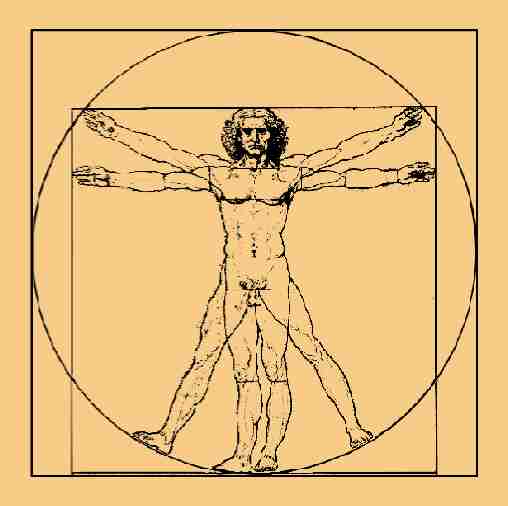
vitruvian_man-001The following essay was published in WBUR Cognoscenti on March 31, 2015:

Narrative non-fiction is not an objective undertaking; the author determines which facts to include and shapes their interpretation. So how does a writer flesh out the virtues and flaws of people he respects?

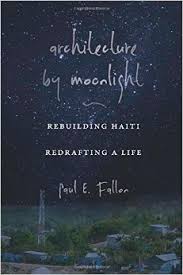
I recently published a memoir of post-earthquake Haiti; an upbeat story of Haitians and Americans working together to accomplish something worthy. It could have easily turned into a litany of noble deeds, but I didn’t limit the narrative to positivity. Tension turned our altruistic story into a gripping one. Each character displayed a few warts, myself included. Though the text reveals deep affection for everyone involved, not everyone likes what I wrote.

I was concerned how to present people in a balanced manner. This led to a double litmus test for evaluating prickly passages. First, I always coupled a fault with a virtue. This was easy since all the major players are rich in virtue. Second, I didn’t disparage any character more than I dissected by own shortcomings. Polishing my own peccadillos, along my comrades’, reinforced one of the book’s theses: we were ordinary people doing an extraordinary thing. My editors agreed with my approach; narrative non-fiction is not journalism.

imgresTruth blurring is rampant among every form of writing. Novelists research specific times and places to lend authenticity to imagined plots; journalists shape scenes and dialogue to enliven events. Every non-fiction genre inhabits a literary neighborhood where reality, perception, and memory find unique balance. Even John Berendt, author of the New York Times all-time bestseller Midnight in the Garden of Good and Evil confesses, “Though this is a work of nonfiction, I have taken certain storytelling liberties.”

Narrative non-fiction provides an author latitude. Not every event that occurred over three years could be described in my book. I determined what to include and reported it through the prism of my experience. I upheld Roy Peter Clark’s non-fiction maxims: do not add and do not deceive. Still, some passages bristled. I decided the overwhelming positivity eclipsed those few rough scenes.

I was wrong.

imgres-1The advance publication copy described one family as boisterous. The father sent me a blistering email. After two years of living, working, arguing, and building together, he severed communication over that single word. I read his objections, the Free Dictionary definition of boisterous he inserted in his terminal email, and his declaration that it was both inappropriate and insulting. I couldn’t understand how this guy turned so hard, so fast. Especially since I don’t consider boisterous an insult. Especially since any observer would agree his family is boisterous.

The sting of rejection took weeks to subside. Meanwhile, I landed a promise from Paul Farmer of Partners in Health to write a cover blurb. Communication with his staff went well until they missed the copy deadline. Then I heard nothing. My polite emails degenerated into pleas. Finally, his staff admitted reservations about the book and produced a list of passages they considered insulting to Haitians.

I reviewed their list and decided against making their requested changes. There’s solace in being an equal opportunity insulter. A nonprofit dependent upon donations needs to be sensitive to every perceived insult; Partners in Health cannot afford to consider a phrase like Haitians are allergic to multi-tasking as ironic rather than damning. Despite evidence that American’s penchant to do too many things at once is both inefficient and unhealthy, they lifted the phrase out of context, as any spin-doctor might. They didn’t consider how that point-of-view helped shape my emerging awareness of Haitian culture or that American construction could benefit from the focus our Haitian crews brought to their task. Organizations tuned to any possible slight cannot cotton subtlety.

People who’ve read the book have universally appreciated my balance of narrative, personal insight and contextual research. Unfortunately, people in the book have objected to how they’re portrayed. My own sister, described as someone with “a flair for drama that I lack”, telephoned and exclaimed, “You called me a drama queen!”

imgres-2I now realize my criteria for evaluating the book’s content was naive. As long as we live in a world of sound bites, as long as someone can cut and paste a phrase without context, no litany of sweet talk can mask the bile generated by a single harsh word. And though I may be comfortable divulging details of my personal life, that doesn’t mean others will bless how I interpret their actions.

The main characters didn’t have the opportunity to review or edit my text. This is my story, in which they play a part. It is the truth as I know it. They may dislike my version of the truth, but no one has refuted it. They may harbor equally valid yet competing truths. Mine just happens to be the one pressed between two hard covers. And that permanence makes everyone wary.

Posted in Haiti, Personal | Tagged , , , , , , , , , | Leave a comment

Audiobook Orgy Part 4: American Theocracy

usa-001Kevin Phillips has a grand, sweeping thesis: three interrelated factors are bringing America down. First there is oil. The energy that drove the unlimited aspirations of the American Century is showing its limits in the 21st. Second, there is religion. In particular fundamentalist Christianity, which has taken over the Republican Party and defines the national conversation on every major issue. Finally, there is debt. The triumph of financial services over manufacturing foreshadows America’s reduced role in the global economy.

Mr. Phillips uses previous world empires – nineteenth century England, seventeenth century Holland, and sixteenth century Spain – to demonstrate a pattern wherein the dominant ‘energy’ of empire (coal for England, wind for the Dutch, and New World gold for Spain) fueled economic behemoths with righteous moral views. Each of these empires lost their energy edge, either because it dried up or the rest of the world caught up. As that happened, these affluent societies also lost the manufacturing edge that triggered their rise. They supplanted making things with complex financial instruments that they convinced themselves were as economically valuable. Then they let their inflated morals draw them into costly wars that ultimately diminished their stature.

imgres-9The most fascinating aspect of American Theocracy‘s discussion of oil is that it makes a convincing case that our oil-based future is limited without even delving into the issue of global warming and climate change. There is simply not enough oil to sustain our consumption habits beyond a generation. Sure, there are new sources to be found, but they are increasingly hard to extract and have diminished EROI (energy return on investment – the difference between the energy a source will generate minus the energy it takes to get it). Where oil isn’t physically difficult to extract, it’s often politically difficult to extract. Just look at Iraq.

images-5The outsized influence that the religious right plays in politics, especially in the Republican Party, especially in the administration of G.W. Bush, isn’t news. But Mr. Phillips’ analysis of how that administration’s policies gave religious institutions’ a leading role in our supposedly secular government connects seemingly disparate acts into a frightening whole. I never understood how environmental stewardship could be construed as a license for human plunder until I overlayed the Biblical perspective that man has dominion over all the earth. Nor did I realize that the ongoing turmoil in the Middle East is welcome for people praying to experience Revelation first hand.

images-8If we KNOW we are better than everyone else, and we KNOW God has blessed us with the right to plunder, going into debt to keep our system afloat is a no-brainer. Besides, when we put our national actions on credit, we can hide the true cost of the ongoing wars that will eventually spell our economic and political doom.

The statistical analyses in American Theocracy are daunting. Although Spain, Holland and England provide templates for demise, the scale at which the United States has drunk oil, promoted its exceptionalism, and gone into debt makes those previous empires minor players in the game of hubris.

imgresMr. Phillips does not offer any bold recommendations to steady our path. Yet I did not come away from his tome as discouraged as I might. First, because the book was published in 2005. Although many of his comments are more relevant now than ever, some are not. And second, because the empires Mr. Phillips analyzed – Spain, Holland and England – may have lost their former glory, but they are still pretty fine societies.

In the past ten years our dependence on oil has remained supreme. We have made good strides in finding more domestic sources of energy, but fracking and Arctic drilling only prove Mr. Phillips point that exploration is getting extreme. We’ve fallen behind in developing the next big energy source – renewables – because we continue to subsidize oil. Right now Germany is technically the leader in renewables, but once China decides to conquer that market, it will be all theirs because their centralized economy can actually respond much faster than our supposedly free-market one. And once we finally get on the renewables bandwagon, we’ll have farther to go than any other nation, because cheap oil has encouraged us to have the most dilute development patterns on the face of the earth. It just takes a heck of a lot more per-capita energy to survive in the U.S.A.

imgres-10The religious right still has too strong a voice in setting the national debate, but they don’t always win. Look at gay marriage. Look at the Occupy movement. Look at states raising the minimum wage. Look at #blacklivesmatter. I don’t understand why the right still sets the agenda, perhaps because a black/white view of the world is so appealing and a message of fear is easy to sell. But I believe there is more counter debate in 2015 than there was in 2005.

With regards to debt, the answer is as simple as it is boring. We have to start living within our means. At a national level, at a state level, and at a personal level. And we have to recognize that making money by shuffling money is not the same as making money by making things. That idea is starting to percolate, as Gretchen Morgenson described in Smothered by a Boom in Banking (NY Times 3/1/2015).

We like to think that human progress is an ascending line. Yet history is littered with societies that recede. Europe in the Dark Ages. Cambodia under the Khmer Rouge. Afghanistan under the Taliban. Societies where ignorance triumphed over knowledge and fear trumped hope. True; Spain, the Netherlands, and England are less powerful today than they once were, but they’re more balanced then at their zenith. I believe the United States will be a better place when our citizens are more equal and we treat our neighbors with greater understanding and respect.

images-7The real fear I take away from American Theocracy, is that our lifestyle is so unsustainable, our beliefs so blind, and our debt so enormous that we won’t slide into gentle comfort like our European cousins. Instead we’ll crash like a 21st century Rome. Let’s stop striving for global domination that we will never achieve and does no one any good. Let’s all pull together for a smooth landing.


Posted in United States | Tagged , , , , , | 2 Comments

Counting Every Step

vitruvian_man-001I’m a good little doobie. When the voice of authority tells me do something, I do it. Even when that voice is distant (I never call anyone after 10 p.m., per my mother’s directive circa 1966). Even when that voice is discredited (I still make the sign of the cross when I’m flustered despite leaving the Catholic Church 35 years ago). Even when that voice is electronic. When Apple reminds me to upgrade my software, I log in and load up.

I don’t like upgrades. They shuffle my icons. I have to go into Settings and learn all over again how to make them squiggle, so I can push all the new ones I don’t want to the back and retrieve my favorites to the main screen.

searchTwo upgrades ago a small white icon appeared with a little red heart in the upper left corner. “You need that one, it monitors your health,” my friend Chuck told me. I didn’t think I needed anything to monitor my health. I ward off Prozac by exercising twice as much as anyone I know and then eating twice as much dessert. However, since Chuck has a deep, authoritative voice, I tapped on the heart. Up popped requests to input my weight, my sleep, my calories. No way was I going to insert the calorie count of the pint of Talenti Sea Salt Caramel Gelato I had just devoured after yoga into my permanent electronic memory. But one set of statistics required no input. My new app counted my steps and then gimagesraphed them by the day and week. No input, cool data, I was hooked.

I’m familiar with the 10,000 steps a day strategy to health. Given my weakness for ice cream I decided to aim for that mark. Forget that every week I already go to the gym three times, take seven or eight yoga classes, and teach two more. I just added a new objective: 10,000 daily steps.

In less than two days, casual counting became an obsession. I began charging my phone overnight so it could rest in my pocket all day and never miss a movement. I analyzed my most frequent walks. I take almost 2,000 steps a day just inside my house, the benefit of an old Victorian with a zillion stairs. It’s only 800 steps to ride my bike to yoga, but 3,000 if I walk. Cycling to the gym registers 2,200 steps. Harvard Square is 4,000 steps away; but it’s over 5,000 when I walk all the way to the Y.

images-3All of this step counting was crazy, especially since so much of it happened to and from places of exercise, but I was in the thrall of my app. During our harsh winter I couldn’t bicycle for weeks, so I walked everywhere. I logged 14,000 step days, even 18,000 step days. When my son Andy and I walked Plum Island for his research project, I took over 22,000 steps.

In no time the idea of 10,000 steps a day evolved from an average to a minimum required. One night, when my pedometer indicated 9,236 steps, I paced the second floor thirty or forty times while brushing my teeth so I could pass the magic five-digit mark. I made it past 10,000, but later, in bed, reckoned that I’d gone too far. Walking no longer had anything to do with moving from one place to another. It wasn’t even about health; it was just an exercise in counting. The next day I rebelled by only walking 6,000 steps. Slouching off made me sluggish.

imgresLast week I volunteered to be part of an Alzheimer’s study. I filled out questionnaires and took baseline memory tests, which will have follow-ups every few months. In exchange for my participation I received a free membership to digifit MVP. More advanced than my Apple health app, it can give me fitness assessments, advanced heart rate analyses, and compare me against others. I perused the app, wondered whether it monitored a control group of others who ate ice cream by the pint, and closed it out. It wouldn’t make me any healthier, just more neurotic.


Posted in Personal | Tagged , , , , , , , , | Leave a comment

Audiobook Orgy Part 3: In Defense of Food

usa-001“Eat food. Not too much. Mostly plants.” These seven words address everything Michael Pollen has to say in defense of food, but seven words does not a book make, and so he continues on for 200 more pages.

Mr. Pollen spends most of the book addressing the second word: food. Somehow our superior culture has lost its connection to this basic, natural substance of life. In our zealous desire to analyze, we’ve turned food into a science, reduced it to proteins, carbohydrates, fats, nutrients, and vitamins; reconstituted these component parts into processed entities whose value – whether measured by nutrition, flavor, or associative satisfaction – equals less than the sum of its parts.

images-4One of the most amusing, and truthful, lines of the book is, “You are what what you eat eats.” We have to pause, dissect, and reassemble the words to discern their meaning, by which time we realize the meaning’s grim. The additives, supplements, and machinations required of Big Food to produce the bounty that leaves us simultaneously overweight while less satisfied requires tinkering up and down the food chain. What we’ve gained in creating foodstuffs with long shelf lives doesn’t compensate for what we’ve lost: balance, variety, and understanding human’s natural role in the earth’s cycle of energy and nourishment.

imgres-8In Defense of Food is the practical compendium to Mr. Pollens’ opus, The Omnivore’s Dilemma, which is both more entertaining but less applicable (I can’t see myself ever hunting my own dinner.) But I can envision following at least some of Mr. Pollen’s suggested guidelines in defense of food:

  1. Eat food, not substitutes.
  2. Shop beyond supermarkets.
  3. At supermarkets, shop the periphery; avoid the middle aisles.
  4. Eat mostly plants, especially leaves.
  5. You are what you eat eats too.
  6. Pay more, eat less.
  7. Stop eating when you’re 80% full.
  8. Eat meals, not snacks.
  9. Cook your own food.
  10. Eat it with others.
  11. Grow a garden.

In general, I am very good at number 3 and 8, okay at 1, 5, and 9. I could use improvement on number 2, 4 and 6. I’m lousy at number 7, terrible at number 10, and can’t imagine ever embarking on number 11. I suppose each reader has his or her own habits that could use improvement.

From a broad perimgres-7spective, any real change in our food system is going to require a shift in how we think about number 6 – Pay more, eat less. Americans pay less for food than any people on earth (less than 12% of total income). We also have more food than everyone else. But it’s no coincidence that as the cost of our food goes down; the cost to our health goes up. Over the past generation our relative food-to-healthcare expenses have flipped. Although we cannot attribute all of the increase in healthcare costs to poor eating, the collateral cost of obesity, diabetes, cancer and other food-related conditions is staggering.

imgres-1Mr. Pollen doesn’t offer any panacea that will change the course of our unhealthy food system. He simply outlines what each individual needs to do to improve eating habits. In almost every case, this requires that we choose foods that are more expensive to obtain, take more time to prepare, and offer satisfactions beyond immediate gratification. These are difficult choices in a world inundated with cheap and easy shortcuts. But the only way to turn Big Food into real food is with small steps.


Posted in United States | Tagged , , , , | Leave a comment