Thanks to the Academy…

This Sunday night, the Oscars will be broadcast across America, across the World. The Academy Awards are our cultural State of the Union. The annual pulchritude parade reflects our social and aesthetic coherence—and dissonance—by applauding achievement in that squiggly gap between popular entertainment and high art. Traditionally, our President addresses the nation every winter and pronounces, “the State of our Union is strong,” even when it is not. So too, Oscar proclaims its winners to be the apex of our culture, even when that’s no longer so.

The Academy Awards’ importance has never been as great as Hollywood imagines, but for most of my life, Oscar has held both cache and relevance. I recall the excitement, as a fresh-face ten-year-old, splat on the living room floor in my footed pj’s, watching Bob Hope poke gentle fun at the svelte women and handsome men that pranced across the stage. I got to stay up late because, one: my father loved Bob Hope, and, two: the films honored reinforced our family’s identity: Julie Andrews as Mary Poppins in 1965; The Sound of Music as Best Picture in 1966, or any other year as far as we were concerned.

When the nation teeter-tottered, the Oscars hung on for the ride. Is there any clearer evidence of our late 1960’s national schizophrenia than presenting the Best Picture Award in succession to In the Heat of the Night, Oliver!, Midnight Cowboy, and then Patton?

During those tumultuous teenage years, I watched the Oscars with friends. We all rooted for Midnight Cowboy; even though none of us were allowed see the only X-rated Best Picture ever. Something about its forbidden grit appealed to my small circle, all of whom eventually defined ourselves by a word we didn’t even know at the time: gay.


College, marriage, babies. Through every phase of life I set aside a dark Sunday night to sit through the bloated glam-fest. Usually, I had seen at least some of the movies. When the VCR era emerged, Oscar received more preparation; I made sure to see them all.

Peak Oscar immersion occurred when my children were in middle school. My daughter’s interest in fashion demanded that we watch the red carpet segment. My son’s best friend’s family was Oscar-buffs. We watched all five Best Picture nominees together. We staged elaborate parties, themed to the nominees. After the Walker’s moved, we actually flew to Chicago over Oscar weekend to continue our ritual.


Cold winter day’s well-spent, family bonding in dark theaters, sharing films that reflected the breadth of our culture. We preferred the adventure movies (Master and Commander, Gangs of New York) even though they never won the big prize. But the quieter films offered opportunity for a dad and his teens to discuss challenging topics. After The Hours, over Chinese food, my very hetero-twelve-year-old son conversed about homosexuality and suicide—topics that would have been impossible to excavate from him without that film. Shared viewing also enabled us to express understanding and affection in singular ways. Two minutes into Mystic River, as the boy gets into the priests car and drives off, my son leaned over and whispered, “You’re not going to like this one very much.” How well he knew me, even then.

All golden eras must end. My children graduated to life and the Oscars began their long, messy tumble. When Crash beat out Brokeback Mountain for Best Picture 2006, I wasn’t as appalled as most of my ilk: after all I always liked action films. But the snub signaled the Academy’s hesitancy to engage the issues of our day. When they expanded the Best Picture category in 2009 from five films to as many as ten, I felt manipulated to see even more movies and stopped trying to see them all in advance. I actually wound up seeing fewer nominees before the ceremony. When The Artist won the statue in 2012, a silly trifle of retrograde nostalgia, the Academy Awards had become too inverted, too self-reverential for me to care.


This year’s Academy Awards have been tainted by misstep after misstep, each more disorienting than the last, each wounding every possible constituency. The Academy kicked off awards season by announcing a ‘Best Popular Picture’ category. Was that a snub to popularity or Best Picture or both? They were forced to retract. Then they publicly aired the trouble of finding a host. Kevin Hart went up in flames and the Academy aborted even having one. Now, they plan to distribute some awards during commercial breaks, denying the TV audience even a snippet of award winning cinematography. Yet in their capacity to make every constituent angry, the Academy announced it will live-stream those presentations, a policy sure to enrage the companies paying for those commercials. They pretty much snubbed If Beal Street Could Talk while heaping critical praise on Roma, an escapist slice of memory in an idealized place far removed from our own. Finally, the Academy proclaimed severe measures to keep the broadcast under three hours; a fascist insistence on time and order hardly necessary since I doubt many people will be watching.

This year, for the first time in over fifty years, I’m skipping the Oscar broadcast. I had an invitation to a different, preferred, social event. When an upper middle class, gay white male of a certain age—Oscar’s precise demographic—forgoes the broadcast, you know the Academy Awards are done.

Perhaps the worst thing about this year’s Academy Awards, the truly scary thing, is how, because of all these snafu’s, Oscar remains an accurate reflection of our culture: so fragmented it cannot agree on anything. The Academy expands the nominee pool in a gesture toward inclusion, but actually diffuses our collective interest. They abandon having a host because no single person can corral the entire event. They pretend that culling a four-hour marathon to a three-hour leviathan will pique interest, but our attention spans have already shrunk far below that (average You Tube video is 4 minutes 20 seconds). We are a culture—if that term even applies— defined by our conflict and differences more than our shared commonality. And so, after making all kinds of changes that have insulted pretty much everyone, this year’s Oscars are sure to have the lowest ratings ever.

Thanks to the Academy for ensuring that the Oscars remain a perfect reflection of our times.

Posted in Personal | Tagged , , , , , , , , , , , , , , , , , , | 1 Comment

Sherlock’s Last Case: Holding a Magnifying Glass Up to Changing Theater

Everybody was there. Actors, house managers, directors. Folks I’ve met in and around Boston theater over the past twenty years. So many theater insiders lent an expectant buzz to the Huntington Theater’s opening production of Sherlock’s Last Case. I wondered why they were in the audience rather than behind the curtain. Same reason, it turns out, that I was there. The Huntington Theater distributed a rasher of comp tickets to ensure an opening night full house; and theater mavens gobbled them up.

Sherlock’s Last Case is an amiable farce, littered with witty lines that evaporate as quick as the audience giggles. Like all Huntington productions, the set was an elaborate creation (in this case Victorian bric-a-brac run amok), the costumes spot on, the acting tight. It was enjoyable as…as… as… sitcom, which is all well and good, but hardly worth the effort of turning off my 42” TV, rising off my sofa, and forking over fifty bucks for a ticket. Which is also why the tickets were free.

Intermission, twitter: ‘What’s the point of this?’ At which point I realized that, in the twenty-first century, live theater as entertainment is passé. We can chuckle to witty one-liners on over a hundred television channels 24/7. Three hundred hours of video are uploaded to You Tube every minute. In a culture that suffers no shortage of entertainment, live theater demands too much attention, too much focus—and too much money—to simply entertain. It must transcend what a screen can offer.

Let’s call is art.

Later in the season, I attended a performance of Jennifer Blackmer’s Delicate Particle Logic at Watertown’s Mosesian Center. I paid real money to sit in a black box theater, with minimal set and vintage shop costumes to watch talented though fledging actors: an experience much richer than what the Huntington had provided. The story of a Jewish female physicist in Nazi Germany is not sitcom fodder, yet the triangle of politics, love, and science is extraordinary. The simple production left room for the imagination to embellish incomplete details and deduce partially stated truths. The play, and this production, played the only trump card live theater holds over anything created on a screen. Delicate Particle Logic was entertaining, yet also inspiring, thought provoking, and emotionally complex. It demanded more direct connection than anything I watch at home; and more active attention than Sherlock required as well. And since I invested more in Delicate Particle Logic, I reaped a greater reward.


Posted in Personal | Tagged , , , , , | Leave a comment

Roma Contrarian

First impressions matter. When the camera finally pans up from the luscious opening visual of water on stone, more water on stone, even more water on stone; my imagination stirs at the wondrous places it might lift us up to. That Roma opens in an urban carport is a bit disappointing. We are in a compact yet airy house, upper class though not grandiose, somewhere south of the Tropic of Capricorn. A somnolent place to be sure, where shade is more precious than light. As the camera pans the carefully arranged interior, immediately I feel cheated. Not by the detail, which is precise; nor the pace, which is leisurely. Rather, by the color. Or lack thereof.

Is there any place where color is more integral to its fabric and energy than Mexico City? Rio perhaps, Cartagena, Mumbai, Barcelona, maybe even Miami: cities banded across lower latitudes where orange and red, turquoise and green punctuate the sharp edges of bright sun and deep shadow. But Roma strips Mexico City of color. As if Bergman shifted his diffuse Scandinavian gloom 40 degrees to the South.

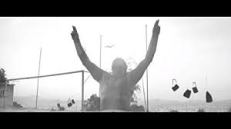
Roma and I get off to a bad start. Then things deteriorate. The first time the father wedges the Ford into the carport, okay. The second iteration; we’ve seen this before. Then the mother wedges between two trucks. Finally, when I’ve spent more time than I care to in that carport, she bangs the heck out of it one more time. The metaphor is beaten beyond meaning or humor. Ditto the dog poop. Ditto, ditto, ditto the airplanes flying overhead, directly above the focus of our attention at every plot turn. The plane flies between the extended arms of the fake army leader. It flies above our downtrodden heroine’s final climb to the roof. In pursuit of what noble deed? To hang the laundry.


Clearly I have missed the point of this important movie. So, after the final credits, I indulge in reviews after the fact, podcasts that dissect Roma’s marvels and mystery. It’s about class conflict (by the end of the film, love has been expressed to the maid, but she’s still the maid). It’s a memory film about Director Cuaron’s youth (And? So?) It’s magic realism. Actually, Roma is anything but magical realism. Despite an earthquake, with terrible special effects; a wild fire, with even worse effects; and a student protest that spills into a furniture store, there’s nothing magic in this movie’s realism. The distilled black and white images polish privilege to a silky luster, but they don’t even hint how that privilege might—or even should—change. Magic realism bursts with the color of imagination. This movie is grounded in a reality rut.


Still, it’s easy to see why Roma is a movie for our times.

The film possesses the dramatic arc of a #MeToo darling. The men are all cardboard villains, the women complex, fully human, yet ultimately heroic. The sunset tableau on the beach, all strength and unity, includes only women and children. We are long overdue films with fully fleshed female characters. Can that only be achieved by making the men simpleton cruel? Are our screens too small to breath life into a full range of characters?

The brilliant light of that same tableau also washes away the skin tones that define who is the maid and who is the mistress. Roma may be set among Brown people to our South, thus triggering all manner of reaction identity politics north of the Rio Grande. Yet the film is not about immigration or Northbound striving. It’s about social hierarchy, rooted in race. The maid is smaller, darker, more indigenous than the people she works for. Which makes me wonder: would Roma enjoy the same critical acclaim if it were set a few degrees further north? If the maid’s skin were a shade darker, her boss’s a shade lighter? If instead of Brown and Browner, they were actually Black and White? Consider a Roma set in the Mississippi delta, down the road, perhaps from last year’s richer, deeper, more nuanced Netflix Oscar nominee, Mudbound. Would we still applaud this sweet, though obtuse maid, and her erratic employer if they represented stereotypes closer to home?

If ‘Best Picture of the Year’ is the film that most represents our times, perhaps Roma deserves to win that award. Narrow in scope, incidental in plat, it reflects our times only too well. The characters are affected by big events (violence, natural disaster) without any attempt, or even inclination, to affect them. If so inclined, everyone left milling about the house at movie’s end can claim victimhood.

The forces that created the world of Roma (i.e. men) are all gone. Those remaining have no plan for how to maintain, or better yet improve, the terrible things that men have wrought. We’re inclined to a positive outcome: after all, the maid is climbing; and there’s that plane; and just about anybody could do better managing the world than men have done. Yet in truth, the women and children have no Plan A, B, or C for what might happen next.

Call me old-fashioned, but I like movies that are bigger than life, that inspire me to transcend man’s malicious nature (as in Mudbound) or celebrate triumph over adversity (The Florida Project) or maybe simply bubble over in shared ecstasy (Bohemian Rhapsody). But we don’t live in an era of enlightened perspective, or hope, or euphoria. And so we celebrate Roma, a monochromatic vision of the most colorful city on earth; a solitary woman who, at the end of the film, is still the maid.


Posted in Personal | Tagged , , , | Leave a comment

In the Auto Zone

My recipe for a happy life includes: giving no credence to Breaking News in the moment; being curious of all things natural, technical, and human; and finding humor, rather than fear, in the many things I do not understand. Therefore, I find a spark of joy, several times a week, riding my bicycle through the Auto Zone parking lot.

I don’t need to ride my bike through the Auto Zone parking lot to get to the gym. I could stay on the bike path or ride the street, But cutting through the parking lot is much more fun. A quick trip to a foreign land for a guy with limited mechanical ability who doesn’t even own a car.

The Auto Zone parking lot is so much more than a place to leave your car while you purchase windshield wipers and motor oil. It’s the place to install your new windshield wipers and replace your motor oil, preferably with other Auto Zone groupies giving advice, perhaps even lending a hand. The guys who work at Auto Zone—they are all guys—spend a lot of time in the parking lot; popping hoods, checking belts, fiddling filters. I have no idea if this hands-on assistance is included in the purchase price of Auto Zone’s wares (a cyclist has no reason to ever go inside) but I am inclined to think the place offers good value: parts plus replacement.

There are also the guys—they are always guys—who simply hang around the lot because their car is cool. Cool can mean souped to the max, though it can also mean a vintage relic with such potential to trigger restoration fantasy.

Men loitering in the Auto Zone parking lot pay no heed to a guy on a bicycle; I invisible here. Which is fine, because it enables me to observe them directly. To try to fathom how representatives of the same species, of the same country and state, of the same race and gender, can be so different.

I enjoy the action of the Auto Zone parking lot immensely. Still, I thank god I’m not one of these guys with a lumbering machine to tend. I am confident that they thank their own god not to be me. Perhaps I offer them some amusement. Hopefully, as much as they provide me.


Posted in Personal | Tagged , | Leave a comment

A Soft Landing: Social Insurance

This is the twelfth essay in the series, A Soft Landing, which explores how we might achieve a more just, equitable society without violent revolution.

As this series evolves, I ricochet between launching test balloons for specific ideas (new Constitution, Universal Service, Universal Basic Income) and advocating for general changes to our social, economic, or political systems (Impact taxes, immigration reform). This essay, the last for a while though probably not the last ever, explores how a concept so boring—insurance—might be appropriated as an approach to achieving greater equity.

The underlying purpose of insurance is simple: pool resources in order to address tragedies that could, in theory, happen to many though, in fact, they will only happen to a few. The bigger the pool of insured, the cheaper an individual’s coverage, because risk is spread wide. Almost all of us insure our homes against fire because, although the chance of our house burning down is small, a fire would be a major personal catastrophe. Since so many of us purchase home insurance, the annual cost is reasonable. This is less true, say, of travel insurance, which is relatively expensive for what it covers because only a small proportion of travelers purchase it. Similarly, many more of us have medical insurance than dental insurance, since a major medical event is more devastating than most dental problems.


Although insurance is a proven way to pool collective risk, like so many aspects of our society, it’s been contorted by our profit hungry system. Insurance has a bad rap; often deserved. Two main reasons. First, the ratio between insurance premiums and distributions to disaster victims often exceeds the mere cost of administration: insurance companies make giant profits. Second, those same companies habitually deny claims. According to the US Department of Labor, about 1 in 7 health insurance claims in the US are denied. The reasons may be simple as misfiled forms, misunderstood scope of coverage, or network provider restrictions. But the result is that many of us—most of us—feel misused by an overly complex system that seems to work better for the insurers than the insured.

I am fast approaching the demographic most fixated on insurance: senior citizen. Many of my friends are already there. I tend to drift off in bemused reverie whenever conversations detour into opinions about ‘Part B’ and “Prescription Drug Plans.’ When the time comes, I’ll assemble appropriate coverage, though I doubt I’ll make an avocation out of the medical labyrinth.

Within Medicare’ single payer approach, not all plans and all people are treated equally; for those ineligible for Medicare, the United States is an even more unfair place. Add the potential of needing a nursing home, or memory care to your future, and the prevailing attitude is: I don’t have enough money, or enough coverage. Therefore, I must look out for myself.

And so each of us angles to get the right-fit insurance; we scramble to accumulate maximum retirement resources. This is exactly where the powers of economic ‘expansion’ and consumption want us to be: forever worried to purchase more protection against every perceived calamity. This perspective that leads to only one conclusion: I will never have enough.

I cannot save enough money or buy enough insurance to protect me from every misery that could potentially befall me. And yet, since every malady will not befall every person, collectively we have enough to care and comfort us all. Actually, we have more than enough. If only we start to view our assets in a different light. If we pool our resources and share our risk.

Sounds simple. Will be darned difficult to do. Because it requires a sea change in attitude and behavior. It requires that we put trust in a collaborative endeavor rather than personal accounts; that we pay premiums, however defined, rather than private deposits; that we believe we’ll receive the benefits we need, if and when we need them. It requires that everyone honor the intent of the system: that the insured do not abuse; that the insurers do not gouge. It requires that those of us fortunate enough to age easily not grouse about benefits we did not receive; rather that we be grateful that we never suffered the need.

My example focuses on sharing risk in advancing age; my metaphor is insurance. But the concept can be extrapolated to virtually every aspect of our lives. The hallmark of a healthy society is not how it promotes personal gain, how it pits neighbor against neighbor in a zero-sum game that worships winners and castigates losers. The hallmark of a healthy society lies in appreciating that our optimal capabilities are derived from leaning into each other, supporting each other, teaching, housing, feeding, healing each other. An equitable society acknowledges and celebrates individual ability and achievement, and then channels those attributes to benefit everyone. Consider it social insurance.


Posted in A Soft Landing | Tagged , , | Leave a comment

Suicide Walk to the Sea

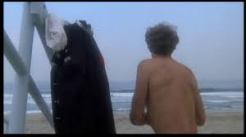
In 1978, the closing shot of Coming Home is Bruce Dern, as Marine Captain Bob Hyde, hanging his uniform on a lifeguard stand and walking into the Pacific Ocean at a funereal stride. He has lost the war, lost his wife, lost his purpose. He retreats, head high towards death, rather than remain in a world whose values have skewed from his truth: the right of might.


Fifty years later, the closing shot of Beatriz at Dinner is Selma Hayek, in the same jeans and shirt she’s worn the entire film, striding into that same Pacific Ocean after dinner with six 21st century money chasers, the high priests of our current morality. The camera shifts up. We look down upon the sea swirl until Ms. Hayek disappears, then we follow her path beneath the bubbly surface and emerge, at last, into the tranquil mangrove that our heroine has been paddling intermittently, in dream and in memory, throughout her last, suffocating day in Southern California.


When Bruce Dern walks into the sea, I feel sorry for the man of principle, yet I’m relieved for our society that his wrong-headed scruples have been discarded. When Selma Hayek walks into the sea, I am glad that she has found eternal peace, yet devastated that such peace can only come through terminating the reality of life on this earth.

Beatriz is a healer, a seer, a person in touch with every living thing. She makes her living laying her hands, and her spirit, on cancer patients. A low-paid calling, to be sure, that she supplements with hands-on work for wealthy clients, whose liberal inclinations demand they invite Beatriz to stay for dinner after her old car breaks down, yet whose privilege does not extend to Beatriz actually questioning their values. Values that encompass only what can be touched, claimed, and purchased. Values that do not recognize the concept of ‘enough.’

I wonder whether the makers of Beatriz at Dinner had Coming Home in mind when they chose to end the film with Ms. Hayek’s walk into the sea. For me, the connection was immediate, and profoundly tragic. When Bruce Dern disappears, we lament a good man out of step with his time yet we celebrate time moving away from authority, toward tolerance, empathy, and understanding. When Ms. Hayek vanishes beneath the waves, she takes that empathy and understanding with her. We are left with nothing but hollow greed.

Fifty years forward, if another character in another film walks into the sea, what beliefs will he wash away? What morals will she leave behind? That will depend on what values we nourish between now and then.

Posted in Personal | Tagged , , , | Leave a comment

A Soft Landing: Economic Links

This is the eleventh essay in the series, A Soft Landing, which explores how we might achieve a more just, equitable society without violent revolution.

Of all the reasons given for the run-up to the Great Recession of 2008, few note an economic saddle point that flipped trajectory. In 2006, Maryland edged out New Jersey as the state with the highest median household income.

For decades, New Jersey and Connecticut vied for the number one and two spots: small states with wealthy suburban populations snug to New York City. So much money was concentrated on the isle of Manhattan; it leached across its rivers. To be sure, the money was not equitably distributed—consider Camden, New Jersey and Bridgeport, Connecticut—but Wall Street’s wealth flowed direct to its immediate surrounds.

Yet in 2006, at the apex of unprecedented speculation in housing and technology, during a so-called conservative presidency, households in Maryland eclipsed their metro New York counterparts. And they’ve never looked back.

Today, Maryland still has the highest median household income in our nation; the District of Columbia is second. The three wealthiest counties in the United States ring the Beltway. Follow the money in 21st century America, and it leads direct to Washington, DC.

I am old enough to recall stories of the Depression and World War II. My mother recounted how her uncle lost his job, so his family moved in with hers: seven children, four adults, three bedrooms, and one bathroom. Not in a Lower Side tenement, rather in the leafy town of Lyndhurst. My father recalled eating oatmeal for every meal, though given his flair in story telling, it might have been laced with whiskey. Nevertheless, I grew up on tales of hardship faced, sacrifices made, character formed; that developed the grit of fighter pilots, Navy seamen, candy stripers, and Rosie Riveters, all of whom blossomed from my family.

In 2019, more than a decade beyond own generation’s economic crisis, do we offer similar stories of burdens shared? Very few. The Great Recession of 2008, it turns out, was not a time to come together. Rather, it was a time for each of us to put his head down and beat out the other guy. Our president did not extol the virtues of shared sacrifice; he told us to go shopping. We did not sign up for a war that most of us believed in; we outsourced the longest (undeclared) war in our history to private contractors.

Humans are not good at heeding the lessons of history; Americans are particularly faulty in that trait. Hearing our parents’ stories does not imprint the same lessons as living them. The vast majority of us alive today have not faced the challenges that drew people together during the Depression and in World War II. Many of us have faced no real hardship at all, while those who have bear the additional weight of struggling alone, cheek-by-jowl against those succeeding. We are a society of haves and have-nots, uncomfortable with arbitrary luck or fate, trapped in the Puritanical belief that the have-nots are somehow insufficient, and therefore deserving of their fate.

How can we enlarge our shared experience? How can we value what each person brings to this life? Ideally, we would appreciate each other simply because we exist. We would celebrate our commonalities, and yet value our differences even more, since it is our cumulative talents that expand human potential. Unfortunately, the chasm between our mutual disrespect and that utopian mindset is too great for even these idealistic essays. And so, since our only shared value seems to be the almighty buck, we are going to have to start there. Money.

In order to illustrate in concrete terms our societal interconnections, we need to link each of our contributions in direct ways. That begins with compensation. First, establish living wages (which will happen anyway once Universal Basic Income frees people from mundane work that can be easily automated). Next, link the compensation within a company or institution. (Remember when Ben & Jerry’s had a 12:1 compensation ratio among everyone who worked there, CEO to janitor? That was a cool idea.) Then, link compensation across products and services. (This will require tricky regulatory vs. free enterprise balance, but we can better distribute the value-add in every step of food production, manufacturing, transportation, delivery…). Finally, a critical step is to link compensation between the public and private sectors. Let all boats rise and fall on the same tides.

Which brings me back to Maryland, the state with the per-capita highest number of Federal employees, ousting New Jersey as the state with the highest median household income. During The Great Recession, when many Americans faced lower paychecks (including me), many government workers did not share the shrink. Maryland’s affluence provides one symbolic measure of a government less and less concerned with serving its people, more and more concerned with serving itself. The lack of public initiative during the last recession, of New Deals that might bring us together instead of bailing out indulgent bankers, contributes to the ever-increasing disdain so many Americans harbor against our public sector.

I am a big fan of government, even big government. By definition: democracy is inefficient; giving everyone a voice is messy; only government is charged with the welfare of all of our citizens. Yet I want a government that serves all of us, one that looks out from the Beltway, across our nation, rather than tunnel gazing within the marble corridors of our capital city.

Therefore, let’s link compensation between the public and private sectors. Let’s make their health contingent upon each other. I don’t know what the specifics should look like. The connection must be broad—after all, one of the public sector’s responsibilities is to regulate the private sector—but I am confident that we can do it. If we want to.

Once we acknowledge that both the private and public sectors have important roles in our nation, we can stop denigrating them or pitting them against each other. We can embrace the truth that our true potential lies in each fulfilling their role. It’s unfortunate, perhaps, that we have to start with economic links. But hopefully, one day, those links can transcend money, and we will appreciate what each of us brings to society simply because we are here, we matter, and whatever we contribute has value.

Posted in A Soft Landing | Tagged , , , , | Leave a comment

Sorry: Not!

This morning, as I walked around Fresh Pond, a hoard of runners came upon me and cut me off as they turned left into the parking lot. “Sorry!” One of the women giggled.

On Tuesday, our habitually late yoga teacher arrived to class five minutes after noon. ”Sorry I’m late,” were her opening words.

Last week, a couple was walking their dog, off leash, along the bike path. I slowed to accommodate the wandering dog. “Sorry!” the wife mumbled.

Merriam-Webster defines ‘sorry’ as “feeling sorrow, regret, or penitence.” None of the micro-encounters described above included any sorrow or regret, and certainly no penitence. The runner didn’t want to break her stride crossing in front of me, even if it meant I had to break mine. The yoga teacher made no intention to begin future classes on time. The couple did not leash their meandering dog. Yet I believe that each of these women felt amelioration, maybe even forgiveness, by their words. After all, they apologized.

Once upon a time, the word ‘sorry’ meant, “I did something to inconvenience, perhaps even hurt you, and I will be more aware not to do it in the future.” These days it means, “I did something to inconvenience, perhaps even hurt you, but it’s okay because I am entitled, and if I toss a ‘sorry’ your way, my conscience is scrubbed clean.”

Men, of course, rarely say they are sorry. I used to think this was rude. Now, since almost everyone uses the word without a morsel of sincerity, perhaps men who inconvenience or hurt others are actually being more honest. They don’t fake apologize. They just do what they are going to do and if others get in the way, tough ‘nuggies.

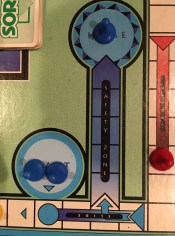
I blame this sorry state of affairs on Parker Brothers, who popularized the British board game in the United States. No one is actually sorry when they send another player’s token back to start. Trilling the word, “Sorry!” only adds salt to the wound of setback, often made worse by the fact that, in a truly vicious game, a player can often select which opponent to abuse. It’s a game of conquest; so elementary to Western nature it hardly needs directions.

Which brings me to my own micro-crusade. I want to resuscitate the word ‘sorry’ to its original meaning, or at least give it enough heft to actually mean something.

Phase One: only say the word ‘sorry’ when I truly mean it and then change my behavior moving forward. This means I say the word less often, but actually think about how my actions affect others more.

Phase Two: When others throw a ‘sorry’ my way, stop and ask them what they mean. Do they actually regret what they did? Will they try to change their behavior moving forward? Capitalize on an unpleasant encounter to create a moment of connection.

Each of the three scenarios above—and there are so many more—concluded with me explaining to these women how they used the word incorrectly, imploring them to be more conscious of their actions, and only saying ‘sorry’ when they actually mean it. These conversations ran to ten even fifteen minutes—in my head. For of course I am too stymied in the moment to actually say anything out loud to these offenders.

Will I ever summon the courage to engage someone who tosses an insincere ‘sorry’ my way? That remains to be seen. In our uncivil word, entering into conversation with strangers is a dicey proposition, especially when the agenda is to inform and hopefully modify behavior. If I ever tried to do that: I might be sorry.

Posted in Personal | Tagged , , , , | 4 Comments

A Soft Landing: Non-Profit, Goodbye

This is the tenth essay in the series, A Soft Landing, which explores how we might achieve a more just, equitable society without violent revolution.

Here is a non-obvious suggestion to make our society more just and equitable: eliminate non-profit status for any organization. Actually, let’s eliminate the entire notion of private non-profits altogether.

Our society currently operates under a triumvirate of economic sectors: for-profit, private non-profit, and public.

For-profit is easy to define: an organization that provides a good or service and sells it on the open market. For-profit companies are the fundamental component of capitalism. When they make a profit—revenue minus expenses—they pay taxes to the public coffers.

The public sector provides goods or services through governmental entities, usually at free or greatly reduced cost. These include providing services that are spread across the entire population, like the cost of legislative bodies, public education, and national defense; as well as those that provide a collective health and safety net, such as sanitary water systems, food stamps, and Medicaid. Public sector services are paid for by a variety of taxes, including those collected from for-profit organizations (see A Soft Landing: Impact Taxes).

The non-profit sector is squishier to define. These are private organizations that do not pay taxes. They provide basic goods and services that may not be offered by the public sector to people who cannot afford to purchase them from for-profit organizations. Non-profit organizations offer a huge array of services: healthcare, housing, supplemental education, scientific research. They are exempt from paying taxes because, in theory, they are motivated beyond the bottom line: prioritizing charitable goods and services over making a profit. Much non-profit revenue comes from charitable donations, and many of those can be deducted from the donor’s taxes.

There are three major problems with non-profit organizations as they exist today. First, they provide exorbitant tax shelters to the rich, who further increase their outsize influence in our nation in the name of philanthropy. Second, this in-between sector dilutes the effectiveness of both the for-profit and pubic sectors. Third, non-profits enjoy economic advantages without having to meet what ought to be fundamental to all social service programs: universal access.

From Andrew Carnegie to Bill Gates, generations of super rich have docked their money in foundations to extend their influence and refashion their legacy. Rockefeller, Ford, and Getty’s foundations soften our perception of these capitalist cut-throats long after they’re gone, just as the Sackler family’s named places at Tufts, Harvard, and Yale, as well as the Metropolitan, Guggenheim, and Smithsonian Museums sugarcoat their role in the opioid crisis. If moguls want to spend their money in charitable ways, fine by me; even the richest men in America are allowed to indulge in reinvention. But that doesn’t mean our tax structure ought to enable it.

The second problem may be less narcissistic, but is even more corrosive. The American fixation on individual freedom is joined at the hip to our fantasy of minimal government. The more tasks and services advocates of less government can pawn off on non-profits, the fewer services the government has to actually provide. Similarly, non-profit facades enable for-profits to dodge social responsibility, all the while leaning into it. Have you seen a Whole Foods wall of ‘affiliated non-profits’: warm feeling without actually committing receipts from grocery cash registers.

Our government is the only institution tasked with providing services to all. When we shift social services to other providers, we dilute universal access. This is most true among faith-based organizations. In a country based on the separation of church and state, why are these organizations tax-exempt? They should not be.

Here’s my recipe to simplify. Every company, every organization, is either private or public. Private companies make products and services according to regulatory and marketplace rules; they pay taxes on profits. Public entities provide the universal services and infrastructure we, as a nation, agree that we need. Public entities also determine and provide social supports available to all.

If people want to engage in humane and charitable work like feeding the hungry, teaching the illiterate, and inoculating the ill, terrific. They are entitled to the satisfaction of lifting up their fellow man, but they should not be entitled to tax deductions. If a religious community wants to erect a church and hire a pastor to shepherd their flock, fine, but that should not exempt their property from taxes levied by a secular government. If Jeff Bezos wants to establish a foundation to cure the world of whatever ill he decides is most pressing, go for it, but don’t let him transfer Amazon’s profits out of our taxable pool to fund it.

Rather, tax all private profits and distribute them collectively, democratically, according to a consensus of the people over the preferences of the rich.

Eliminating non-profits will not be easy; they are entrenched in our economy and culture. Virtually everyone has a ‘favorite charity’ they support. We like to feel like we make a direct difference. The benevolent rush we get from writing our end-of-year charitable checks is much more satisfying than the April woe we feel in paying the IRS. We distrust our government to allocate tax revenues in the way we want.

And yet these are the very reasons why non-profits muddy our economic system. In a democracy, it is our responsibility to make sure the government allocates revenues according to our wishes. And if we get a rush in writing a charity check, that should be reward enough. No need to tag on a tax deduction.

The idea of a private non-profit is both inspiring and effective, yet non-profits simultaneously boost our noble intentions while indulging our baser instinct. Two days a week I volunteer at Mount Auburn Hospital, a gig I love. In 2015, President and CEO, Jeannette Clough received $6.5 million dollars in compensation to captain our 213-bed community hospital. For every $100 people in our community spent on healthcare at Mount Auburn, two bucks went directly into Jeanette’s pocket. I have never met Ms. Clough, and hope I never do; I would find it hard to be civil to such virtue-cloaked greed. Yet, I am confident that Ms. Clough’s feed at the non-profit trough is not a singular example.

Let’s get rid of such duplicity. Let’s abandon the inherent contradictions of state-subsidized private non-profits. Let’s make a strong private sector, economically efficient, to placate our competitive natures. Then, let’s support a strong public sector that mediates private excess and spreads our wealth equitably.


Posted in A Soft Landing | Tagged , , , , , | 6 Comments

A Soft Landing: Immigration: The Ultimate Test of Our Humanity

This is the ninth essay in the series, A Soft Landing, which explores how we might achieve a more just, equitable society without violent revolution.

Immigrants are perfect targets. The foreigner seeking opportunity, refuge, or escape ignites our fear of the ‘other’ quick as dried newsprint. He’s equally cheap and abundant. He will steal our jobs; she will corrupt our culture; they will take what is rightfully ours. Politicians suffer no fallout for beating on them; they cannot vote. Employers risk no retribution for abusing them; they cannot complain.

Virtually all of us were immigrants. Our family stories include forebears who risked all to come to this new land. This shared experience ought to foster empathy for the immigrant. Instead it fuels our disdain. Poverty, persecution, and need create immigrants. We may be grateful that our grandparents and great grandparents took risks to deliver us to the promise of America. But for all we cherish our collective nation-of-immigrants tale, we don’t much like immigrants in the here and now. They are too close reminders of our own vulnerability.

Immigration is more complicated than most other challenges we face: because immigrants are so easily abused; because our own prejudices are so strong; because their motivations are too complex to be addressed in 140, or even 280 characters. Unlike the broad concepts that capture other aspects of achieving A Soft Landing (a new Constitution, universal income, universal service), how we ought to assess and welcome immigrants (or not) cannot be distilled into a single phrase. Nevertheless, it can be synthesized into a spectrum of attitudes and actions that we will need to undertake if we seek a balanced approach to immigration. I am hesitant to label it a list, as each idea builds upon, and reinforces, the others. Cumulatively, they provide a framework that can lead to more rational immigration policies. Perfectly fair and just: probably not. But striving in that direction.

One: Immigrants are individuals, not a collective threat. When we aggregate immigrants and describe them as a force, we make it easier to stoke fear against them. This benefits politicians, but obfuscates reason. Truth is, it would be difficult to find any defined group with less ‘collective’ identity or organizational structure than immigrants. Their histories span every segment of every culture. They hold nothing in common save hope.



Two: Enforce existing immigration laws with respect. Our borders should not be open to anyone who wants to cross. However, if someone arrives seeking asylum, they are entitled to a fair hearing and timely resolution, and we should allocate the necessary resources to enable that.

Three: Revise immigration laws to reflect national and humane priorities. Our patchwork of green card lotteries, H-visas, J-visas, and selective raids against undocumented immigrants is a complicated labyrinth that keeps immigrants in a limbo of harassment. The number of people admitted by lottery fluctuates so much. Sponsored individuals granted work-dependent visas are strung along for ten, sometimes twenty, years before determining permanent residency. We reveal and deport undocumented immigrants in arbitrary raids. All of this confusion and delay further politicizes immigration; fosters continuous anxiety among immigrants, and foments fear in the rest of us.


Four: Eliminate opportunities for undocumented workers. At present, everyone benefits (in the short term) from undocumented workers. Employers get cheap labor; consumers get artificially low prices. Everyone, that is, except undocumented workers. They toil for low wages; they make few demands. A person living in shadow has no voice, no power, no agency. If we enforced labor laws against employers who hire undocumented workers; fine them, jail them even, opportunities for undocumented workers would evaporate as would their incentive to come here. Unfortunately, the undocumented themselves cannot realize this change. It is up to us, all of us, who benefit from the current patterns to take ethically correct action.

Five: Institute a guest work program. This may seem a big new idea, thought it is actually an old one. Our society, our economy cannot function without the labor currently performed by undocumented workers. Even with wage and benefit increases, American citizens are unlikely to pick our crops, process our meat, mow our lawns, and clean our houses. We need a guest worker program to enable citizens of other countries to come here to work, in the light, with specified rights, baseline economic and civil protections, and a clear, albeit long-term path to citizenship.

Six: Support justice and opportunity in everyone’s native land. Although we need to improve how we intercept, process, and accommodate people who arrive at our borders seeking asylum, our ultimate goal should be a world where justice and opportunity is distributed so evenly that people are not compelled to flee. We are so far from this fantasy. In fact, we are careening in the opposite direction. Human action: political upheaval, lack of economic opportunity, and violence against oppressed groups all contribute to more refugees, more immigrants, every year. As environmental dislocation accelerates, the number of people who must relocate simply to sustain life, the number of nomads, will only increase.


As long as we live on a planet divvied up into independent nation-states, each propping up different systems of inequity, the number of immigrants across the globe will continue increase. How we will address this unprecedented migration is a daunting challenge. But if we wish to do it with dignity and respect, we must stop treating immigration as a political footfall and accept it as the ultimate test of our humanity. We have to begin treating others, as we want to be treated ourselves.

Posted in A Soft Landing | Tagged , , | Leave a comment