The Pandemic We Deserve

It is a truth universally acknowledged that in a democracy, we get the government we deserve. Hence, our complacent, morally bankrupt, money dazzled, education-scorning, science-doubting electorate selects Donald Trump as our President.

Over the past few months I have considered the potentiality of another universal truth: that we get the pandemic we deserve. Given the latest increase in coronavirus cases in a nation whose leaders—and citizenry—refuse to acknowledge the rudimentary action required to flatten the curve, the analogy is even more apt.

Consider the granddaddy of all plagues. The Black Plague is said to have killed over half the population of Europe in its first eruption (1346-1353). Then, it kept cropping up with various permutations for the next 400 years, killing 100,000 or so in London in 1665-1666, another 100,000 in Marseilles in 1720-1723. For those who survived, society was drastically altered: the reduced population led to the end of serfdom; the lack of cheap labor spurred the drive for technical innovation.

The American plagues of the sixteenth century were grotesquely effective. European explorers handily killed up to ninety percent of the indigenous people of Central and South America simply by showing up and spreading their germs. Fire breathing dragons could hardly have been more effective conquerors.

The last plague with statistically epic deaths was the Spanish Flu of 1918, which infected about five hundred million people, and killed a hundred million of us. Many more people died from Spanish Flu than in the Great War. The flu’s scope was truly global thanks to returning soldiers, who brought home an unwanted souvenir.

More recent epidemics: AIDS, Swine Flu, Ebola, Zika have distinctly different, boutique flavors. Although they each has the potential for catastrophic spread, their singular means of transmission or particular origins of outbreak, enable many of us to differentiate ourselves from those most infected—gay, African, poor, whatever. The Plague of the Middle Ages brought contagion and death to all. Whereas folks who fall outside the demographic ‘risk groups’ of AIDS or Ebola can feel immune. Worse, they can draw a dividing line between ‘us’ and ‘them’, and stand in judgement of the infected.

Our current pandemic, COVID-19, is a fascinating hybrid of plagues past and present, with a few unique twists. Like The Plague, coronavirus is easily spread through a universal body function: all humans must breathe. Like the Spanish Flu, it spread with global speed, thanks to our interconnected world of air travel. Ironically, the first wave beyond China hit mainly affluent people: those with the means to fly. However, within a short time the virus settled in primarily among the poor, the aged, the vulnerable, the imprisoned, and the lowest paid among us: euphemistically relabeled ‘essential workers.’ The more you suffer the Twenty-first century diseases of poverty: obesity, diabetes, asthma; the more risk you bear for COVID.

The peculiar aspect of COVID-19 that I find most compelling as the pandemic of our time is that, compared to the great epidemics of the past, this is not a major killer. Cambridge, MA, where I live, was the site of one of the first major outbreaks on the East Coast—a conference at Biogen where a dozen or so people became infected. Three months later, about one percent of our city’s citizens have tested positive, about 10 percent of them have died. A plague that kills one/tenth of one percent of the population hardly registers on the scale of the great plagues’ past, yet it represents a significant increase in mortality in a society where people’s expectations of living long, healthy lives are magnitudes greater than those of our medieval ancestors.

In addition, this coronavirus has a relatively long incubation period, and asymptomatic carriers may transmit the virus. These attributes lend a heightened anxiety to the disease. Statistically, any individual is unlikely to contract COVID-19. And if I do, I am unlikely to die from it. However, two million infected Americans is a heck of a lot of people, and being one of them renders statistics irrelevant.

Thus, the novel symptom that coronavirus inflicts upon us more than almost any previous plague: anxiety. It’s difficult to weigh the benefits of precautions required to avoid catching the virus against the deprivations those precautions impose. I’m not talking about me, an affluent retiree who can just stay at home; or people going to bars and restaurants, baiting fate in exchange for a few laughs; or the inconsiderate guys who run around Fresh Pond without a mask. In a country with a threadbare safety net, too many folks have to choose between work and safety. For the people who already have the meanest opportunities in our country, coronavirus presents a new level of ugly choices.

Misinformation, the hallmark of America’s divided society, fuels our coronavirus anxiety. If half of us were dying, as during the Black Death, even Republicans might be forced to take notice. If only a despised demographic caught the disease, President Trump would find a way to simply sidestep it, as President Reagan did throughout years of AIDS.

But COVID-19 is an awkward, middle-ground plague. The virus kills a high number of people across a disproportionately marginalized demographic, while it also spreads enough dread and death throughout the entire population to demand notice. A pandemic whose impact on our physical health is notable, whose impact on our mental health is huge, and whose ability to bridge the chasm our divided, self-involved nation is—apparently—nil.

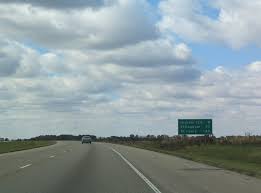
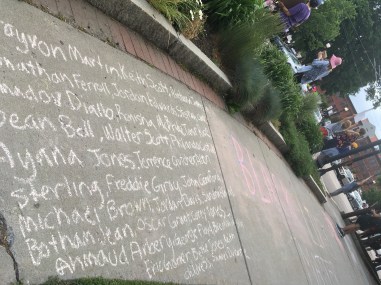
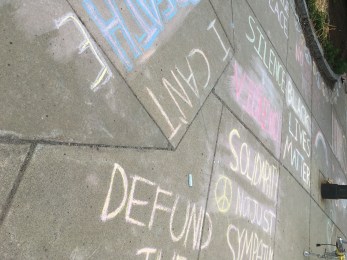
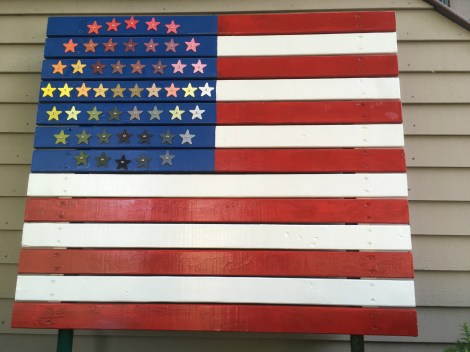
Note: Photo images are from Cape Cod MA; Miami, Florida; Galveston, Texas; and Southern California, in that order.

Posted in United States | Tagged , , , , | 4 Comments

The Optics of Equity

First thought when I learned that Boston University is planning to reopen its campus this fall with an intensive COVID-19 testing policy that includes testing students as often as twice a week was: WOW! BU is handing one juicy plum to folks who thrive on needling the educated elite.

Is there any group, no matter how much direct COVID contact they have or how essential to our society they might be, that gets tested that often? I am hard pressed to consider college students in any essential or high-risk category, except maybe due to dangerous behaviors undergraduates have been known to inflict upon themselves.

Second thought was to check my reaction. Instead of projecting the reactionary spin BU’s effort could trigger, maybe I should actually learn about the plan. So, I did something atypical in our current media environment: I went to the source and read articles in BU Today that describe BU’s plan.

Boston University is trying to open its campus in the fall, which is a positive desire, if it can be done safely. To that end, they are creating a huge COVID-19 Center, where BUs 30,000 students and 10,000 faculty and staff can be tested, contact traced, and quarantined as necessary. The plan seems well-thought out; it might even be effective. It certainly will be expensive. But a school whose tuition and fees are well north of $50,000 per year, and whose average student cost, after aid, is over $37,000, must be willing to spend money to keep that income flowing. And they must demonstrate their advanced state-of-the-art precautions will protect Jill or Johnny, or face the wrath of parents who folk over big change only to find their kid gets sick.

Unfortunately, learning more about BUs plan did not make me any more comfortable with its optics. Higher education is, by definition, elitist. Hence the adjective ‘higher’. So when a university decides to invest in a level of protection for its students and staff that is far beyond the (rather pathetic) norms of our society, it would do well to unveil the plan with at least a nod to equity.

First, BU needs to acknowledge the fact: what it is proposing is well beyond the norm. Then, BU could convince us that their program is valid for reasons beyond the unstated (that BU students and staff are somehow better…more worthy…than others). Perhaps BU could use this as a research project—a laboratory to understand the effectiveness of intense testing and scrutiny. Perhaps BU could announce it’s establishing similar testing and tracing endeavors to serve other segments of our society: meat packers; housekeepers; low-income communities of color. Perhaps it could do both: set up COVID centers to serve various communities, including BU, and compare/contrast the results.


If BU led with the idea that it’s going to use its capacity as a deep-pocket research institution to implement and analyze COVID investigation and testing strategies, (and, oh, by-the-way our own students will be included in the study), the optics of college students getting tested as often as twice a week in a society where some struggle to be tested at all might not sting quite so bad.

I realize that BU is not an isolated example, colleges and institutions all over are looking out for their own before others. But in a state where people with lower income, darker skin, and less education contract COVID-19 at three to five times the rate of affluent white people, it’s time to start calling out inequities wherever they occur.

In an ideal world, the resources and capacities of a place like Boston University would be available to all. Anyone who wanted a COVID-19 test could get one, and we’d do enough broad-based testing to infer useful attributes of the disease. Unfortunately, that’s not the world we live in. For too long, universities have espoused the notion that as aspirational institutions they are apart, but not above, everyone else. But in this era of optical scrutiny, that perspective does not hold steady. BU needs to put forth a message that transcends protecting its own students (and income stream). It needs to find a way to spread what it does and what it learns across a broader spectrum of society. By taking such intensive care of its own—and only its own—BU justifies claims that higher education serves only the elite.


Posted in United States | Tagged , , , | Leave a comment

Imagine

November 1971. I’m a pudgy, pimply sixteen-year-old lying on the back sofabed of an off-brand Winnebago. My father’s driving, happy on the move. My mother’s uncharacteristically silent. My little brother rolls matchbox cars around the table. I should be in high school. But my parents sold everything they owned and yanked me out of junior year. We are rolling west from New Jersey. Too late to be pioneers, too old to be hippies, chasing that clichéd fantasy known as the West. I stare at Illinois’ aching tedium and ponder everything behind me. Gone. Unable envision what lies ahead. We don’t even have a forwarding address.

John Lennon’s “Imagine” comes on the radio. It floats across mid-America’s airwaves, more vapid than the pale, powder sky. No heaven, no hell, no countries, nothing. Immediately, I hate the song, even more than the flat expanse of I-70 west of Effingham.

Upon first listen, “Imagine” was a litany of nothingness enshrouded by silver strings, simultaneously aesthete and opulent. Lyrics that celebrate nothing cannot move a lonely teenager with little more than a pile of clothes, a sketch pad, and a bicycle hanging off the back of rolling tin.

Time passed. We settled—in Oklahoma. I grabbed at the instant adhesives of busyness and youth: new school, new friends, new job. I wasted no time contemplating my parent’s bizarre mid-life action, especially when the geographical cure didn’t assuage whatever ailed them. Nor did I consider whether I was happier or better off than in Jersey, though in retrospect both were true. I was an empty shell of a human at a formative point. I raised my hand in every class. I joined every group. I believed in heaven, and possessions, and the need to claim my own place in world. I focused on the future, trying to figure out what I thought would be worth killing and dying for.

In the intervening forty-nine years, “Imagine” has not changed. The You Tube video is the exact same recording I heard outside of Effingham. Therefore, the change must have occurred within me, because today I think “Imagine’ is an incredible song; the anthem to a time when we will no longer need anthems.

Since I first traversed West I have become a more patient, more thoughtful, more considerate, more confident. Unfortunately, the country I inhabit has become less in all these qualities. Every one of our institutions is weaker than it was then: our churches, our government, our social clubs, our unions. Maybe not our corporations, but perhaps they ought to be. This institutional tearing down frightens those who need their support, and relies on them for answers, even as their answers are self-serving and regressive.

When we utter Machiavelli’s well-worn phrase, “Power corrupts, absolute power corrupts absolutely, we usually ascribe it to men. But the phrase is equally valid for our institutions. In fact, it applies to all of our social systems.

Property zoning was a noble endeavor to provide light and air to places of dwelling and work. Zoning helped eliminate tenements. Then it got contorted by banker’s redlining. Now it’s become an instrument of property-owner control.

Dutch gilds were a wonderful way to promote craft; their descendent labor unions provide necessary employee protections, until, like police unions, they become part of the problem by protecting abhorrent behavior.

Which is not to say Machiavelli doesn’t still speak to the power of men. The ultimate perpetrator of personal corruption, Donald Trump, seeks more power than any American leader. Ever.


Which leads us back to “Imagine.” The world John Lennon envisions is a scary prospect for anyone who inhabits a world of fear, including sixteen-year-old boys clutching for anything to make sense. People in fear need institutions to prop up—and nuture—their fears. A world of us versus them, a world of externally delivered answers, is easier to navigate than one premised on amorphous harmony.

We have so much to strip away to get to the point of “living for today.” But we really have no choice. We must try. The alternative is an earlier John Lennon song. Not nearly as convincing. Revolution.

Imagine there’s no heaven
It’s easy if you try
No hell below us
Above us only sky
Imagine all the people living for today

Imagine there’s no countries
It isn’t hard to do
Nothing to kill or die for
And no religion too
Imagine all the people living life in peace

You may say I’m a dreamer
But I’m not the only one
I hope someday you’ll join us
And the world will be as one

Imagine no possessions
I wonder if you can
No need for greed or hunger
A brotherhood of man
Imagine all the people sharing all the world

You may say I’m a dreamer
But I’m not the only one
I hope someday you’ll join us
And the world will be as one

Posted in United States | Tagged , , , , | 2 Comments

What the Heck Have I Been Doing?

There’s a point in Marc Maron’s Netflix Comedy Special, ‘End Times Fun,’ when Marc (middle-aged white guy, sorta tall, skinny, bearded, salt and pepper scruff; basically me with quicker retort time) iterates the troubles of our era and then bemoans, “So, what have I been doing? I’ve been working on my core.” Which pretty much describes me for the last year. Until the pandemic shuttered my gym. Now even my core resembles a spongey mushroom.

qdVDu

Since I signed off my blog, and allowed a summer hiatus to blossom into a year of silence, I wrote the first draft of a novel; a satisfying form of navel gazing (though the novel’s focus is actually a little lower on the torso). I became eligible for Medicare. I fiddled with my estate plan. I went to the gym—a lot. I interlocked many an online jigsaw puzzle. I became an expert strategist at Spider Solitaire.

Don’t get me wrong, I didn’t do anything bad. No criminal behavior, hardly any white male rage against annoying people. I get that my problems aren’t significant, even if they’re real to me. They’re the only problems I’ve got. I did my volunteer gigs. I voted. I considered myself a solid citizen. But in reality, I was numbed into being a complacent one.

Through the pandemic I’ve told folks—at a social distance, of course—that my life’s changed less than anyone I know. I ratcheted up my volunteer time at the hospital and food bank to maintain a sense of purpose and provide direction for my 10,000 steps a day. True sequesterians consider that foolish, but I’ve assessed the risks and decided to pursue these legitimate excuses to be out and about. Besides, Mount Auburn Hospital and Food 4 Free both seem safer places than the aisles of my local super market.

What took longer to comprehend was that my life had changed less than others because I’d already pulled into myself well before coronavirus required we all hunker down. My curiosity meter had gone into sleep mode. An official senior citizen in a world gone batty, I was bummed that my generation failed so heinously, but content to leave repairs to the next.

IMG_0098

Until the dichotomy of needing to stay indoors for personal safety crashed against the imperative to be out in the streets and shout against the bastards running this sorry excuse for a nation, and I finally woke up. I apologize, world, for having been asleep at the wheel. No use in thrashing myself about past drowsiness; time to just wake up stronger than a cold brew after a sweaty workout.

Good intentions be damned, us white guys are the almost always the last ones on board. I understand, since we live furthest from the inequities of the world. But that’s a lame excuse, because we also get navigate the world easier than anybody else.

I’m back. Well rested. Angry to my core. The Awkward Poser is not seeking so much balance as before. Ultimately, I believe balance it’s what we need to achieve mutual respect, mutual equity. But balance requires everyone to operate from a position of reason. And right now, the prevailing power structure is beyond reason.

Posted in United States | Tagged , , , | 4 Comments

Four Years On, What Trouble We Have Wrought


I set up my constellation flag today with a heavy heart. Four years ago I pedaled throughout this country and found strength in the goodness of the people I met. Tonight, city after city I visited tremble with protests, mostly peaceful, each pounding a valid stake against institutions supported by our government that systematically oppress our fellow citizens for the color of their skin.

I have strived to retain reason and balance through the election of a tyrannical President, the elevation of an abuser to our highest court, the approval of one incompetent sycophant after another by our deplorable Senate. I have struggled to plough fertile rows of truth from the impossibly high pile of lies and corruption. I have remained engaged in my hospital and food banks to counter a pandemic that has endangered as many lives from calculated chaos as from respiratory contagion. All under the naïve assumption that if good people continue to do good work, good will prevail.

But tonight I am worn down. By the assholes I encounter every day who refuse to wear masks, the creeps who violate our social distance, the science-deniers who proclaim their individual freedoms, mistaking inconvenience as oppression.

Tonight I am defeated. Exhausted for the people who are truly oppressed, forced to take to the streets at this most dangerous time to shout: ENOUGH! It is time for this to stop. It is time to treat all people, regardless of their skin color or national origin, as equals. It is time for us white folk to stand aside, share the wealth, share the power.

I am the most patriotic person I know. I love this country so much, I served my nation not in war, but in peace, as a VISTA volunteer. I took the time to explore and document it at a depth few ever will. But tonight I am in tears that the nation I love is so morally bankrupt. I reach out to my community, real and virtual, to help me find the strength and support to carry on. To rebuild our democracy, to recapture the noble ideals of a nation that has strayed so far from its purpose.


Posted in Uncategorized | Tagged , , , | 2 Comments

Summertime…

…and the living is easy.

The Awkward Poser is going to take a break from his ruminations. I wish you all a warm and happy summer. I will be back come September. In the meantime, be kind to yourself and to every other creature on this lovely planet.

Posted in Uncategorized | 4 Comments

A Shared Approach to Addressing Our Housing Crisis

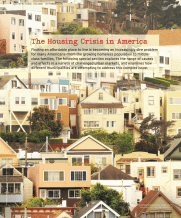
The United States is experiencing a severe housing crisis. Cities with high housing demand are woefully short of supply. Over the past two decades, monthly rents have increased 40% more than wages. Over the past two generations, the ratio of home purchase price to annual median income in Boston has ballooned from 2:1 to 8:1. The housing crisis has reached such proportions that Architectural Record—not a magazine noted for its social conscience—devoted an entire issue to the problem.

AR addresses the issues from predictable perspectives: affordability; income inequity; demand beyond supply; and diminished government assistance. All true, and all arguments that lead to the conclusion—consistent with our economic-growth mindset—that we need more housing. They offer little argument that we need different types of housing or—capitalism forbid—share the housing we already have.

Over the two generations that the home ownership affordability gap quadrupled (1950 vs. 2015 statistics) the average size of a home tripled, from 900 square feet to 2800 square feet, even as the average family size dropped from 3.5 to 2.5. Today, one quarter of Americans live alone. It is true that housing is more expensive than it was for our grandparents. It is also true that we expect much more of it than they had.

Except for the single year (1977-1978) that I served as a VISTA Volunteer, I have shared living space with others. From a social perspective, I cannot understand why people want to live by themselves. But when I weigh the economic burden that a single person or nuclear family carries to operate its own home, our focus on private habitation baffles me.


The old adage, ‘two can live as cheaply as one’ is not literally true, but it’s a pretty good first-degree estimate. Because I have housemates, everything is cheaper for me: food; utilities; Internet. I have less space to furnish; maintenance is shared. Someone else takes out the recycling when I’m gone; I water the garden when my housemate travels.

Sharing a house in middle age is not like living as a student. In addition to our shared living room, dining room, kitchen and den, we each have a private bedroom and a study. Yet allocating 2300 square feet among three people puts my personal space allocation in the 800 square foot range: more like 1950’s than 2015. In addition, my two housemates do not contribute to the ‘demand’ problem in Boston’s tight housing market.

It’s not all as rosy as I render. Living with other people requires accommodation. I never leave a dirty dish in the sink because I expect my housemates would never leave one there. We have to communicate; we have to respect each other; we have to get along. We have to apply those antiquated values that our culture undermines by the illusion that every person can be an island of self-sufficiency. At the most local level, the three of us have to extend the common courtesies that all of us need to convey if we want to society to be civil.

The real reason our nation does not promote shared living is simple: there’s less money in it. Mortgagors, insurers, appliance manufacturers, furniture makers, utilities; they all make three times more money from three people living in three 2300 square foot houses, than three people in one 2300 square foot house. Money is the real reason our culture promotes the supposed joys of independence and dismisses the satisfactions of interdependence.

I favor all the good ideas espoused by Architectural Record and others to address our housing crisis. But my strategy is better, and cheaper, and healthier for our social and mental well-being. Promote sharing. Don’t just build new housing. Build new forms of housing. Ones that provide private space, but also require interaction. Redirect public money to support group living. Use the public purse to explore new ways of living, homes that not only provide refuge for the individual, but also create places for us to come together.

__________

Note: All images in this post courtesy of Architectural Record, October 2018.


Posted in Personal, United States | Tagged , , | 2 Comments

Four Years On

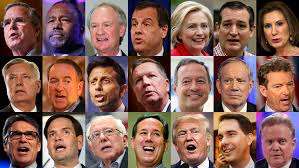
Four years ago this month I sat out the afternoon sun in a Mexican cantina in Postville, Iowa, gorging on $6.95 fajitas and scrolling through the websites of the folks running for President. On Flag Day 2016, I asked each of them my question, ‘How Will We Live Tomorrow?’

None of the candidates responded that day. Or any other day. There was no political upside to the speculation my question required.

The basic gestalt of Postville, Iowa in the summer of 2015 was this: there are too many candidates, none of them are terrific, and besides it doesn’t much matter. In that not-so-long-ago era when the march to globalism seemed inevitable, we thought the economic juggernaut of US-China and our tag-along nations was more important in determining the state of our world than who occupied the White House. Clearly, being President had lost status: we already had a Black President; now we might even get a woman.

While no one paid much attention, the field of candidates got whittled to two; neither of which anyone much liked. One was the ultimate insider with a long public track record to ridicule, who appeared anointed by her party without requisite effort. The other portrayed himself an outsider, kept his track record out of view, and apparently rose from nowhere to command his party.

Although we knew, even then, this guy was not a straight shooter; he was provocatively amusing. And he was a man: a white man. Since we didn’t much think that who was President mattered, we voted for the guy who dominated the media by denouncing it, and we got exactly what he promised. No matter what you think of the last few years, they haven’t been boring.


Four years on we find ourselves in essentially the same boat. There are too many candidates; none of them appear all that good. A few things have changed. This time round it’s the Republicans whose candidate is anointed, while the Democrats shuffle a huge field of potentiates. And anybody whose even half-awake has realized, hey, the President still wields power. The power to skew the Supreme Court to unequal protection; the power to destabilize relations with long standing allies; the power to own the news cycle through endless agitation, accusations, threats, and counter threats supported by imagined truths, half-truths and outright lies.

Four years later, it’s easy to see how 2020 could produce a similar outcome as 2016, with the last-Democrat-standing facing the withering assault of an incumbent capable of anything. Or, we can make it play out differently. Will we, the electorate, pay attention sooner? Will we select at least one candidate for President based on his or her plausible vision for tomorrow? Will we then follow through by electing someone with a message of cooperative hope rather than divisive fear? Time will tell.

__________

Be informed. The first round of Democratic Party debates will be held on Wednesday June 26 and Thursday June 27 on NBC.


Posted in How Will We Live Tomorrow?, United States | Tagged , , , | 2 Comments

A Folk-Art Flag for All of Us  

June 14 is Flag Day; a day to honor the flag of the United States of America. Our nation’s standard includes thirteen alternating red and white horizontal stripes representing the original states, plus a blue field gridded with fifty white stars: one for each current state.

The United States Flag Code, drafted in 1923 by the National Americanism Commission of the American Legion, outlines respectful flag protocol. It became federal law in 1942. The Code specifies how to raise, fly, lower, fold, transport, and even dispose of a flag. It prohibits flying a flag tattered or upside down. It bans flags on clothing, except for patches on military, police, or firefighter uniforms, or worn by members of patriotic organizations. The flag can never be displayed in advertising.

1960’s protestors wore flags, dragged them through mud, and burned them. Among supporters, invoking the flag bolstered their claim of free speech. Detractors were enraged. By the time the Supreme Court upheld flag burning as a form of free speech in 1989, the emotional pulse of the stars and stripes was shifting right. Today, what some considered patriotic expression of free speech has become a symbol of national fealty: our flag is more often displayed on baseball hats and beer coolers than hoisted in protest.

Neither the left nor the right owns our flag. Whether a person wears a flag as protest or in pride, it is still a violation of the Flag Code.

American flag graphics are also integrated into art, echoing claims of free-speech versus nationalism. Jasper Johns’ surreal rendering, Flag, is embedded with scraps of newsprint and fabric. It hangs in the Museum of Modern Art. Wooden flags that display however many stars and stripes fit on a shipping pallet, are mounted on fences and outbuildings all across our nation.

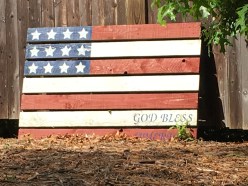
In 2015-2016 I bicycled the 48 contiguous states and encountered dozens of folk-art flags. From rural Mississippi to rural Montana, the message they conveyed to me: ‘I am poor in material resources but proud in spirit.’ Every one of them warmed my heart.

When I returned home, I decided to make a wooden flag for my own yard. Cambridge, Massachusetts: urban, affluent; is markedly different from the economically declining, politically conservative locales where I discovered these constructions. Yet as citizens of the same country living under the same banner, I wanted to create a display that honors our mutual heritage and celebrates our commonalities, while conveying my own community’s vision of America.

I assembled my flag from scrap wood and leftover paint, although I included the full complement of thirteen slats and fifty stars. I arranged the stars in a circle, reminiscent of Betsy Ross. Then, I made a conscious departure from my flag’s inspiration. I painted each star a different color: red, white, black, and yellow at the four compass points, with unique blends of these skin-tone colors for every star in-between.

Our nation’s ideals have always been loftier than our reality. The white men who founded the United States created a more representative government than any of their time, but representation fell short of our total populace then; and it still falls short of our full citizenry today.

I call my assemblage the Constellation Flag: a constellation of stars that reflects the full human spectrum, brought together within one great, imperfect nation. Its iconography is rooted in our national standard; its meaning rooted in what that banner means to each of us. I planted it in my front yard with the hope that it offers a bridge to national division, perhaps might even leverage our historical icon forward. It is a flag that heralds the ideals we have long asserted. Perhaps someday we will make those ideals real.

Posted in United States | Tagged , , , | 3 Comments

Good Catholic Boys: Reject thy Church

“A reminder that Catholics should not support LGBTQ ‘Pride Month’ events held in June. They promote a culture and encourage activities that are contrary to Catholic faith and morals. They are especially harmful to children.”

Thomas Tobin, Bishop of Rhode Island , on Twitter, June 1, 2019

I was a good Catholic boy, obedient and devout. Everyone thought I would become a priest, including me. Brainy and subservient, I would follow in the footsteps of my Franciscan uncles. But then I developed qualities anathema to the Catholic Church: curiosity and independence. So I eschewed the priestly life, and the security that the Church offers men like me became shackles of sin and shame, which I’ve spent the last fifty years unraveling. I can distill my evolution to four distinct moments in time, landmarks of my personal liberation. Doubt steered me away from the priesthood. Arrogance prompted me to leave the Church. Scandal triggered my rejection of the institution. And now Thomas Tobin’s judgmental—and blatantly false—tweet incites my personal rejection into public action. It is time to make this Church: history.

September 1969

A new year of CCD (Confraternity of Christian Doctrine), which is a solemn name for teenage Sunday School. I am fourteen, eager beyond reason. Our teacher, Peter Stravinsky, a Diocesan Seminarian, is only five or six years older than me. He begins our instruction by extolling how a call to religious vocation is superior to all others. I wonder, perhaps, whether a doctor, a dentist, a farmer, even an architect, might make important contributions to the world; that the superior calling for each of us is the one that best suits our skills. I raise my hand and suggest this. I am shut down immediately and not called upon again. Peter’s surety, his superiority, is absolute. It also becomes the seed of my own doubt. I know, right then, that I will never be a priest, though I remain a steady practitioner of the faith.


May 1979

I am getting married! My fiancé is not Catholic. However, she agrees to be married by one of my uncle-priests. Our pre-Cana lessons are condensed into a weekend retreat: workshops, seminars, congregate meals, and communication-building sessions from dawn past midnight. Since Lisa doesn’t plan to convert, we are targeted as a ‘problem couple’. Men in black shadow us the entire weekend.

We survive the cultish proceedings, marriage plan intact. Then meet with my college chaplain to seal the deal. Father Moran explains that, as the true Catholic, I am required to sign a paper stating that I will raise our children in the faith. When I question this policy, the bearded Jesuit says, “No one can ever know how you raise your children. Just sign the paper.”

I always figured I would raise my children Catholic. But in that instant I realize how poorly my Church treats my chosen wife; what little faith their contract places in me, or in us. I am also shocked by my pastor’s moral shrift. I refuse to sign. I stop going to mass. The Catholic Church played me like a numbers game, gambling on bagging Lisa, or at least my unborn children. Instead, the Church lost me.

June 2002

Morning after morning The Boston Globe headline captures my eye. The sexual abuse by priests within the Archdiocese of Boston pollutes the news. People are appalled by the fallen vows and cover-ups, the abuse of young children, the abuse of power itself. I am less surprised. Any babe weaned on Catholicism knows that the Church is not a democracy; it doesn’t pretend to equate all humans. Priests are God’s intermediaries; they are better than the rest of us. The Church will never turn them out for something insignificant as diddling little boys.

I absorb the clerical abuse story, but try not to let it absorb me, until one morning when the headline proclaims a fresh rash of predatory behavior. I stop dead still. I stare at the newsprint. I begin to sweat. Was I abused?

I have no conscious memory of anything untoward during those sacred moments as an altar boy, after mass, in the sacristy, washing Father’s cruets, kneeling before him for his blessing, feeling the whiskey warmth of his breath on my tender shoulders. I am closer to God, through him. Still… If a priest ever touched me, I would have taken it as a special blessing. If a priest asked me to touch him, I would have considered it holy intervention. And if a priest told me this was our private secret, I would have felt our bond more deeply blessed.

I don’t believe I was ever abused. But I know for sure, that I would have interpreted the touch, the pain, as a spiritual experience. I would have accorded it the same sanctity as the confessional; I would have concealed it beyond that hallowed chamber.

That was the moment I stopped simply being a lapsed Catholic. I became anti-Catholic. I stopped calling the religious in my family ‘Father’ and ‘Sister’. I called them ‘Aunt’ and ‘Uncle,’ like all the rest. When they lectured me about my failing marriage, I lashed back, “You know nothing of marriage.” When they called out my sin of being an openly gay man, I replied, “This is how god made me.” When they chided me for sending my children to an urban public school, I shot back, “My children will be exposed to the full rage of life, not the propaganda of the Catholic Church.”

The last mass I ever attended was my mother’s funeral. She remained Catholic ‘til the end, though I eulogized that her most generous gift was to love and support five children, all of whom left the Catholic Church. There’s a quirky logic to my generation abandoning the flock, as the Church abandoned us in kind. When my parents divorced after thirty-two years, my mother’s shame was so great that she spent a considerable sum to have her marriage annulled. At the Vatican, for a price, any lie can be scrubbed true. This good Catholic boy, whom everyone thought would one day become a priest, became a certified bastard.

June 2019

I don’t know why Thomas Tobin’s ugly, hurtful tweet triggered such a strong response in me. The Church has hurled hundreds, thousands, of judgmental directives to bring me to heel. But his is the one that made me understand that it is not enough to doubt, to leave, and to reject the Church. I must oppose it. I must help others oppose it. If the highest official in Rhode Island’s Catholic Church can spew such lies, I have a greater moral responsibility: to shout the truth back at him.

Before I came out I suffered depression and anxiety vomiting. I steered clear of ‘men who made me nervous.’ I knew the evil that nature planted within me; even though it took thirty-eight years to even utter its name. Too often, I weighed the relative weight of complementary sins. Ending my life would free me of homosexuality. Twice, the desire for extinction held sway, and though I am successful in many things, apparently suicide is not one of them.

At my tenth high school reunion, an old friend told me, “Of all the angry young men I know, you are the angriest.”

When I finally came out. I had long ago stopped going to mass. Now I stopped going to therapy, I stopped seeing friends from my previous life, I stopped being married. I also stopped being angry. I had nothing except the responsibility to raise two children, whose immediate needs saved me from drowning in emptiness. Always a latent learner, I started reading about others like me, I went to discussion groups, I sang in the chorus. By the time I finally kissed another man, all the shame had drained out of me. It was as pure and delectable as a kiss should be.

I became more patient, with my children, with my clients, with my fellow humans, even with myself. In fact, I became more patient with everyone. Except priests. My only insight into PTSD occurs when I encounter a Roman Collar. My heart speeds, my temperature rises, anger zooms. He might as well be wearing a Swastika armband or Klan hood; a Roman collar triggers that much wrath in me.

Which brings me back to Thomas Tobin’s tweet, posted twenty-five years after Boston’s clergy abuse scandal, two thousand years after a clever group of manipulators twisted Jesus’ message of human charity into a platform for power and privilege. Tobin’s hateful words make me realize that the Catholic Church will not change. The few who hold the power and the money will not loose their grip. Whatever good the Church may have done in the past is clouded by its inability to clean its own house, and its unwillingness to embrace and celebrate the variety of human conditions. Since the Church will not change, we must destroy it.

After Tobin’s tweet, hundreds of well-intentioned Rhode Islanders proclaimed that he does not speak for the Church, that the church is the community of God, that the Church can be reformed by working for change from within. I have three words for these good folks: You are wrong. Thomas Tobin is the appointed head of the Catholic Church in Rhode Island. When he speaks, he speaks for the Church.

If you sit in a pew at mass, you are affirming Thomas Tobin’s view. If you open your mouth to receive communion, you are abetting a bigoted Church that controls people through shame. And if you–god forbid–put even one dime in that collection basket, you are supporting an institution premised that a select few are better than all the rest of us, a church that will never capitulate that imbalance.

Bringing down the Roman Catholic Church will not be easy, but it isn’t all that hard either. The largest spiritual institution in the world has no army; it controls only a tiny parcel of land. The church will fall apart when we simply stop participating. Catholicism’s Catch-22 is that, although not a democracy, it is more dependent on direct participation than any nation state. The church cannot force you to attend; it cannot tax your tithe; you can leave without becoming a refugee.

The Church will not fall quickly; it’s richer than Midas and can sputter on for decades without further contributions. But if we stop listening to Thomas Tobin’s bilious lies, we make him impotent. If we scratch Pope Francis’ inspirational words to reveal he hasn’t instigated any real change, we expose him for what he really is: a clever spin master.

The more difficult aspect of bringing down the Church is: what will we have in its stead? We need faith. We need community. We need each other. How will we come together to create that, without the Church’s guiding hand? Without its mystery and satisfaction? Being churchless is lonely; I know this firsthand. But the true cross we have to bear is not trying to reform a church that will not change: it is to create a church that nourishes our spirit through love rather than edict.

The Awkward Pose’s byline is ‘Seeking balance in a world of opposing tension.’ I strive to acknowledge, even understand, all perspectives. But each of us has triggers that propel beyond moderation, and I do not maintain a balanced perspective on the Catholic Church, especially with regards to how it treats gays. The Catholic Church did more damage to me than any single person or influence in my life. Being an out gay man is the singular most positive step I ever took. I could not be my highest and best self until I threw aside the shackles of shame the Church piled on me. I am not interested in appeasing the Catholic Church. I want it gone. I want every Catholic to throw off whatever chains the Church uses to imprison them, and experience the wonder of a world liberated from this heinous institution.

________

The images in this post are from Sacred Heart Church, once a large parish in my neighborhood. It has closed its school and holds only two Sunday masses.



Posted in Personal | Tagged , , , , , , | 2 Comments