A Chink in the Wall of Deny, Deny, Deny

Democracy creates strange bedfellows. This morning our precarious system of justice got a one-week reprieve thanks to Dr. Christine Blasey Ford, a soft-spoken, earnest professional woman; two strident protestors who blocked a US Senator in an elevator; and a lame duck Mormon with five children and a shred of conscience. Their actions motivated a one-week delay in the once-speeding Brett Kavanagh Supreme Court approval train.

As the #METOO movement has unfolded, one pattern has held true: men who apologize are pilloried (bye-bye: Al Franken); men who deny remain in power (still here: Donald Trump). But this morning despite Kavanaugh’s testimony, loud and angry as any white man who, methinks protesteth too much, we have hit the pause button. We’re going to try to dig a bit deeper than the usual he-said, she-said.

Life was so much simpler when our nation began. White men got to vote. White women didn’t. At least they got counted as 100% human. Slaves were a mere 3/5 of a person. The world’s self-proclaimed ‘most noble’ government has always been rigged, but at least back then the calculus was clear.

Now—in theory—women vote, slaves are free, and #BlackLivesMatter, but more than two centuries into our democratic experiment, white men still yield outsize influence. So much, in fact, that as long as they repeat a mantra of deny, deny, deny they hold on to power, regardless how many allegations pile up against them.

Perhaps, the FBI probe will demonstrate nothing. Kavanaugh will be appointed to the Supreme Court, and all that Dr. Blasey Ford and the elevator doorstops and a recalcitrant Mormon will have achieved is a short delay. That result would not alter the direction of the highest court in our land; merely tarnish its conceit to represent all. Still, delaying the ‘business as usual’ of the white guy juggernaut is a victory in and of itself, and the week delay will leech through other veins of our septic politics: to elections, protests, and greater civic engagement by people who have been shunted aside.

Possibly, and more likely every day, Kavanaugh will step down; or our President, quick to turn on anyone he considers a loser, will withdraw the nomination. In that event, the chink in the wall of deny, deny, deny, will be big enough to undermine the foundation of the white guys in charge.

I am a white guy. I have reservations about how we apply 2018 standards to 1980’s adolescent behavior. I dislike the politicizing of our Supreme Court, though from Robert Bork to FDR both parties have dirty hands. I disdain the haphazard, accelerated process Mitch McConnell has pursed to appoint Brett Kavanaugh, especially in light of his obstruction to Merrick Garland.


Still, these reservations evaporate in the face of Dr. Blasey Ford’s testimony versus Judge Kavanaugh’s. Two perfect exemplars of the fundamental conflict in our nation. Regardless of your politics, in our hearts, we all know who spoke with the highest authority. A calm and responsible woman with nothing to gain called to question an angry white man with everything to lose. Amen to that.
Posted in Uncategorized | 6 Comments

Let’s Put on a Show!

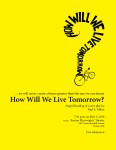
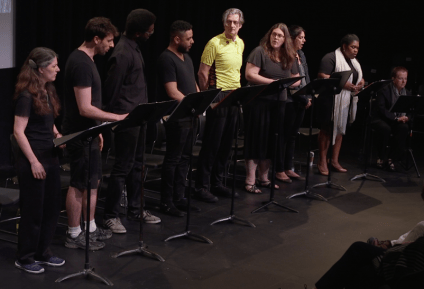
Three years after I began my bicycle odyssey throughout America, the voices of the folks I met took center stage at the Boston Playwrights’ Theatre at the first public staged reading of my new play, How Will We Live Tomorrow? The stories, the songs, the voices made for an enjoyable, and thought provoking evening—as well as another round of revision and polish.

How Will We Live Tomorrow? is now available for workshops, readings, or full performances across the country. Watch this three- minute You Tube trailer of our recent reading. Pass it on to anyone you know in theater. Let’s put on a show!

How Will We Live Tomorrow? Trailer


Posted in How Will We Live Tomorrow? | Tagged , , , | Leave a comment

Different Flow for Different Ages

I love disco. 125 beats per minute, seamlessly melding from one song to the next. The DJ stirring the crowd into a frenzy, soothing us down to take a break and sip our 7&7, then whipping us right back up again. Dance floor nights in the go-go 70’s are among my favorite memories. Memories rekindled at Napoleon Club’s Josephine Room in the 90’s, and The Donkey Show throughout the twenty-teens, the only place left for a middle-aged man to spin and twirl and still be home by ten.

By my mid-century mark, as my dancing waned and my running gave out completely, yoga became my preferred form of movement. Hot, Hatha, Iyengar, Vinyasa, all good. Yoga revitalized my creaky body and, in time, my restive mind. It even triggered this blog, named for one of my favorite poses.

I still practice yoga, several times a week, but rarely write about it anymore. Not because I’ve figured it all out. Rather, because the niche it serves in my life doesn’t trigger the tensions inherent in the awkward pose. Until it does.

I eschew all things fancy, including boutique yoga. I take classes at my gym, the same place I lift weights and swim. ‘Gym yoga’ is different from studio yoga: more exercise-y, less meditative. None of which matters to me. I lay my mat out in a corner and follow the sequence the teacher announces, more or less. Since I breathe slow and deliberately; I am never in sync with others. Sometimes I achieve meditation; sometimes I just move my body. I’m not slavish to the instructor’s prompts, yet I like going to class; I almost never do yoga at home.


By and large teachers of ‘gym yoga’ talk too much. They give too many directions, offer confusing options, and use too many metaphors, as if afraid of the silent sound of simple breathing. Many unspool creative sequences; some possess deep yoga understanding, but they all err on running active classes.

‘Randy’ is a profound practitioner, with inventive poses that build in logical sequence to a clear theme. Yet her class almost never induces the hyperconsciousness that defines meditation. Randy talks at length about matching breath to movement. But she doesn’t actually teach it. She says the words, ‘inhale’ and ‘exhale’ without the timing that actually corresponds to mindful breath. She’s easily distracted by a given student, and then altogether abandons the flow of the class.

I have figured this out, and I work around it. I fill in her gaps by moving in my own methodical way. But sequencing myself requires conscious effort. And conscious effort blunts flow. And flow is what elevates yoga over mere exercise.

Sometimes we learn things by their absence. Since I rarely plateau in Randy’s class, I have been thinking about the elusive nature of flow; how similar conditions induce flow in some but not others, or induce flow sometimes but not other times. Releasing our minds is difficult. We have to be in a secure place. We have to transcend external stimuli. We have to be able to access the noise inside our heads, in order to sort it through. Yoga rooms are ripe for mediation. So are private sanctuaries. So is bicycling across the plains.


Then I realized: discos are also great places for meditation. True, they’re noisy, but the noise is a predictable, steady beat. The insistent pound penetrates our heads and puts us in touch with our internal thoughts. Eventually, the noise drives thoughts away. Discos induce flow, for sure. The euphoria I achieved by ‘Night Fever’ is the youthful equivalent of the centeredness I now find in satisfying yoga classes. One is not better than the other; only better suited to different times of our lives.

Posted in Yoga | Tagged , , , | 2 Comments

Why are We Here?

Today, I ask my readers a question. “Why are we here?” As a guy who takes Plato’s advice that ‘an unexamined life is not worth living’ to an extreme that only privileged folk with time on their hands can unspool, I think about this often. Probably too much. Yet, in truth, I have no answer.


I think there is something bigger than us, call it god if you like. But I don’t think it demands our adoration and certainly don’t think it has the human characteristics most religions ascribe to their creators. Gods who resemble us are nothing more than a narcissistic failure of imagination.

Why are we here? inevitably leads to circular reasoning. We are here to procreate. Check. We are here to care for each other. Check. We are here to care for the other creatures of the earth. Check. All great notions to keep us purposefully busy; to weave a net of connection. They help us direct the process of living, but don’t explain the foundational reason for us to exist in the first place.

Was Sally Bowles right: are we just here to have a good time? Did Schweitzer nail it with selfless service? Do monks, men of moderate emotion, have insider knowledge? If so, then why do I feel so much all the time? Good, bad, hot, cold, hungry, full, anxious, content, I get so tired of feeling, always feeling.

Science is exquisite at enumerating ‘what’ and describing ‘how.’ That’s why I believe in science. That’s also why I believe science is insufficient. ‘What’ and ‘how’ can explain but they cannot illuminate. We are creatures driven by ‘why.’ And as far as I can tell, our ‘why’ remains elusive.


If you know why we are here, please fill me in.

Posted in Personal | Tagged , , | 6 Comments

Oligarchy 101

How often do we read an article or website and fly through words without really knowing their meaning? Very often. It’s a lot of work to know the exact definition of every word and assess how accurately it’s used in a particular setting. But every now and then, a word pops out at me and I realize—hey—I don’t really know what this means. So, I take the time to ferret it out.

Oligarchy. It’s a Russian thing, no? So it must be bad. Google defines ‘oligarchy’ as, “a small group of people having control of a country or institution.” The Silicon Valley elite includes no implied judgment in its phrasing. Merriam Webster, however, raises alarm: “a government in which a small group exercises control, especially for corrupt and selfish purposes.” Doesn’t that describe Russia to a T!

Searching for one definition inevitably leads to others. Call it the oligarchy variations. Aristocracy (government by noble heredity) is out of favor in a world swirling in egalitarian-speak. Kleptocracy (those in power exploit and steal) is always bad. Plutocracy (government by the wealthy) stings our populist sensibilities. Technocracy (government of technical experts) is appealing in this mechanized age, until one considers Travis Kalanick and Mark Zuckerberg’s recent incompetence. Perhaps a meritocracy (government based on ability) is the way to go, though who establishes merits’ measure? Self-appointed experts, to be sure.

We can ascribe a different slant to these descriptors, but any variation of government by the few leaves a bitter, elitist aftertaste. Unfortunately, words that describe single rule are even more repugnant: absolute monarch, autocrat, dictator, despot, tyrant.

Our spin-savvy age is tuned to terms with a distinct democratic-leaning, especially when applied to ourselves. A republic is a state in which the people and their elected representatives hold supreme power. That would be us, except perhaps for the corporate perks ensured by Citizens United. A democracy is a system of government by the whole population. Surely that’s us, except maybe for discriminatory voting restrictions.

Then there are the various ‘isms. Capitalism is about private ownership; socialism is about shared ownership; communism is about central ownership. What about fascism? Extolling the virtue of the nation-state over the individual, often along racial grounds, has no place in these United States. Except maybe at a rally in Charlottesville.

Examples that reflect every one of these terms for organizing society exist right here in the US of A, often to misleading ends. Undocumented workers, with few protections, are the collateral damage of pure capitalism. North Dakota electric cooperatives are a beloved form of pure socialism in a deep red state. There’s a vast difference between a dictionary definitions and how words are applied in practice.

I could fly to Russia to encounter oligarchy in practice. Or, I can simply take Amtrak to D.C. to witness “a government in which a small group exercises control, especially for corrupt and selfish purposes.”


Posted in United States | Tagged , , , , , , | 2 Comments

Hanging Pictures, Hanging Out

When was the last time you went to a barn raising? How about a threshing party? Or even a quilting circle? Coming together for shared work is an idyllic vision of our agrarian past, as alien to contemporary life as a horse drawn plow.

Despite being a total city boy, I can draw examples from my past where people came together for both society and purpose. Growing up, my mother went to a neighbor’s house once a week to ‘pattern’ a young girl. Karen was born with a muscular / neurological disorder treated by a quartet of housewife’s literally moving her arms and legs in sync until, eventfully, Karen learned to walk. After purchasing our first house in Oklahoma City, this fledging architect teamed up with his high school buddy David; we alternated weekends between his 60’s ranch and our 30’s bungalow until we transformed both places.

These days, Karen’s patterning would be coordinated by professional physical therapists, and I hire contractors for my home improvements.

Over the last two centuries, as we moved from farm to city, became more affluent, more specialized, and more litigious, our work lives became segregated from our social lives. After hours, we seek diversion and relaxation rather than shared efforts. Friends are people we hang out with, not people we depend upon in any meaningful way.

I’m pretty good at a lot of things, but I’m lousy at hanging out. I just don’t get it. My body always wants to move, my mind always wants to explore. I’m social enough; I enjoy other people in modest doses. But I prefer focused interactions: a bridge foursome; a thought provoking play; a book discussion. I’m always on the lookout for opportunities to hang out, with purpose.


Whenever I hear anyone is moving, I always volunteer. Packing boxes, loading furniture, unloading it, unpacking stuff: mindless, physical work best done by a small group. I claim that moving others demonstrates gratitude for the personal blessing of a quarter century at the same address. But in truth, I’d rather do useful stuff with people than sit next to them in a dark movie theater.

Unfortunately, as my friends have gotten older—and richer—they hire movers. This has prompted me to augment my offerings. These days I suggest helping friends hang pictures in their new place. Given my design skills and engineering accuracy, I’m pretty good at it.

Among my cohort, moving means downsizing. This translates to years of accumulated art on fewer walls. In response, I’ve developed a signature approach to hanging pictures. Instead of centering a print or a painting on a wall, we aggregate related pieces into collage.

I’ve hung art in apartments all over Boston. Last week I expanded my territory; I hung pictures with a friend who just moved to Manhattan. This was, perhaps, my first trip ever to The Big Apple without seeing to a show or frequenting a club. Still, Dan and I enjoyed arranging, measuring, marking, and hanging. We chatted as we worked. He treated me to a sumptuous meal, more than adequate payment. When we were finished, we shared the satisfaction of making his apartment his home.


Hanging pictures may not be as elemental as building a barn or bringing in the harvest. But it provides deeper satisfaction than just hanging out.

Posted in Uncategorized | Leave a comment

The Primacy of Horizontal Space

How far will you walk over rather than down? How much farther will you walk over rather climb up?


As an architect who designed large, multi-story buildings, I learned early on to locate physical spaces that have important connections next to each other rather than above or below. Why: because people prefer to walk horizontally rather than take stairs or even elevators. This preference for horizontal travel is irrational. Most everyone will opt for 100, 200, even 500 feet horizontally over 15 feet vertically. I accepted this quirk of human nature, and laid out spaces accordingly. But recently came to appreciate it in a deeper way.


I have a cursory curiosity about most everything with an engineering temperament to match. Math and science are tools I use to affect the world, hopefully in a positive way. But I am more adept at connection and breadth than rigorous depth. My friend Bob, on the other hand, is pure scientist, a geologist by training, curious about the natural world without pesky regard for how we might manipulate it. Recently, Bob stayed with us. During back-to-back dinner conversations, unrelated to architectural design, he gave me unexpected perspective on why we humans have such a strong preference for horizontal space.

On a pleasant Saturday, Bob and I rode our bikes out the Minuteman Trail to Concord’s Old North Bridge. Which, having been replaced five times since ‘The Shot Heard ‘Round the World, is actually not very old, but I digress. The sixteen-mile ride is a lovely trek on a spring day. The trail, on an old railroad grade, has scant vertical rise, though on a bicycle you notice even one percent grade.


That evening, Bob was in geologist mode. He talked at length about the earth’s crust, and the Magma that we more of less float upon. The distance from the Mariana Trench to Mount Everest, the deepest and tallest extents of our crust, are a mere 12.3 vertical miles. We estimate the crust itself is up to thirty miles thick below continents, as little as three miles thick under the oceans, which means an average thickness of about sixteen miles, or the distance from Cambridge to Old North Bridge. Yet we have not actually gotten to the bottom of the earths crust; the deepest hole ever dug, the Kola Superdeep Borehole in Russia, goes only 7.5 miles below the surface.

The next day was rainy; Bob spent most of his time reading Jeffrey Kluger’s Apollo 8: The Thrilling Story of the First Mission to the Moon. Therefore, most of our dinner talk centered around space. Sixteen miles above the earth? That’s about twice the distance beyond the limits of our atmosphere.


Taken together, I realized what a thin slice of space we humans occupy. We occupy a 25,000 mile circumferential sphere that we can wander upon with relative ease. But we really don’t know much about eight miles below us, and we are dead eight miles up. Suddenly our predilection for moving horizontally does not seem irrational; it seems downright instinctual.

Posted in Uncategorized | Tagged , , , , | Leave a comment

Update from Mildred, Fresh Pond Owl

Location. Location. Location. The real estate attribute so dear to humans applies to us owls as well. Less than a month ago I hooted the advantages, and annoyances, of nesting at Fresh Pond. Now I find myself indebted to that ultra touchy/feely species of urban animal lover: the Cantabridgian.

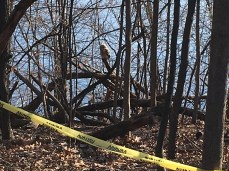
Jake, my mate, is a terrific guy. His majestic wingspan still quickens my birdy pulse. Yet, every creature has his shortcomings. Turns out Jake’s nest building skills are a bit shaky. Though I raved about our tree fork location and his expedient construction, a series of late winter storms and persistent high winds took a toll on our home. When Hector, our owling, leaned against the edge of the nest in concert with a strong wind, the structure weakened. Out fell our offspring.

I watched Hector descend. Owls do not fall fast; we are mostly feather. Motherly instinct impelled me to fly after him. He bumped off a few branches. But prudence intervened. In disaster, time stretches to the limits of endurance. He landed in a pile of storm soaked leaves. I could not save him mid-air. Owls fall softer than humans. And he would need me, even more, on the ground.

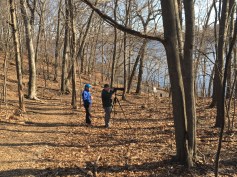
The man with the tripod and telescopic camera recorded it all. I was annoyed at him for digitizing my owling’s trauma, until I realized these owl-crazy locals would be essential to Hector’s salvation.


Indeed they are. Hector has been on the ground for a week now; it will be several more weeks until he’s capable of flying. Even then, the usual strategies of coaxing him onto a branch and enticing his first leap from a distance will be useless. Unlike other owlings, Hector has learned to walk. He’s covered several hundred feet, heading west, as if he wants to go to kindergarten in Belmont.

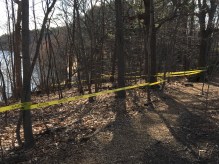
Jake and I do what we can: bring him food; hoot off dogs and coyotes. We are stretched beyond our normal capacity, staying close to the ground, flying in bold daylight, coming closer to humans than we ever dared before. But Hector’s survival depends just as much on them. Every dawn the bird lovers arrive with yards of yellow caution tape. They mark a new zone around Hector. The city has posted signs for folks to leash their dogs. People we once considered curious distractions are now our protectors. The more humans congregate around Hector, the more attention they bring to his condition, the less likely a single unleashed canine will bring his doom.

So many things can go wrong. Even if Hector survives on the ground, we have no idea how he’ll learn to fly. But no matter what happens, Jake and I are grateful for everything the humans have done. In tragedy, we need all the friends we can get.


Posted in Uncategorized | Leave a comment

Individual Responsibility / Societal Responsibility

There’s a passing quote in Rachel Aviv’s recent article “The Edge of Identity” (The New Yorker April 2, 2018) that stopped me short.

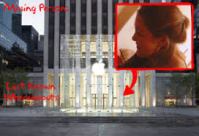
In 2008, Hannah Upp, a vivacious, engaging woman, experienced a dissociative fugue. Fugue is the medical/psychological term for an extended, complete identity lapse. Hannah ‘disappeared’ in New York City. She triggered newspaper headlines and a widespread search, her image popped up on several retail video cameras around the city, and she was finally ‘discovered,’ twenty days later, floating in New York Harbor.

Four years later, in Kensington, Maryland, Hannah ‘disappeared’ again. Another search. This time she was found in a creek.

After Hannah’s second fugue, some wondered if perhaps Hannah might benefit from wearing a chip implant; the Maryland police suggested an ankle bracelet similar to the ones designed for people under house arrest. Hannah did not want anything like that and her mother, Barbara, honored her decision. “She’s living it, and she needed to have the freedom to make choices.”


That’s the quote that gave me pause. Really? A young woman who has endured two disappearances, suffered personal danger, and caused all sorts of heartache among family, friends, and emergency personnel, can decide against identifying technology that could assist in another fugue simply because she needs the freedom to make choices? If Hannah can choose not to take precautions against another fugue, do we—society—have a responsibility to intervene and require her to do so? If she refuses reasonable safeguards against a foreseeable disaster, are we responsible to sound the alarm and search for Hannah the next time she goes astray?

Which, of course, she does.

Hannah’s third fugue occurs on St. Thomas, just after Hurricane Irma hit in 2017. Her third search includes three Coast Guard helicopters, several boats, and extensive human resources, conducted amidst the chaos of disaster relief. Her official search gets called off only as Hurricane Maria approaches. But her mother Barbara moves to Saint Thomas indefinitely and continues to look for a daughter who has never been found.

Where do we draw the line between people who blamelessly deserve societal support, and those who contribute to their own downfall?

Surely we should provide support for children with Type I diabetes. How about adults with Type II diabetes exacerbated by poor diet?

We should rescue scientific expeditions on Mount Everest that encounter extreme conditions, but should we rescue clueless day hikers who wander beyond their abilities?

How about my friend Bob, who endured a brain tumor that left his balance precarious? He’s fallen several times in his apartment, even blacked out, yet he refuses to wear an emergency call button. When he inevitably falls again, are we compelled to expend unlimited resources to his resuscitation, or are we allowed to hold back, since he shuns reasonable precautions?


We humans are expert at destructive habits. What is our responsibility to treat addicts who relapse after multiple rehabs? Heavy smokers? Chronic gamblers? The dividing line is rarely clear. Most misery istriggered by a combination of personal action and cultural conditions. Folks with Type II diabetes are not 100% responsible for their condition; they may be unaware of better dietary choices, and healthier food is both more expensive and more difficult to access.

Americans hold individual freedom paramount. We may restrict individuals for the stated objective of protecting others (we require parolees wear an identity bracelet), yet we don’t demand that individuals protect themselves (Hannah was not required to wear one). We establish certain obligations that serve everyone’s health and safety (drivers license and insurance to drive a car), yet are lax on others (user ID on hand guns). Our fixation on so-called individual rights over societal responsibility is so strident as to become self-centered, borderline narcissistic.

Hannah’s story is tragic; her condition arbitrary as it is bizarre. The article focuses on her deep empathy and caring. Yet it doesn’t even mention the obvious flip side. By refusing to do whatever she could to minimize the impact of her fugues, Hannah brought all manner of distress on others. We will never know, if Hannah had agreed to technical monitoring, whether it would have helped us find her when she went wandering on St. Thomas. We only know that her third fugue was predictable, that she did nothing to mitigate it, and that society condoned her decision.


Posted in Uncategorized | Leave a comment

The Curious Case of the Benefits Bestowed by Failed Technology

The chasm between technology’s glittering promise to liberate humans from drudgery and the more commonplace reality of technology rendering us incompetent in our objectives through opaque algorithms or mis-struck keystrokes, is simply too commonplace to deem blog-worthy. We all feel humbled, inconvenienced, misunderstood, and annoyed by technology every day. Some days, we feel it all day. So imagine my surprise—joy is not too great a sentiment—when a recent experience in failed technology blossomed into personal good fortune.

I belong to that long gone epoch of humanity who find satisfaction and security in paper. I print out theater tickets, bicycle maps, and airline boarding passes. I understand, in theory, that these scraps are redundant. My phone preserves all necessary e-documents, and despite my care in recycling, the paper consumed drains our natural resources. Yet I remain attached to the superfluous ‘stuff’ of printed forms.

Recently, upon a visit to Atlanta, I mentioned to my beloved daughter that I was compelled to check in for my return flight and obtain an e-ticket, since my AirBNB did not contain a hard copy printer. Being young, and lacking my affinity to parchment, she laughed that I ever printed such things. Twenty-three hours before flight, I checked in online and followed all prescribed steps until a bright red box proclaimed, ‘Check-in Complete’. Then I let my phone go to sleep.

In the meandering queue at TSA ATL, I awoke my phone to retrieve my electronic boarding pass. Alas: several emails, myriad instructions, yet no actual boarding pass. I shared said phone screen with the TSA officer who, nice as could be, directed me to the Delta ticket counter for the express purpose of obtaining a paper boarding pass. A second gracious agent guided me out of the security area. Most everyone knows that Hartsfield-Jackson Airport is the busiest airport in the world; many fewer acknowledge it to also be the friendliest.

Cinisia, a Delta agent with a big smile, even bigger hair and bewilderment that matched my own, was incredulous that my e-boarding pass shot deep into cyberspace without successfully landing in my phone. She printed me a reliable paper copy, trustworthy as currency, beyond its weight’s worth in gold. Then she added, “The flights to Boston are all delayed; severe weather up that way. I’m going to register you on standby for an earlier flight that’s been delayed.” She handed me my pass and added, “Proceed with all haste to Gate A6 by four o’clock. I am resolute that will welcome you aboard.” Her exact words perhaps mirrored a more contemporary jive, but her meaning was clear.

I relished the joy of a second return trip through the TSA Security maze—not. Yet my snail’s crawl was peppered with an enjoyable encounter with another lovely officer, this one monitoring the bins. “Have you got any food in your backpack?” “Just a Power Bar.” “Only one? We’ll let that slide.” “You can have it if you’re hungry.” “No thanks, I’ve got a salad waiting for me.” “You eat better than I do.” Officer Jacinta smiled and waved me through. I arrived at Gate A6 even as my deadline loomed. The efficient Delta team directed me to one of the few remaining seats on the delayed flight, held in my name. All hail Cinisia! She reserved for me a window seat of my own.

Our amply crowded plane grumbled away from the gate and loitered on the ground while the captain explained the intricacies of Air Traffic Control flight allotments. We sat; buckled into our metal tube baking on the sunny tarmac, warm as fresh bread, stinky as aged Stilton. Shared distress bonds the common folk in economy class. Each shared his personal tale of woe and delay. Except me, who had suffered no delay he could heartily relay. All found comfort in cursing circumstance beyond control. Except me, who was running ahead of schedule and is too well-bred to gloat.

We took off in a mighty tail wind. I nestled into Henry Fielding’s Tom Jones, an author of infectious language. Boston came fast upon us, before poor Tom, hindered by the eighteenth century limitations of muddy roads and wobbly carriages, had reached even halfway to Brighton. Our weary band of travellers descended through sunbeams slanting against candy cotton clouds. Light refracted in fantastic colors until it gave way to a sordid, solid grey mass beneath. High winds, scattered showers, nature’s cruelty spit upon New England’s drab spring. What horrific sins these Puritans must have committed to deserve such fury. The pilot guides our fuselage out of aerial danger. The assembled applauded the captain’s tricky landing; relieved all, to finally arrive.

Instantly, everyone fingered their phones, texted their loved ones. They were all running late, but at least they were safe. Expectations and plans got jimmied accordingly. I sat alone in my contentment, having arrived at my destination an hour early; thanks to the necessity of a boarding pass printed upon paper.

Posted in Uncategorized | Leave a comment