Recuperation

How quickly one routine evaporates and another congeals. Out on the road I thrive on ride/talk/write. The balance between physical exertion and mental analysis, sociability and isolation is near perfect. Then – bang – bike meets Porsche. Within two weeks I’m home, anxious about how I will navigate the weeks or months (no one ventures an estimate) until I reach a functional plateau.

imgres

Inactivity is Paul Fallon’s nemesis. The resolution to everything – anxiety, healing, fitness – hinges on embracing a new routine. Within days I find a rhythm; not as satisfying as cycling cross country, but not so bad either.

Fortunately I have nothing to do but be an exemplary patient. The doctors tell me to walk, so I do. Five miles a day, sometimes more. I put out a call to friends to join me around Fresh Pond morning and afternoon; I have company most days. After a walk, I’m exhausted.

Standing and walking are the most comfortable positions for my corseted back, but I get fatigued and need to sit, vertical and cushioned. The kitchen bar stools pinch my hips, my desk chair is excruciating, the sofa is out of the question. I take a pillow, march through the house, and test every cimageshair. I only own a few sticks of furniture, but my housemate Paul is an antique lover. Wingback, club, slipper, I test each of his valuable specimens for comfort. His quartet of gold brocade Bergere armchairs provides the perfect blend of cushion and support. We set one at the table where I eat, another at my computer, a third in front of the TV. I spend my day moving between them like a member of Louis’ XVI’s court. C’est magnifique!


images-1


After dark I climb the stairs, swallow two Advil, slip off my brace, lay board flat on my back and fall asleep. Ten hours, maybe twelve.

Progress is not linear. Some mornings my elbow buckles trying to sit up to brace position. Sometimes my head woozes when I stand, despite planting my good hand on the armrest, taking a conscious inhale, and exhaling to rise. I can’t discern daily improvement, but after a week my walks are longer and dizziness abates.

images-2

I give my HMO high marks for timing. Whenever one aspect of my recuperation gets under control, they up the ante. Three weeks after hospital release, the PA removes the pins in my hand and sends me directly to occupational therapy. Kerry, a motorcycle chick from Arkansas, demonstrates a series of exercises to get my finger joints, grip, and wrist in motion. She shapes a splint to my swollen, deformed hand. I am to repeat the exercises four times a day. Being the good student that I am, my soul stirs with purpose at the prospect of three hours a day of hand therapy.

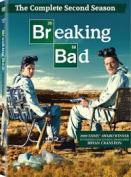
On my walk home – I walk everywhere these days – I stop by the library and check out season compendiums of all the miniseries I’ve heard about and never seen. Breaking Bad, Boardwalk Empire, House of Cards, Network, Downtown Abbey, The Wire. Each 45-minute episode aligns perfectly with the time I need to manipulate my hand. I watch violence layered upon violence while untangling the damage inflicted on my own body.


imgres-1 imgres-2images-4images-3

I know I’m getting better when envy creeps into my countenance: cyclists banking the curve along my street. I’m weeks or months away from getting on one of those. Although I suffer no pain in stillness, an uneven sidewalk crack can jolt my spine, a sudden turn can pop my shoulder, the road rashed skin on my left hand is still too tender to touch, and my pinkie joint moves like a barnacle encrusted rudder. I don’t have nightmares about my impact with the Alabama pavement, but I wince at every car crash the miniseries dish up. When and if I can return to my bicycle, will I even want to?


Posted in Bicycling, How Will We Live Tomorrow? | Tagged , , , , , , , , , | 2 Comments

Eight Random Observations of Eight Days in a Hospital

I spent eight days at Sacred Heart Hospital in Pensacola, Florida after a Porsche took out my bicycle along a bucolic byway in Alabama. I received uniformly cheerful, prompt, and competent care, which is not necessarily the same as efficient or effective care.

imgres-1

During my 30-plus year architectural career I designed healthcare facilities. In order to understand the patient experience I observed operations, spent overnights in emergency departments, simulated patients navigating wheelchairs around bathrooms. But none of that prepared me for the actual experience of being an inpatient.

American healthcare is not a coherent system, more like a collection of protocols inequitably applied. There are ample studies and reports that articulate how it’s too expensive, too skewed to disease over wellness, too poorly coordinated, and too concerned with profit. If you want a big picture analysis, go read them. Here, I simply offer eight anecdotes from my eight inpatient days.

  1. One at a time clinical care. Over fifty different people; physicians, nurses, nutritionists, therapists, saw me during my stay. Only once did two clinicians visit me at the same time. I became very good at spinning my medical tale, as I never got the impression any of them read each other’s notes.

images

  1. Pain is bad. Patients are not supposed to feel anything. Pain medications are offered early and often. A nurse prepared a morphine shot within an hour of my accident. I stopped her. Due to shock, it took over two hours for me to feel the pain in my shoulder. If I’d been on morphine, would I have felt the pain that directed our attention to that area? All staff delivers the same message: take pain meds in advance of feeling pain because “once the pain starts it’s hard to catch up with it.” Really? Or is it just easier to deal with patients who are numb. I want to feel my pain, so I know where I’m hurt.

imgres

  1. Watch, don’t read. I had 72 channels at my fingertips but no books or magazines. By day five I was able to walk about. No mags even in the gift shop, only The Bible. Ever mindful of the seventh commandment, I ‘borrowed’ magazines from the surgical waiting room and returned them before I left.
  1. There is a pill for everything. I broke my L2 vertebrae, a shock that shut down my digestive track. Three days after admission I received general anesthesia for hand surgery, so my intestines stayed clogged. Nurses gave me three successively more aggressive drugs to loosen my bowels. On day five, I asked the dietician for prunes or bran. Not available. I guess you can’t itemize a bill for prunes or bran.

images-1

  1. Wrapped in plastic. Every pill is administered in a plastic cup, every utensil comes in plastic wrapping. Every bit of plastic is single-use and tossed. There was no recycling bin in my room.
  1. What are you here for? On my third day, the social worker stopped by. She was a circuitous talker. After 10 minutes I asked, “What are you here for?” My question rattled her. She muttered something about a Case Manager to oversee my discharge, then retreated. Odd, since I was scheduled for surgery the next day and not about to be discharged anytime soon.

images-7


  1. Medications are added, never reduced. The clinicians were concerned about me developing blood clots in my legs; an unlikely condition for someone who’d been peddling fifty miles a day. They put on compression stockings, which felt great, and gave me anti-clotting medication. Even after I was walking a mile a day, more steps than the average American, anti-clotting medication was still prescribed. Until I refused it.
  1. Discharge is a black hole. One by one, clinical services signed off on me. I stopped seeing the neurosurgeon, the orthopedist, the physical therapist. But I didn’t get transferred to rehab, either. The weekend came and went. I stayed. By Monday I was walking all over campus; I didn’t need to be in the hospital any longer. I waited for the promised Case Manager. Instead, a flippant intern arrived late afternoon and announced I was discharged to my own reconnaissance. She was flummoxed when I expressed concern. “People are happy to be discharged.” Not when they still need assistance getting in their brace and it’s too late to catch a flight home 1,000 miles away. I had to stay another night. Just because.
Posted in How Will We Live Tomorrow? | Tagged , , , , | 4 Comments

Leap Year Leap

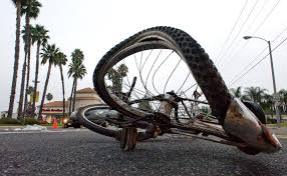
imgresOn February 29 I turned off Alabama Highway 98 to visit the historic town of Fairhope. An elderly Porsche driver took a sudden left turn across my path. I tried to veer away. Surly’s front tire hit the vehicle’s passenger side door. I flew off to the left; my left hand and shoulder landed on the pavement and I winced into fetal position on my right side. Immediately, onlookers surrounded me, cautioned me not to move, called 911, and kept the intersection clear. An off duty medic at the scene checked my vitals. The driver stopped and stood to the side. Our eyes met though we exchanged no words. EMS arrived, police. I was the centerpiece of a small town event.

images-3

I argued with the medic against cutting the gloves off my bloody hand. He insisted. All I could think was they were new since Tucson and would be difficult to replace in a small town. Accident victims focus on the minutia in order to avoid larger realities.

Within half an hour I was at St. Thomas Hospital emergency. I refused the tech’s attempt to give me morphine. “How am I going to feel where I hurt if you shoot me up?” Dr. Sharp ordered a battery of images and tests. A no nonsense nurse debrided my hand with ruthless precision. Everyone parading in and out of the room asked me to move my toes, fearful of paralysis. Except the police officer, who wanted my side of the story.

images-4

The driver didn’t see me. Two witnesses confirmed the man turned too quick. The police report faulted him, though the gentleman didn’t receive a citation. Infractions against cyclists don’t carry the same weight as those against vehicles. Odd, considering the brunt cyclists bear in altercations.

I asked about Surly, who landed outside my field of vision. The officer explained that my bike reared over the car, damaged the side panel and broke the windshield. I’m not so noble that the news didn’t provide a swell of satisfaction. Apparently, my traveling companion broke into several pieces and the police disposed of her. I’ve never been so attached to anything that wasn’t human. I love that bike. We were a good pair; she proved a trusty steed to the end.

I am also broken into several pieces. I suffered a burst fracture in my L2 vertebrate, the fifth metacarpal on my left hand sheared in two, my left scapula cracked like a china plate in too hot an oven; and I popped my AC (acromioclavicular) joint as well. Fortunately, the barium CT ruled out internal organ damage, and my limber toes reflected neurological continuity. Still, Dr. Sharp was concerned about bone fragments infiltrating my spinal column, so he transferred me to Sacred Heart Hospital in Pensacola.

imgres-1

I spent three days in Sacred Heart’s ICU and step down, where monitoring ruled out anything beyond breaks and bruises. My initial hand set proved unsatisfactory, so the orthopedist surgically pinned my metacarpal. The neurosurgeon’s assessment was hopeful. “Surgery is indicated, but in your case not required.” In the face of trauma, it helps to be fit. I was fitted for a custom back brace. My hand was cast and slinged. Those restraints together immobilized my shoulder as well. Within five days I was walking. Eight days after kissing Alabama blacktop I flew home to Boston, never once setting my eyes on Pensacola’s famous beach.

Recovery at home is smooth. My housemate Paul takes exquisite care of me. My principal therapy is walking to strengthen my back. Two trips around Fresh Pond every day is five miles, usually accompanied by my children or my friends.

imgres-2

Since April, my primary occupation is physical therapy, first, on my hand, then my shoulder, and finally my back. My manipulations require three 1-1/2 hour sessions per day plus walking. I watch hours of mindless television while rolling putty and yanking pulleys, grateful to whoever invented miniseries and fortunate to be retired.

Today, I am free of casts and splints; I wear my back brace about half time. I have a green light on my hand, but still attend weekly PT appointments for shoulder and back. I’ve added swimming three times a week to my walks and at-home exercises. I hope to be cleared for yoga or the gym or to get on a bike soon. Which triggers the question: am I going to finish my trip?

Screen Shot 2016-05-23 at 11.11.55 AM

My trip has already exceeded any expectations; I don’t need to ride any farther. I cycled 12,576 miles over 246 days. I visited 31 states. I profiled 286 people’s thoughts about ‘How will we live tomorrow?” and published short-form replies from even more. I stayed with 159 different hosts – 134 of them I’d never met before. I was immersed in a United States that is so much more generous, thoughtful, and caring than our political, social, and economic systems can ever acknowledge; that our media will ever report. Even in Pensacola, I received visits and flowers from strangers who’d learned about my journey. In the process I believe I’ve become more generous, thoughtful and caring myself. I do not need to pedal another mile.

Yet, why not finish? It’s so much fun and, I believe, worthwhile. Every one of us who lives authentically today enhances our prospects for a healthier world tomorrow. And I’ve discovered I’m most authentic on my bike.

images-5

Unfortunately, I am not healed enough to know if or when I can return to my journey. I’m not strong enough to ride, and still skittish when I hear a car screech. However, I will continue to work toward the objective of mounting another Surly another day

I will take a hiatus from posting to www.howwillwelivetomorrow.com, though anyone interested reading profiles of the fascinating people I met along the way can find them there. I will continue to post essays about life unrelated to cycling the 48 states here.

I offer sincere thanks to all of my readers, to everyone who’s participated in my cycling project, and to everyone whose helped my recovery. Good luck in all of your endeavors.

Posted in Bicycling, How Will We Live Tomorrow? | Tagged , , , , , | 4 Comments

Emergency Room Regression Analysis

The next time you’re in a moving metal object which makes contact with another moving metal object and lands you in the Emergency Room, make sure to get a cubicle near the nurse’s station and leave your curtain open. Ignore the clinicians who slither up to your bedside one white coat after another and relay all manner of fact and opinion to your dazed head. Listen instead to the real truth of what ails you; what the doctors and nurses say at the station because they think no one is listening.

imgres

The medical heads mouthed ‘lumbar compression’ and ‘burst fracture,’ to my face, the sort of words that imply extensive treatment and hefty bills. But nurse-to-nurse, behind the counter, I overheard the more ominous diagnosis. “That guy, the cyclist, broke his back.”


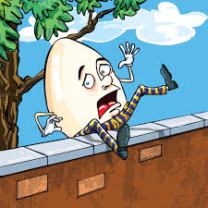
A broken back is a fantasy diagnosis. People don’t break their backs; we break our extremities: our big toe, our right arm, our nose. A broken back is a mythical injury, the stuff of childhood games. ‘Step on a crack, break your mothers back.’ Our back is our core, our thickest part. We can survive a dangling limb but we cannot survive being broken in two. The nurse’s schoolyard epithet made me laugh; my cracked ribs ached. I pondered my nursery rhyme condition. Could I be put back together again?

imagesAll ER diagnoses should be couched in fairy tale. A concussion is nothing more than Jack breaking his crown; falling from a ladder is itsy-bitsy spider syndrome. Storybook labels reinforce that being a patient in an emergency room is an infantile experience. Despite rejecting the morphine a mousy nurse tried to pump into my veins, trauma shock alone made me loopy enough to behave like a child.

An ER patient is an infant or a puppy: helpless and in need. It’s an unbalanced relationship with the staff. You have nothing to offer them. Actually, their day would be easier if you’d never arrived. You can gain attention by screaming, or you can smile and coo. I chose to be accommodating and friendly, chatted up every person who came into my room, asked their name and tried to repeat it at least three times. A way to keep my mind sharp while my body was whack; with the side benefit that familiarity might earn me favor.

imgres-1 imgres-2 imgres-3

I don’t know whether my stratagem worked. I received good and prompt attention. Possibly because I was so docile; probably because I had injuries that trumped everyone in the waiting room. Anyway, at midnight the community hospital slid me back on a stretcher and ambulanced me to a trauma center in Pensacola; Winken, Blynken, and Nod sailing off in a wooden shoe.

Just imagine how my mind would have raged if I’d accepted that morphine.

Posted in Bicycling, How Will We Live Tomorrow? | Tagged , , | Leave a comment

Trip Log – Day 246 – Ocean Springs, MS to Fairhope, AL

to fairhopeFebruary 29, 2016 – Sun, 75 degrees

Miles Today: 86

Miles to Date: 12,576

States to Date: 31

 IMG_6436I spent a leisurely morning at the Porter Greenhouse Coffee Shop that my host Jesse owns: coffee, biscuits, and conversation. About ten, I headed toward Mobile, sixty miles away.

By the time I reached the state line the terrain changed considerably; gentle hills and broad farms that could pass for Ohio. Around noon I received a message from my New Orleans friend Elyse that her friend Cathi in Fairhope would like to host me. I was making good time, so Fairhope before dark seemed doable.

IMG_6441

IMG_6444

Mobile is a challenging city to cycle. As I approached downtown I realized the primary way across the river was a tunnel; I took an eight-mile detour to cross on a bridge that offered me a great view.

Mobile Bay is immense and the US 90 causeway no more than six inches above sea level. It must flood at the mere threat of weather. But on a clear crisp day it was exhilarating to roll along at water level with the sea scent filling my lungs.

I got to Fairhope about 5:30 p.m. I had heard the old town was extraordinary so I veered onto scenic 98. About a quarter mile in, a Porsche took a sharp left in front of me. Surly hit the passenger side door. Paul flew off his steed and hit the pavement.

Everything changes in an instant. I broke my fifth left metatarsal, my left shoulder, and burst my L2 vertebrae. I have no internal injuries, no paralysis, and an excellent prognosis.

Screen Shot 2016-03-03 at 3.22.06 PMThe goodwill I have found everywhere in our land thrives in Pensacola. I’m locally famous at Sacred Heart Hospital where many staff exclaim, “You’re the bike guy!” Strangers who are now friends visited with cookies and flowers. I’ve received local offers of places to recuperate. I’ll likely remain in Florida through March; it’s easier to rehab at the beach than in Boston this time of year.

I won’t post any more Trip Logs for some time, but will continue to post my conversations as I master the art of one hand typing with my non-dominant hand. It’s never too late to learn new skills.

Screen Shot 2016-03-03 at 3.21.54 PMThanks to everyone who’s contributed love, support, and their ideas along my journey thus far. I have witnessed how great our nation is, not through its strength, but through its compassion. I have had one heck of a ride, which may not be over yet.

Stay tuned, because I think tomorrow is gonna be a good one.

Posted in How Will We Live Tomorrow? | 1 Comment

Trip Log – Day 245 – New Orleans, LA to Ocean Springs, MS

to ocean islandFebruary 28, 2016 – Sun, 65 degrees

Miles Today: 89

Miles to Date: 12,490

States to Date: 30

I rose early, despite my Saturday night partying, and headed to Mississippi. The city of New Orleans stretches far to the east; more than twenty miles along US 90 of mostly deserted highway on a Sunday morning. By the time I reached Lake Catherine, dry land was a narrow isthmus with fishing camps on either side. The lakeshore turned into marsh with flocks of heron. Upon entering Mississippi, I was surrounded by sweet, pungent pine forest.

IMG_6416 IMG_6423 IMG_6425

IMG_6427I crossed the first of two wonderful causeways at Bay St. Louis, two miles long with a dedicated bike lane: great sign of progress for cyclists. The causeway leads to over thirty miles of beachfront from Pass Christian to Biloxi. The beach at Pass Christian is one of the most beautiful I’ve ever seen; white crystal sand on my right, stately mansions on my left.

IMG_6430 IMG_6429

Cycling this stretch was gorgeous but tricky. US 90 has zero shoulder. The ‘boardwalk’ is sometimes only three feet wide, shared by cyclists, roller bladers, runners and pedestrians: scenic but not speedy. It gets more complicated in Biloxi where they’ve built casinos along the shore. It appears to be as big a gambling spot as Reno.

On the far side of the splendid causeway over Biloxi Bay I arrived at Ocean Springs, a scenic beach town. My host, Jessie, took me to a weekly Sunday potluck where her group of friends welcomed me to their community.

Posted in How Will We Live Tomorrow? | Leave a comment

Trip Log – Day 244 – New Orleans, LA

to New OrleansFebruary 27, 2016 – Sun, 50 degrees

Miles Today: 22

Miles to Date: 12,401

States to Date: 29

I’ve been to New Orleans half a dozen times: with family, with friends; to come to Jazz Fest, to build after Katrina. I appreciate New Orleans. I value it. Which is not to say it suits me all that well. I’m a New Englander, by choice and disposition. I am prudent and sensible, perhaps to a fault. I’m preoccupied with time, space and schedule. My wild fantasies are just that, fantasies; I have no need to act them out. New Orleans is a healthy anecdote for me: spontaneous, impulsive, unstructured and unscheduled.

IMG_6389The afternoon I arrived in NOLA I had more ‘potential’ meetings and places to stay than anyplace I’ve visited on my tip. Yet, nothing was firm. I took a Big Easy breath and let it all unfold in a rich, chaotic New Orleans way. I visited Musician’s Village and stayed at Buskers Bunkhouse on Friday. This morning I rose at dawn and made me way to New Orleans East to visit a Habitat for Humanity build site. NOLA has one of the largest and most successful HFH operations in the country. Then I pedaled clear across town to Carrollton to meet a pair of NOLA natives whose fathers’ were musician and musicologist involved in establishing Preservation Hall. Back in Mid City I met with a geotechnical consultant expert in the unique combination of rising tides and subsiding earth that makes Louisiana give up so much land the sea – second only to Bangladesh in coastal land loss.

IMG_6396Finally, after an odd string of texts, I arrived at Gina and Phyllis’. Gina invited me to stay but said they were going out. As a rule, I do not stay in houses where I haven’t met my hosts, so I suggested we get together late afternoon. She thought I was interviewing her to see if I wanted to stay, which must have made me seem like a prick. (She didn’t know I just came off a night at Busker’s Bunkhouse, not a place for the fussy.) No matter. We clicked when we met and they invited me to join their female friends to hear Susan Cowsill, longtime NOLA resident of Cowsill fame, channel Karen Carpenter.

IMG_6412We went out to dinner, where I snarfed down a variation of a Mufeletta called a Frenchuletta. NOLA being nothing more than a really big small town, we met two other women they know and all ate together. We arrived at Chickie Wah Wah almost an hour late, plenty of time before the main show stared. The place was jammed. We heard some good original stuff, a superb double drum jam, and a seven-piece ensemble that did justice to all the Carpenter’s greatest hits in full reverb. It wasn’t Preservation Hall, but it was wicked fun.

IMG_6415

Posted in How Will We Live Tomorrow? | Leave a comment

Trip Log – Day 243 – Gramercy, LA to New Orleans, LA

to New OrleansFebruary 26, 2016 – Sun, 50 degrees

Miles Today: 56

Miles to Date: 12,379

States to Date: 29

The east bank of the Mississippi River, which is actually the north side in these parts, is a smidge higher than the west bank, which is in fact the south. My host in Gramercy boasted of being six feet above sea level. Perhaps that is why as industrialization supplanted the plantation economy most factories located on the north side. Oil refineries, sugar refineries, and granaries cover former sugar fields with miles of pipes and towers. Conveyor belts long as football fields span across River Road and the levee to connect riverside docks with the behemoths that turn raw materials into the stuff of contemporary life.

IMG_6330 IMG_6358

My ride into New Orleans oscillated between navigating narrow River Road and riding the Mississippi Levee Trail bike path along the crest of the levee. When completed, the trail will give cyclists an elevated approach to the Crescent City. Now, there’s quite a bit of up and down involved.

IMG_6344The Bonnet Carre Spillway is a creepy stretch of pavement. The spillway provides a relief valve to divert the Mississippi directly to Lake Pontchartrain during high waters. The dam proper is concrete, but above is a section of vertical wood slats. I have no idea what they’re for, since light shines between them and would easily let water through. A few timber sections have been pierced by floating logs – whole trees really. The large specimens look like toothpicks against the mammoth spillway. I picked up my pace along the low side for over a mile, feeling a need to get higher than the river ASAP.

Beyond the spillway heavy industry gives way to fabrication and assembly plants, residential neighborhoods and commercial strips. From the top of the levee I realized that the streets of small homes sit quite a bit lower than the river surface, even in February when the mighty Mississippi is relatively low.

IMG_6356I recalled my very first trip to New Orleans. I was ten or twelve years old on some instantaneous family excursion my father concocted. We visited Grandmother Schumacher, a tiny old woman, grandmother to our neighbors, who came to live on our New Jersey street every summer when New Orleans was hot. When the adult conversation grew tedious in her Jefferson Parish home, I snuck outside. I saw a hill at the end of her street. I climbed the steep grassy slope. The word ‘awe’ was created to describe what I saw. The vast Mississippi River, one of the world’s most majestic thoroughfares, sluggish green, cluttered with barges and tugs and tankers, happened to be down the street, and a few dozen feet higher, than Grandma Schumacher’s cottage. My first experience of the Mississippi River was perplexing and magical. It cemented my belief that wonder can lie around any corner.

Although the entire relationship of land and water, monumental and domestic is bizarre in this land where low is dry and high is wet, traversing the top of the levee is different from climbing it dumb. The current was swift. A single tug guided fifteen barges downstream, while it took a pair to push just one up. Pipes and conveyors and service roads and wires connect ships and docks to land. Raw materials from all over the world on my right zoomed over my head to be turned into stuff on my left. I sat on a bench, drank water from a plastic bottle and ate a granola bar. Either of whose constituent parts might have one day been here before.

IMG_6359 IMG_6363 IMG_6360

I left the levee to pedal down St. Charles Street and around the Garden District, which look fully polished ten years after Katrina, even though the trees and telephone wires still sported beads from last week’s Mardi Gras’ parades. I spent too much time meandering the Convention Center area, all new and overscaled. It takes like five minutes to bike around the carbuncle that is Harrah’s. The French Quarter was packed even on a cold day in Lent.

IMG_6369Finally, I got to the east side and made my way to Musician’s Village, where I’d lent a construction hand post-Katrina. I got a tour of the performance and training spaces, which did not open until 2012. Then I made my way back to Busker’s Bunkhouse, an artist commune run by Ms. Pearl only five blocks from New Orleans most famous side street: Desire. I spent an evening, a fly on a tattered paper wall, among heavy smokers with gravelly voices who sounded profound, though I have no interest in fact-checking their political assertions or conspiracy theories.

IMG_6370The exception being one silent woman who wouldn’t even share her name: she lay in her dark room next to mine with a phlegmy cough. I couldn’t help feeling sorry that she had arrived at the wrong French city, reenacting the tubercular La Boheme within shouting distance of where Tennessee William’s Stanley, Stella, and Blanche raised such a sexually induced ruckus.

Posted in How Will We Live Tomorrow? | Leave a comment

Trip Log – Day 242 – Morgan City, LA to Gramercy, LA

to LaPlaceFebruary 25, 2016 – Clouds, 60 degrees

Miles Today: 62

Miles to Date: 12,323

States to Date: 29

 IMG_6279 IMG_6289 IMG_6282

Up at out early along Highway 182 east with the wind at my back. After a few miles of industry and a nice climb over the causeway at Amelia the road turned sweet: fresh blacktop with a wide shoulder. I turned onto Highway 20 and things got even better: a marked bike lane flanked by gorgeous cypress forest.

IMG_6290

Thibodaux is a featureless town except for its fields of new houses. This one has perhaps the biggest roof cap I’ve ever seen, easily twice as tall as the house itself.

IMG_6286The land around me sank from wetland to marsh to pure swamp. The shoulder shrank to a narrow strip and then disappeared. One bridge over a bayou sported a ‘no bikes’ sign. Too late. I signaled with my right arm and pedaled over. Thankfully, drivers in Louisiana are among the most polite I have encountered on my journey.

IMG_6296People who focus on Wal-Mart are not spending enough time in the truly small towns of our country, where the dollar stores are the main thread of commerce. They often sit right next to each other.

When I reached Highway 18 I knew the Mississippi River was near, but it is invisible behind the levee and the swatch of trees that grow in the flood zone. Thanks to an early start and tailwinds I reached my destination – Whitney Plantation ninety minutes early. I am much better about reaching destinations on time on my bike than in a car; I allow ample time for mishaps.

IMG_6310The Whitney Plantation opened just over a year ago as a historical site and tourist attraction focused on slave life rather than the life in the Big House. Whitney borrows, with great success, from the WPA Writer’s Program narratives of former slaves. The tour is among the best I’ve attended, and since I’m the writing guy on the bike, I had a nice conversation afterward with the Director of Operations.

In late afternoon I crossed the mighty Mississippi to Gramercy. The Gramercy-Wallace Bridge is the first choice among cyclists because it has a generous shoulder. However, it is very steep and high and has six expansion joints that are the biggest I’ve ever seen. I had to stop my bike at each one and guide my wheels over the gaps to avoid taking a header. Fortunately, I crossed safely and live to tell stories another day.IMG_6323

Posted in How Will We Live Tomorrow? | Leave a comment

Trip Log – Day 241 – Lafayette, LA to Morgan City, LA

to Morgan CityFebruary 24, 2016 – Clouds, 60 degrees

Miles Today: 77

Miles to Date: 12,261

States to Date: 29

I slept in a craftsman-style studio with a tin roof adjacent to a woodworking shop last night. Yesterday’s rain ended but gales of wind continued throughout the night, dropping branches on the roof, blowing the shop door open and slamming it shut. My dreams were the sound track of a Grade B horror movie.

I got turned around several times trying to get out of Lafayette, but eventually found US 90, which had a frontage road just for me! Within a few miles I connected to LA Highway 182. I didn’t mind the cool morning and heavy clouds. The strong wind had my back.

IMG_6254As the day progressed the clouds broke and shadows spread across Louisiana. The wind remained my friend. I made excellent time, which I used for more stops along the way. In New Iberia I visited Rosary House, where devout women assemble rosaries by hand. Top of the line jewelry grade rosaries cost over $350, but this superstore of all things Catholic also sells less expensive lines, including rosary bracelets and rosary rings, for as little as 95 cents.

IMG_6264Since I’ve been doing what Catholic ladies tell me since I was a boy, I headed across the road when they told me to visit Konrico, the oldest rice mill in the United States. Wendy gives a terrific four dollar tour of the three-story cypress and galvanized steel plant that’s been hulling and polishing rice since 1912.

I was enchanted by Jeanerette’s domestic architecture. The further south I went along Bayou Teche, the more grand homes lined the river.

IMG_6267 IMG_6272 IMG_6274

I passed fields of waving sugar cane, not unlike the fields I encountered in North Dakota in June. Just sweeter.

IMG_6273

IMG_6277The last ten miles of my route was mostly industrial. Morgan City is an oil and fishing industry town without strong Cajun roots. I was surprised and pleased to see the German couple I met in Marathon, TX at an intersection, making their way toward New Orleans at about my same speed.

The Red Roof Inn in Morgan City is newly renovated; a great deal for $40 a night. And there’s a decent barbeque place with notable baked beans only half a block away. I appreciate the Cajun food I’ve tasted the last few days, but don’t think its going to become a new favorite cuisine.

Posted in How Will We Live Tomorrow? | Leave a comment