Ditties from the Info Desk: Love and Radiation

They’re the most dependable ones. The cancer patients. Arriving at the same time each week, head wrapped in a turban or scarf, checking in before chemotherapy. Or worse, hobbling in daily for three, four, five weeks straight to receive radiation. One might think they’d be most irritated by the three screening questions I’m required to ask everyone who enters the building. No, they haven’t been outside of Massachusetts in the past two weeks; they’re too ill to go anywhere but here. No, they haven’t been around anyone who’s tested positive; they’re too vulnerable to see any one any way. No, they don’t have COVID symptoms; the nausea and aches of trying to expunge cancer are symptoms enough.

In truth, when a frequent flyer approaches, I cheat the questions. As the same dwindling woman whom I greeted at the hospital information desk the day before approaches, I lighten up. “You didn’t go down to Providence for a COVID dance party last night, did you?”

Cancer patients possess nobility, how they suffer bodily abuse in an attempt to stave off even worse. The crabby ones, angry at cancer’s arbitrary victimization, are easy to forgive. There but for the grace of god… But the stoics, the good-humored ones: they’re inspiration. I am lucky not to be among them; luckier still to witness their grace under duress. I can only hope, should their fate befall me, I confront cancer with such magnanimity.

I am particularly in awe of Helen and Rajiv. For in addition to their dignity, I am enthralled with their love.

Helen (the names are changed, but the story is true) is a classic, dignified WASP. The remnants of a sturdy frame and authoritative bearing shine through her radiated form. A crisp Yankee accent; elegant yet undistinguished clothes; a generous, if discreet, smile. Helen arrives every day of her five-week regimen with Rajiv, a tiny, shriveled Indian man so much smaller than his wife, one might assume he is the patient. Rajiv defers to Helen in every way, yet the sparkle in her eyes when she gazes upon him reveals mutual appreciation.

The effort of getting from car to information desk exhausts Helen. I settle her into a wheelchair and navigate her to radiation oncology. Rajiv is too frail to push her himself. We take separate elevators: three people cannot maintain the required six-foot distance. During the sixty seconds Helen and I are alone in our cab, she speaks of her husband. “What would I do without Rajiv? That man is my strength. He is my miracle.” Every day, her accolades are variations on the same theme. Every day, she iterates them as if fresh news. Every day, when our respective elevators arrive at the ground floor and the two lovers set eyes upon one another again, they beam as if their separation had been months, not moments.

After I deposit Helen at her therapy I wonder, briefly, how Rajiv got dispensation to attend his wife’s appointments during this era of ‘no visitors.’ Far be it from me to let a mere virus come between them. Then I speculate, at greater length, about the origins this lovely couple.

Helen once told me they’d been married 52 years. I do the math: 1968. The height of social non-conformity. Yet, I wonder what Helen’s family thought when their daughter—easy to envision turning about a sailboat or stepping off a tennis court—brought home this small, dark man, with his high, quiet voice and retiring manners. I wonder even further back: what brought them together in the first place? Perhaps their physical and cultural differences provided the metal of their union. Some couples dissolve under pressure; others get fused by it.

I will never know. It is impossible to know such intimacy in the time it takes to wheel a person to radiation. Actually, it is impossible to ever know the vines that tangle two souls into love. The miracle of lover lies beyond human determination. Yet, it only takes a moment to witness love in its purest form. And rejoice in those who have found it.

Posted in Uncategorized | Tagged , , | 4 Comments

January 6 Vocabulary Quiz

Which definition best describes what occurred at the US Capitol on January 6:

A. An act or instance of revolting against civil authority or an established government

B. Needless or willful damage or violence

C. A sudden decisive exercise of force in politics especiallythe violent overthrow or alteration of an existing government by a small group

These are three definitions from Merriam-Webster’s online dictionary of words that express various forms of unrest.

If you selected ‘B’ you are in agreement with The Boston Globe’s recent headline, which describes the actions of January 6 as ‘mayhem.’ (‘A’ is the definition of insurrection; ‘C’ is a coup.)

True, what happened on January 6 was willful damage and violence. But it was so much more. It was a revolt against civil authority. It was a sudden exercise of force in the service of altering an existing government by a small group. It was beyond mayhem. It was insurrection. It was an attempted coup.

Why would The Boston Globe, not exactly a right-wing rag, headline such a misleading word less than a month after the most serious attack on our Capitol? The answer, I fear, is the same old, same old. Giving a pass to white guys.

When Black or Brown people take to the street, we are accustomed to their ‘demonstrations’ being rebranded as ‘protests,’ even ‘riots.’ We use words that escalate, even criminalize, their action. No one would use the word ‘mayhem’ to describe the 100 nights of protest in Portland, OR after George Floyd was killed.

But when white people storm the Capitol and successfully shut down the national government, the terror/insurrection/sedition they incite is downplayed by the label ‘mayhem.’

Let’s be clear. Mayhem is fun with an edge. Mayhem is WWF. Mayhem is a comic character hawking Allstate Insurance during NFL games. Mayhem is letting “boys be boys,” with a wink and nod and an acknowledgement that their silly antics are ultimately harmless. After all, these boys are our future, and we’re still proud of them.

Justice for the Capitol attack will only come when everyone involved, directly and indirectly, is held to account. Not because of the color of their skin. Because of the gravity of their acts. We the People have to keep the pressure on, because everyone in a position of influence and power, from Congress down to The Boston Globe, will find reason to backpedal the trespasses of these white attackers (who were disproportionately law enforcement officers and veterans as well). They will cast them as benign figures. Let’s be clear and insistent. Let’s call them out for what they are: domestic terrorists. Let’s call then out for what they did: sedition.

Posted in Uncategorized | Tagged , , , | 2 Comments

Everyone’s a Little Bit Nazi

When this ‘Lefties are Nazi’s’ post appeared on my Facebook wall, I realized that extreme labels, stripped of their actual definition, retain only the power to divide and offend. I cannot provide any reasoning to this conflagration of errant history and twisted tongue. Instead, I offer this parody, based on “Everyone’s a Little Bit Racist,” from Avenue Q. Enjoy!

(Note: I posted an audio/video link of the parody on You Tube, which was removed for violating hate speech. Such is fate when humorless algorithms determine content. I appealed the removal, so perhaps my rendition will see the light. Still, I suppose a song that promotes communication and love actually does violate the ‘community standards’ under which we live these days. In the meantime, if you would like to ‘hear’ the song, let me know and I forward the .mp3 file.)

Everyone’s a Little Bit Nazi

——

Everyone’s a little bit Nazi, its true

Even though we wrap our hatred in red white and blue

Look around and you will find

People crushing each other’s spine

To climb to the top of the higher-archy

To take all the goodies I can get for me.

——

Everyone’s a little bit Nazi, don’t you see

Pundits on the left just cancel anything they disagree…with

No racial jokes, no ethnic slurs

Every gender pronoun mistake deserves

A damning rant on your Facebook wall

To prove you’re the most woke bloke of all.

——

Everyone’s a little bit Nazi, I know

People on the right, their skin’s so white it glows

God and guns and traditions endure

To maintain a nation that’s pure

But if you betray one shadow of doubt

They will quickly snuff you out.

——

Everyone’s a little bit Nazi, today

But no will admit they’re Nazi, no way

When we spew that label of hate

We lose our chance to communicate

It’s easier to inflict that word

Then actually let someone be heard.

——

And listen. And be heard…in return.

——

Everyone’s a little bit Nazi, in our land

Everyone’s afraid to reach out…or up…or down…or over…and take someone’s hand

But one thing I know for certain.

Folks screaming ‘Nazi!’ are the one’s most hurtin’

So if someone throws slander at you

Take a moment to admit: ‘it’s a tiny bit true’

Then turn the tables and try to hear

The cry of person who’s lost in fear

Dominance is wired in our DNA

Doesn’t mean we have to act that way

Don’t forget the crimes of the Nazi regime

Or trivialize them to a meme

Consciously we can rise above

And choose to act in the spirit of love

——

Everyone’s a little bit Nazi. Just sayin’

Posted in Uncategorized | Tagged , , , | Leave a comment

Come for the Activism; Stay for the Art

Steve McQueen. Not the bad-boy race car driver from The Great Escape, idolized by all guys over sixty for nabbing Ali MacGraw. The other Steve McQueen (officially Sir Steven Rodney McQueen CBE). The twenty-first century British filmmaker of Grenadian and Trinidadian descent who’s the polar opposite of last millennium Steve. Where American Steve McQueen is all frenzied pursuit, British Steve McQueen delivers deep stillness. His camera sits patient, documenting a passive black face so long, the inner rage rises through the skin and pierces our soul.

It was a no-brainer for me to hit ‘Play’ on Small Axe, Steve McQueen’s quintet of films about Caribbean immigrants in London during the 60’s and 70’s. The series got great reviews and aligns with my current anything-but-white-guy media jag. In the evening, my eyes are too tired for serious reading. I just want to watch.

Episode One, Mangrove, based on the real events of London police harassing a Trinidadian man uppity enough to open a restaurant in Notting Hill in the late 1960’s, is a full feature film. The riveting drama culminates in court room tension that feels both more genuine and more unsettling than Netflix’s recent The Trial of the Chicago 7. Devoid of Aaron Sorkin’s polished Hollywood, Mangrove is more authentic. Yet the scene that resonated in my head the following morning was a lingering image of restaurant debris, strewn across a floor beneath the soundtrack of a police raid. Mr. McQueen does not always show the violence. He makes us feel it.

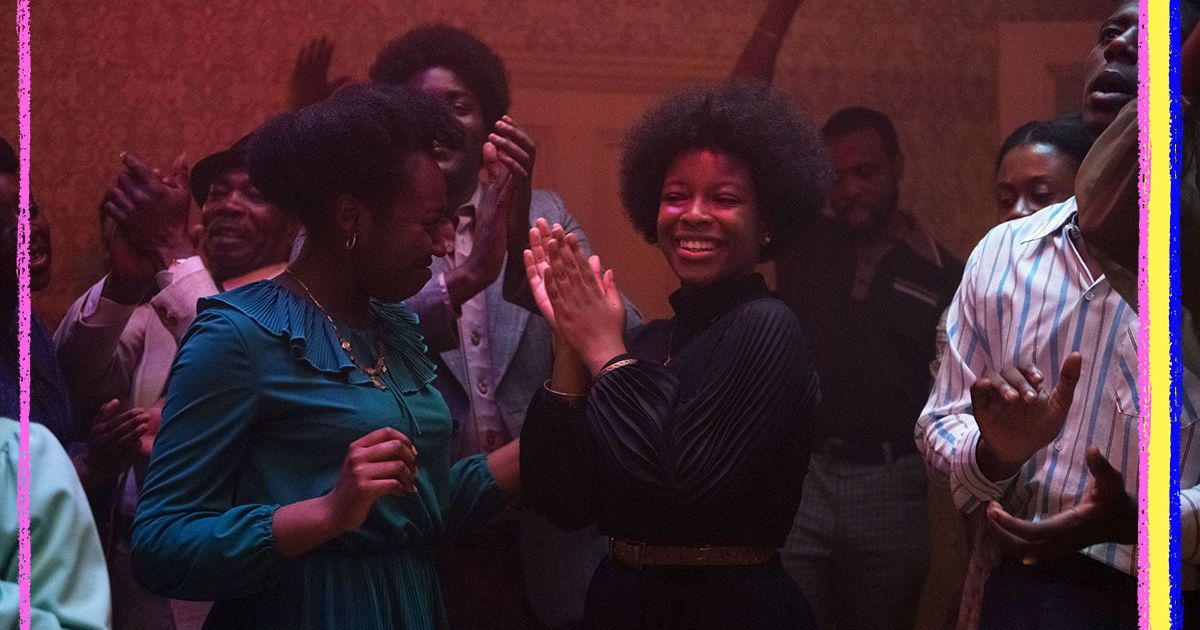
Fearing more angina, I waited a few days before I attempted the second film, Lover’s Rock. No need for such worry. This delightful, affective film follows several loose stories about preparations and enactment of a house dance party in the 1970’s. The sound track is amazing, the camera work perfectly jittery. We are at the dance; from awkward first steps to joyous frenzy to tedious exhaustion. The young lovers who meet within the soundtrack are poignant and potentially tragic as any Romeo and Juliet. And though the reality of threats from within and without—sexual predators and thugs down the block—are never far away, the film has a rosy luster that speaks to every individual’s search for respite, for joy.

Red, White, and Blue. Back to a plot based on a true story: a Black police officer’s desire to reform the London Metropolitan Police from within, even as he suffers a father’s wrath and his community’s rejection for signing up with the enemy. Four hours into Small Axe I’m guilt-stricken by the sick consolation that the United States is not the only homeland of racial hatred, discrimination, and violence. Brutal systems of racial injustice exist everywhere. But Steve McQueen makes them real, personal, in his constant close-ups. Officer Leroy Logan’s matte, dark chocolate skin absorbs light, sucks us into his isolation. While his father’s lacquered black complexion refracts his anger at the endless oppression like a light saber brandished at warp speed.

Alex Wheatle picks up where Officer Logan left off: a young Black man entering prison. But the story of a total orphan abused by the supposed benevolent social system takes a welcome, positive spin. Perhaps because Mr. McQueen believes in the transformative power of Rastafarian, perhaps because hope wins out in the end, perhaps because this too, is based on a true story, which has a happy ending.

By now I realize that the films after Mangrove, are quite different than the initial offering. Shorter, more particular slices of life in Black London. The final film, Education, is similar in length and scope to two, three, and four. It’s also based on real events: an unofficial policy within London schools to transfer disproportionate numbers to Black students to ‘sub-normal’ schools. However, the plot and characters were created in service to the message, and the result is a bit preachy, almost documentary in style. Although I hear the message, Education does not rouse the empathic anger the other films evoke. Yet once again, Mr. McQueen’s most profound messaging comes from his camera’s stillness. The slow pan of a classroom of ‘sub-normal’ students: some jittery; some passive; our hero Kingsley bored to fatigue; while a pathetically useless teacher strums and drones a tortured version of ‘House of the Rising Sun.’ It’s an excruciating scene, minutes long. As the teacher warbles verse after verse of a song we all know, I found myself counting toward the end, wanting it to be over, yet unable to stop watching the tedious visualization of human potential lost. When the song finally comes to the end, and I breath a first sigh of relief, the teacher starts all over again. I gasp at the prospect of enduring it all again. While the children, unperturbed by this peculiar torture, submit in order to survive.

Watch Small Axe. All of the films. In order. Watch how human potential can be crushed. See it thrive anew.

Posted in Uncategorized | Tagged , , , , | Leave a comment

On the Inauguration of ’46: Heeding the Words of ‘2

“Nip the shoots of arbitrary power in the bud, is the only maxim which can ever preserve the liberties of any people.”

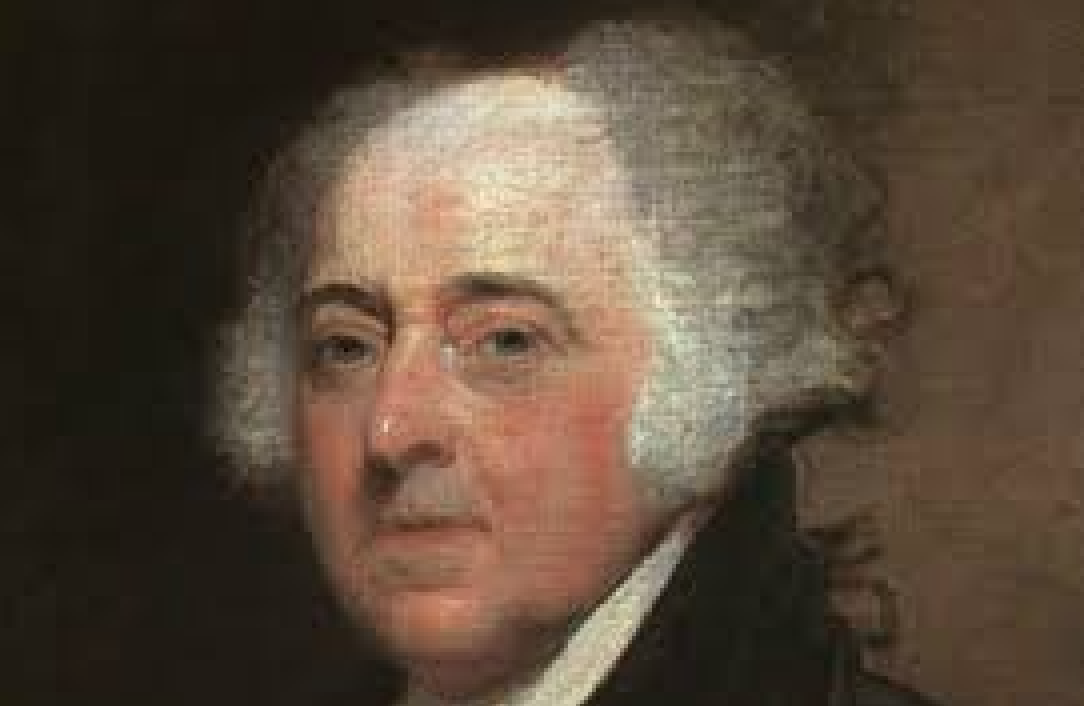
On this day of our nation’s rockiest Presidential Inauguration, I turn my thoughts to John Adams.

“Power always thinks it has a great soul and vast views beyond the comprehension of the weak; and that it is doing God’s service when it is violating all his laws.”

George Washington served as our first President for eight years, so popular he could have continued on forever, yet he established the precedent of two terms and a graceful hand-off to his Vice-President. Four years after the first Number Two became the second Number One, John Adams had a far more distasteful task: to turn over the reins of an office he fought for and desired to his bitterest opponent: Thomas Jefferson.

“The only maxim of a free government ought to be to trust no man living with power to endanger the public liberty.”

If John Adams had a seditious bone in his body, he might have scripted an early version of ‘45’s playbook. Thankfully for us, he did not. In 1801, conducting a peaceful transition of power between ideological opposites was truly revolutionary.

“Power always sincerely, conscientiously…believes itself right. Power always thinks it has a great soul and vast views, beyond the comprehension of the weak.”

Among our Founding Fathers, John Adams cuts a peculiar figure. Short and stout, overbearing and righteous. (Adams bowed to Jefferson becoming President, but he did not attend the Inauguration and the two men remained bitter rivals. Adams’ last words are reported to be, “Thomas Jefferson survives,” when in fact, both men died on the same day, July 4, 1826.) Adams was unemotional, rational beyond bending, yet as devoted to his wife Abigail and their children as to his pursuit of freedom. One of the least wealthy Founding Fathers, John Adams lived a life of equality (he was an abolitionist who never owned slaves) even as his Federalist leanings and distrust of majority whim make him a potential poster child of today’s educated elite.

“Because power corrupts, society’s demands for moral authority and character increase as the importance of the position increases.”

Yet in the ribald election of 1800, wealthy, slave-owning Jefferson successfully portrayed himself as the champion of the little man. Perhaps the earliest example of American voters selecting a leader based on what he says, rather than what he does.

“Power must never be trusted without a check.”

So today, as Joe Biden becomes our 46th President despite ten weeks of false claims of election fraud, an attempted judicial coup, and violent sedition, let us give thanks to John Adams for his courage and humility. To turn power over to a rival because we are:

 “A government of laws, and not of men.”

Posted in Uncategorized | Tagged | 2 Comments

Sons of Liberty

September 10, 2020

Cambridge, MA

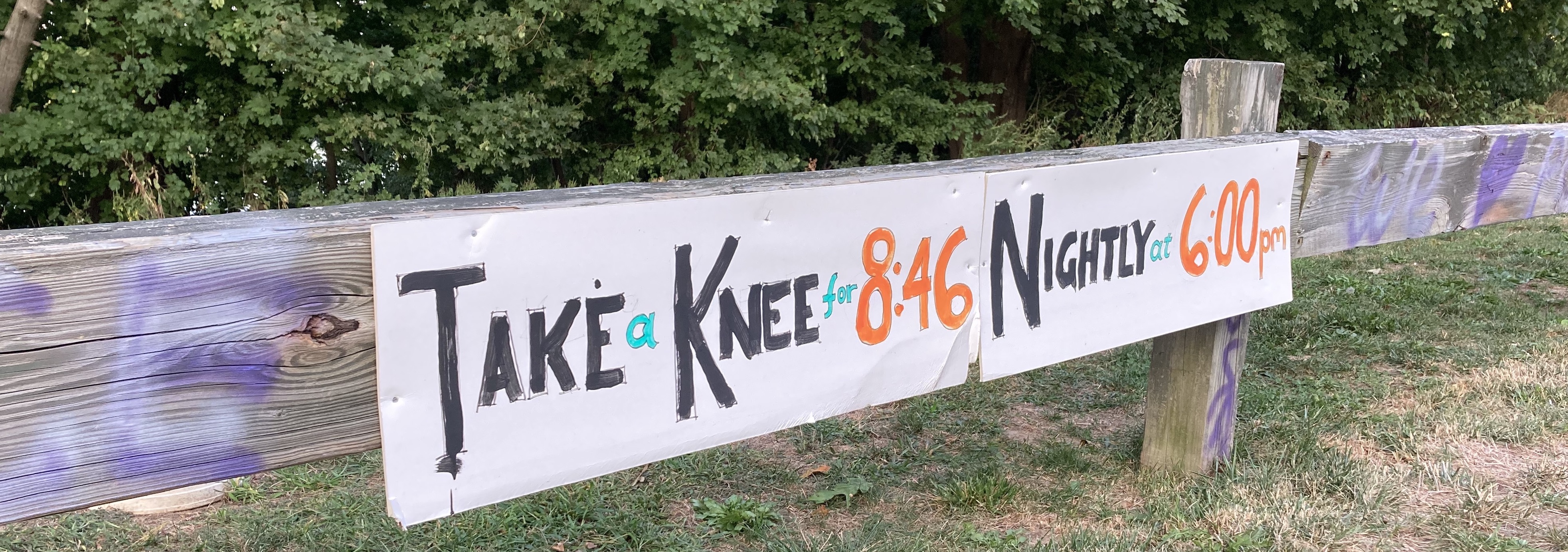
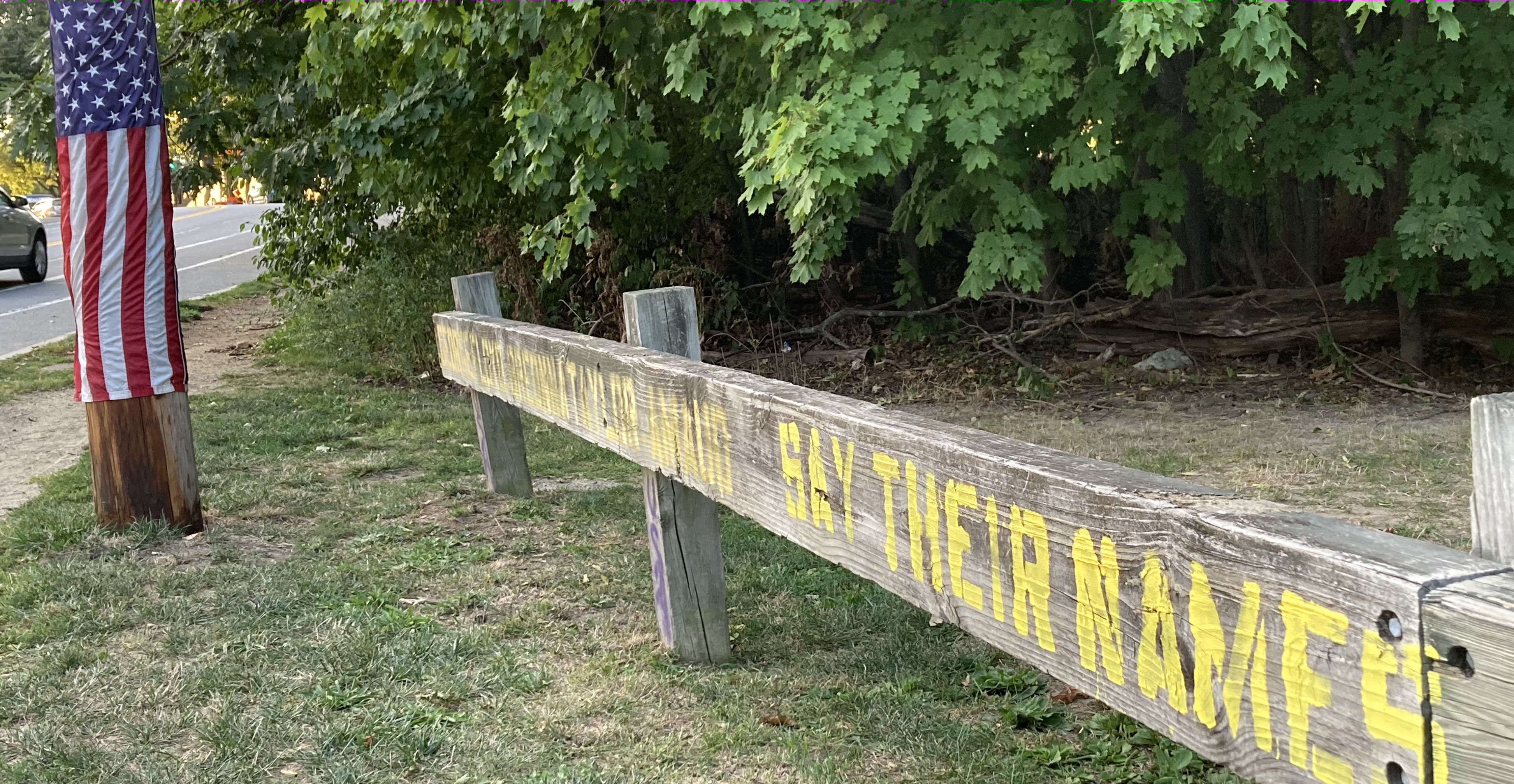
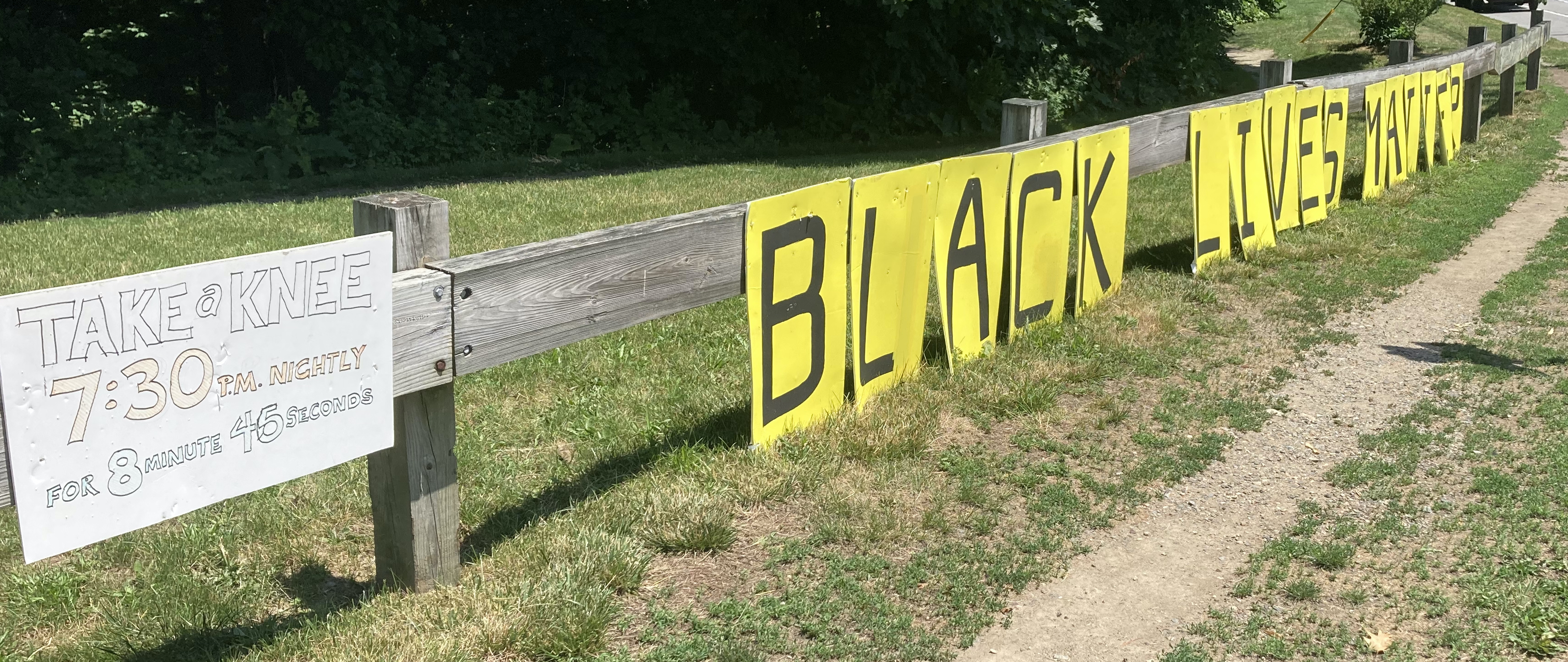
A chilly drizzle sprinkles discomfort over our Black Lives Matter evening vigil. The number of people taking a knee since late May has shriveled to five. My meditation wanders from the horror of Officer Derek Chauvin’s knee pinching George Floyd’s neck to whether—or why—we should keep this going. Gone are the halcyon summer days with dozens of kneelers, a parade of encouraging car horns, accolades from people of color, spontaneous applause. Summer’s collective energy has morphed into quiet persistence. The few souls who remain have incorporated 8:46 of public silence into our daily routine.

Our vigil might be the smallest in the Boston area, but it also might be the longest lasting. We bear witness every night. Because keeping injustice in the public eye is one small compass point in the spectrum of change. We don’t know which passersby we might influence. We are not supposed to know. We witness because it is the right thing for us to do. For our own fortitude. And because we trust that seeds of change germinate from bearing witness.

An elderly couple, a female couple, and me. All regulars. Not exactly friends, though each night our after-vigil conversations (masked and socially distanced) grow longer, more personal. During a pandemic in which prudence requires we remain apart from most everyone, I welcome our shared meditation, our after-knee encouragements. I doubt I would kneel alone, but as long as one or more neighbors come to the guardrail, I will join them.

A pick-up truck stops along the curb: very big; very new. It’s not uncommon for people to pull over; the odd intersection of one-ways where Huron Ave meets Fountain Terrace requires some people to double check reference points. The driver rolls down his window. Also not uncommon. People sometimes feel the need to talk with us, though we generally remain silent in response. He unloads venom in words I don’t print in this blog. Unusual, but not unique. Hecklers are emboldened when our numbers are small and their vehicles so protective. We don’t enjoy being yelled at, but there’s no actual threat. The driver remains in his seat of horsepower, and as soon as my timer sounds, 8:46 complete, he revs away.

I watch him roar off and I ponder our futile non-interaction. What if the driver remained? What if we talked? Really talked. Could we transcend our stereotypical roles of affluent elite and angry young man? Is there any connection, however slender, to begin to bridge the chasm between us?

That event actually happened. And it inspired me to conceive a different ending. To prompt the kneeler to speak up. To prompt the heckler out of his truck. To sit them down on a porch and drink a few beers. To stop seeing each other as ideological opposites, but as actual human beings. To seek out common ground.

The result is Sons of Liberty, an 80-minute, adult-themed, two-person play that takes place on a front porch in real time. Peter, an intellectually obtuse engineer, cajoles reluctant Daryl, an army vet and postal carrier, to his porch. They exchange predictable tropes of right versus left, educated elite versus working class bloke, until commonalities—the New England Patriots, the residue of divorce—scratch their antitheses. As their conversation ranges from political rant to personal revelation, the men oscillate between mutual distrust and reluctant acknowledgement. Their connection fuses when they discover related heroes. Daryl is a Revolutionary War reenactor in the thrall of fiery Sam Adams, while Peter is a student of Samuel’s hyper-rational cousin, John. The ability of two Founding Fathers with such disparate temperaments to collaborate toward a shared objective offers guidance for these two men to become, if not quite friends, mutually respectful citizens.

Since September 10, I have written several drafts of Sons of Liberty, workshopped the play with two sets of Boston-area actors, and shared it with a number of local and national theater groups. I am currently seeking opportunities for virtual readings or workshops, with an eye toward an actual live staging (someday soon?). The script is available on the National New Play Network, though I am also happy to share a .pdf directly.

Please contact me if you’re interested in reading Sons of Liberty, or if you know anyone or any group that might be interested in developing this play, prescient to this moment in our history.

Posted in Uncategorized | Tagged , , , | 6 Comments

What We Allow, We Enable

This is the letter I sent to my Representative and Senators regarding the Capitol insurrection on January 6. Feel free to use any or all portions with which you concur in reaching out to your own elected officials.

January 10, 2020

Dear Senators Markey and Warren,

Dear Representative Clark,

What we allow, we enable.

We allowed domestic terrorists to storm our Capitol. We allowed them to disrupt a peaceful government process. We allowed them to enter, deface, and ransack out nation’s most prominent public symbol.

It is only dumb luck for us that they were so disorganized. They had no real plan. The next time we allow such a breach, the terrorists may not be so aimless. Insurrection could result in actual coup.

Therefore, we must act now so we never enable them again. We must make clear—this week, before any subsequent events (already advertised for January 17) take place—that every person and organization involved in this terrorism will be dealt with to the fullest extent of the law:

1. Remove Donald Trump from office. He committed treason by inciting this violence. Voluntary resignation, the 25th Amendment, impeachment: whatever method is required.

2. Identify, arrest, and try to the fullest extent of law every person who forcibly entered the Capitol.

3. Identify every person from the Executive branch, member of Congress, elected official, self-appointed leader, financial supporter, and media influencer who championed this insurrection. Make public their involvement. Arrest and try to the fullest extent of law.

4. Formally censure all members of the House of Representatives and Senate who voted to sustain objections against the electoral college results, even after the insurrection was over and government resumed. They misused their power of this valid Constitutional check. Their ongoing insistence of unproven claims of election irregularity fuel further lawlessness. They are complicit in what happened, and will be complicit in any further illegal behavior.

5. Investigate why law enforcement branches frequently utilized to check large protests were ‘called off’ from this one. The scale and intent of this demonstration, turned insurrection, was well-advertised in advance, yet the law enforcement response was tepid. Any complaisance between an arm of law enforcement and these terrorists should be investigated, made public, and tried to the full extent of the law.

6. With regards to the Capitol Police, I suggest a different tact. Here we have an opportunity to move beyond public shaming and convicting insurgents. Here we have an opportunity to redefine policing that is strong yet just. Since the Capitol Police are part of the Federal Government, I suggest that Congress develop a model policing program, formulated to include the full range police tools with an emphasis on non-violent response, applied equitably across all citizens. I suggest that all current members of the Capitol Police be terminated, then given the option of reapply to the force, along with other citizens who demonstrate capacity to practice equitable policing. The reconstituted Capitol Police should be trained to protect our Capitol in a manner applied equally to all citizens, regardless of race, gender, economic strata, or political persuasion. It is important that citizens can convene at our Capitol, make their concerns known, and protest. It is equally important that no one be allowed to breach the Capitol and disrupt government process. The Capitol Police need to ensure and accommodate peaceful protest for all citizens, yet stand fast against anyone who attempts to invade. Recreating the Capitol Police is a perfectly scaled ‘pilot’ for overdue police reform throughout the nation. It could offer one positive result of January 6th’s seditious violence.

What we allow, we enable.

We must act now to make clear the violence of January 6 will not be tolerated. And then use the horror of that day to move from our current divisions toward our Founders’ vision: a more perfect union.

Thank you for your consideration. I look forward to your action on each of these six points.

Sincerely,

Paul E. Fallon

Posted in Uncategorized | Tagged | Leave a comment

Ditties from the Info Desk: Seeking the Vaccine

A tall elderly man approaches the desk. Patrician in bearing, not a millimeter lost to the gravity of age.

“I’d like to find out how to get the vaccine.”

“Do you work at the hospital, sir?”

“No, but I’m seventy-five.”

“At this time, the hospital administers vaccines to health-care workers according to the governor’s priorities.”

“But I’d like to get one.”

“I suggest you review the guidelines to find your priority. Perhaps you can contact your physician.”

The gentleman gives me a look I’ve seen before, though usually from immigrants or non-English speakers, folks unfamiliar with American culture. A bafflement, an incomprehension of a world that mistreats him. He opens his mouth. I sense that he wants to protest, to argue, to have his way. But he can’t voice the injustice to me: another aging, albeit less distinguished looking, white guy. Besides, pubic displays of anger are likely not his style. The man turns and leaves. Withholding a polite, ‘thank you” is the extent of visible protest. But I feel his brain spin in disbelief. He is accustomed to being the first in line.

——————–

I staff the information desk at my local hospital a few days a week. The parade of people who enter a hospital provide fascinating glimpses into the vagaries of human experience. I occasionally share vignettes with my readers, stripped of identifying markers, which illustrate and sometimes delight.

Posted in Uncategorized | Tagged , | Leave a comment

Two Thumps Up: Rich Philanthropist

A Google Search for MacKenzie Scott yields the following headline:

MacKenzie Scott, Philanthropist and ex-wife of Jeff Bezos…

Two years ago, those among the general public who knew MacKenzie Scott (I did not) described her as Jeff Bezos’ wife. Then, in July 2019, she got a whopping $38.5 Billion from Mr. Bezos (4% of Amazon stock) in their divorce and she became famous as his savvy and wealthy ex-wife. During 2020 she gave away over $4 Billion to various charities. So now, the adjective ‘philanthropist’ gets plopped in front of Ms. MacKenzie’s name before the less flattering ‘ex-wife.’ And she’s still got a hefty $30 Billion to burn.

Ms. Scott has so much money, multiplying so fast (investing her divorce settlement in lowly US Treasuries would yield over $3 million a day) she cannot possibly spend it. In giving away an amount inconsequential to her—immense though it be to the rest of us—she buys something no piece of art or real estate can procure: fawning publicity with the noble adjective ‘philanthropist’ tacked in front of her name.

Ms. Scott does not have to give her money away. Neither does Bill Gates. Nor did John D. Rockefeller or Andrew Carnegie. But for each of these immensely wealthy people, giving away a proportion of their total wealth purchased them an inspiring legacy. More people know about Andrew Carnegie’s libraries than about the oppression and violence he foisted upon his steelworkers in Homestead, PA.

The United States’ social and economic system is riddled with oddities. We create tremendous wealth, and then distribute it erratically. We measure a person’s worth by the money they acquire, and then further lionize them if they give some away. Take a look at the Home page of The Giving Pledge. Headshots of billionaires, mostly white men, many with youngish wives at their sides. Their contributions may or may not improve the world. Their contributions will absolutely burnish their image.

Every person on this planet acts according to what they perceive to be their best interest. One measure of an individual’s wealth is the lens length of that interest. Poor, homeless, hungry people have a very short-term perspectives: they seek a hot meal and a place to sleep. People one paycheck away from eviction keep their eye on the job. Affluent people worry about their 401K’s and health care coverage. Billionaires worry about their legacy.

My problem with billionaire charity goes beyond whitewashing the actions that acquired wealth. It centers on the more fundamental issue: who gets to decide how we generate and allocate resources.


During my time in Haiti (a nation with the highest per capita ratio of NGO’s to citizens in the world) I witnessed the chaos of well-intentioned charity directed without broad perspective or local initiative. On the two projects I designed and helped construct, we used to joke, “Thank god we don’t have any Clinton-Bush funding,” It was well understood, on the ground in Haiti, that projects with such grandiose funding sources were bureaucratic entanglements, from which little money ever trickled all the way down.

I don’t know the social benefit that The Gates Foundation or Ms. Scott’s donations provide at the point of receipt. What I do know is that our society has ceded to Mr. Gates, Ms. Scott, and their ilk the privilege of shaping how we care for those in need simply because they are rich. Then we bestow upon them the cloak of generosity.

Instead of allowing the fabulously wealthy to create foundations that glorify themselves, we ought to make them pay more taxes, and collectively determine how to use that money to the betterment of humankind.

To be sure, that shift in wealth and responsibility requires drastic change in many attributes of society. It requires that we have a progressive tax structure as a fundamental method of income redistribution. It requires that restructuring not allow assets to flee beyond national boundaries. It requires that we collectively determine a minimum level of health, shelter, nutrition, and social benefit every person is entitled to receive simply for being here. And it requires a responsible, accountable government to provide those services, either directly or through fair contract. In short, it requires that we non-billionaires stop pretending that the rich will take care of the poor, and acknowledge that each of us is responsible for our fellow human beings.

Whew. That would be a lot of work. Especially in a society grown addicted to the notion of individual rights and allergic to collective responsibility. It’s easier to let philanthropic foundations tackle the issues they choose, pretend the super-rich have got the charity thing covered, and then laud their generosity.

Within the space of two years MacKenzie Scott has gone from being tech-wife to savvy divorcee, to icon of female empowerment, to philanthropist. That she landed $38.5 Billion in a divorce is merely an extension of the grotesque amount of money we allow a few people to make. (It’s not for me to monetize the agony of being married to Jeff Bezos, and the guy’s certainly got billions to give.) That Ms. Scott chooses to adorn her name with ‘philanthropist’ for what’s essentially chump change is such an obvious expenditure it’s hardly worth noting. What is interesting to me is that we allow it, we condone it, and we celebrate it.

Thumbs up, MacKenzie, for being rich. Double thumbs up for being a rich philanthropist.

Posted in Uncategorized | Tagged , , , , | 2 Comments

Top Ten of 2020

2020! 364 days ago, I hoped this ocularly significant year would help the world see things straight. I was so, so wrong. Still, all was not lost. Consider this listicle of experiences that we never even considered, yet 2020 delivered

10. The aversion reflex. It is now socially acceptable, even commendable, to close your mouth and look away when passing someone on the sidewalk. How friendly!

9. The zig-zag. Of course, it’s better to simply cross to the other side of the street to avoid others, ricocheting like some toddler learning to navigate a first bicycle.

8. The moss munch. You know it’s time to change your mask when the inner lining turns all cotton-candy and infiltrates your mouth. Time for some entrepreneur developed flavored face masks.

7. Rules are for others. People at the hospital information desk yell at me why they’re special: exempt from wearing masks, demanding to eat in the cafeteria, insisting to visit contagious, vulnerable patients. Corollary: Rules are for losers. The most compliant people I encounter are low-level workers and people of color. The least compliant? Senior staff and white people. Just sayin.’

6. Walk, walk, walk. I have so much time on my hands I walk everywhere. 268 straight days over 10,000 steps. Will I be able to keep it up through the winter to reach a full year?

5. Zoom seminars are terrific. Without geographical constraint, I attend BLM meetings with Aware-LA was easily as SURJ Boston. Hear speakers from the National Constitution Center as easily as Cambridge Forum. Corollary: Zoom social events are terrible. Enough said.

4. Sanity is a basement workshop. So far I’ve made beehives, planters, protest signs, and shelves. Next up: a Little Free Library for my front yard.

3. Take a Knee, meet your neighbor. Six months into our nightly vigil since George Floyd died, I am no better at meditating. But it’s important to me to bear witness, and I enjoy neighbors I had never met before.

2. Spider Solitaire. Totally addicted!

1. That’s all folks! This year has been such a downer, no way there are actually ten good things to say about it.

Here’s hoping health and contentment to all in 2021.

Posted in Uncategorized | Leave a comment