
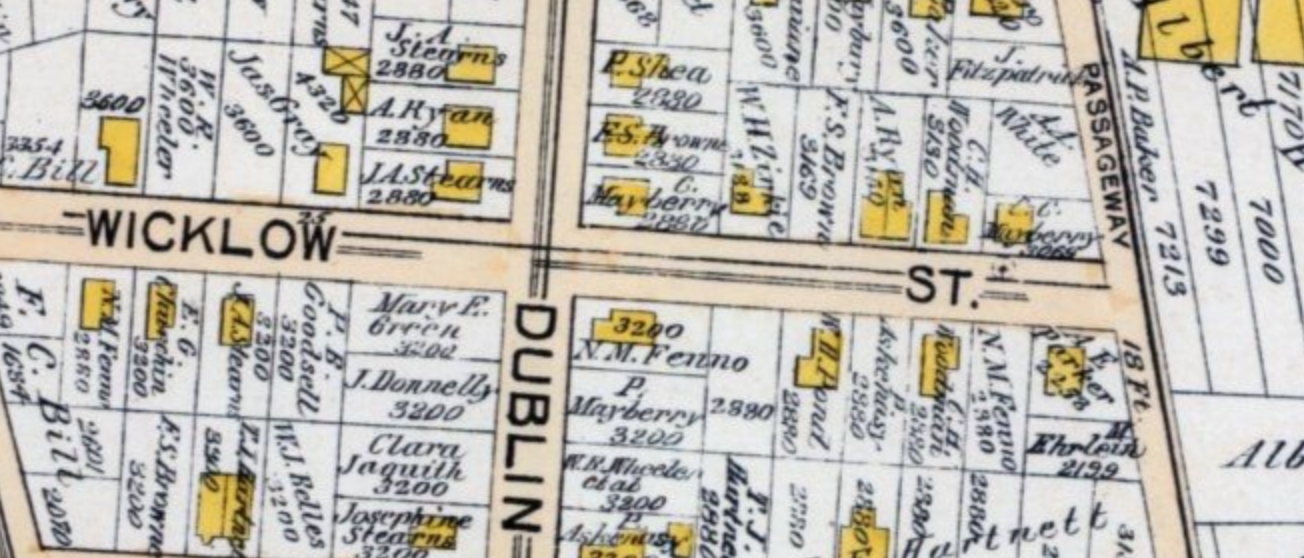
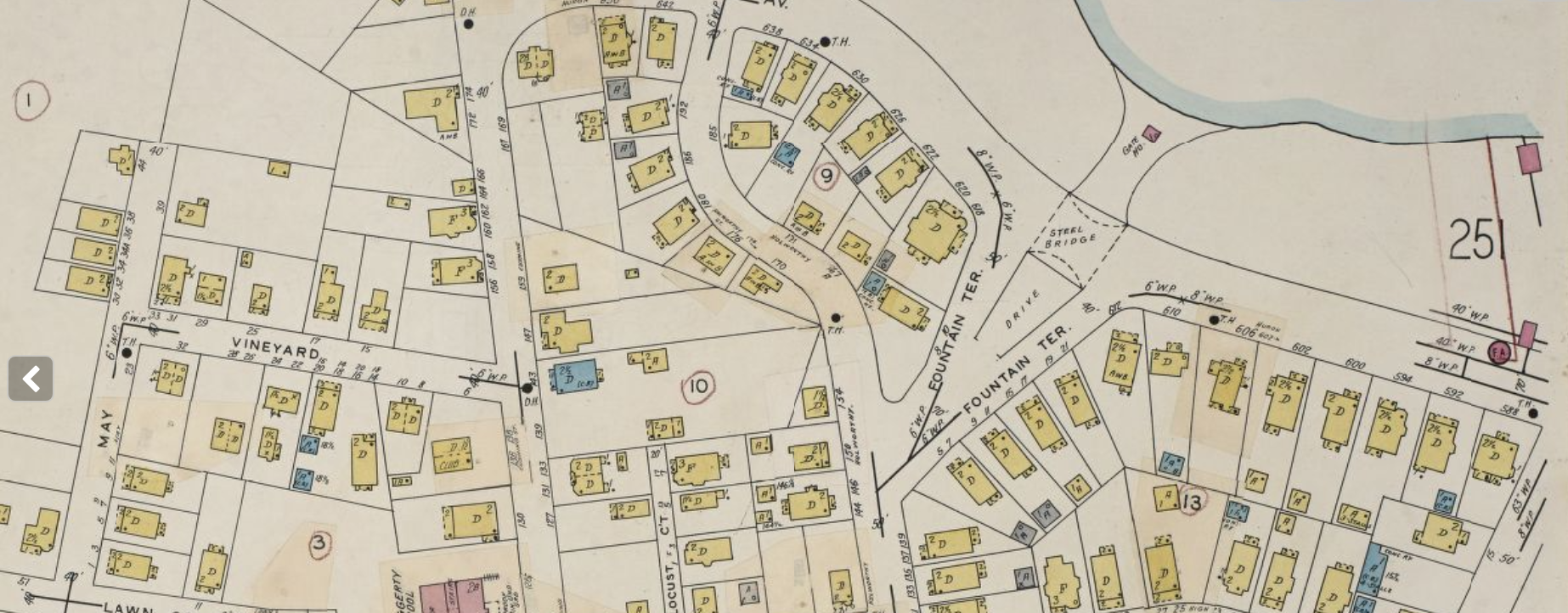
One hundred thirty years ago, in 1891, Mr. A.E. Parker built a house at 60 Wicklow Street in Cambridge. A 2-1/2 story wood frame building that he shared with his wife. The building first appears in the 1894 Bromley Atlas, another yellow outline in the growing city of Cambridge.
By the time the next Bromley Atlas was published, in 1903, Wicklow Street had become Stearns Street. Eventually, it was designated part of Neighborhood Nine, a sort of shorthand for saying, neither here nor there. Stearns Street’s an equidistant walk from Cambridge’s long-time tony, Tory, Brattle Street; Victorian-fashionable Avon Hill; and the rough-and-tumble worker housing near Alewife’s clay pits.
The Harvard/Radcliffe Archive of Cambridge Buildings and Architects includes no other references to 60 Stearns Street. Little wonder, since the ordinary building on its meager lot hardly warranted special attention. At some point it was chopped into a two-family residence. It got wrapped in aluminum siding.
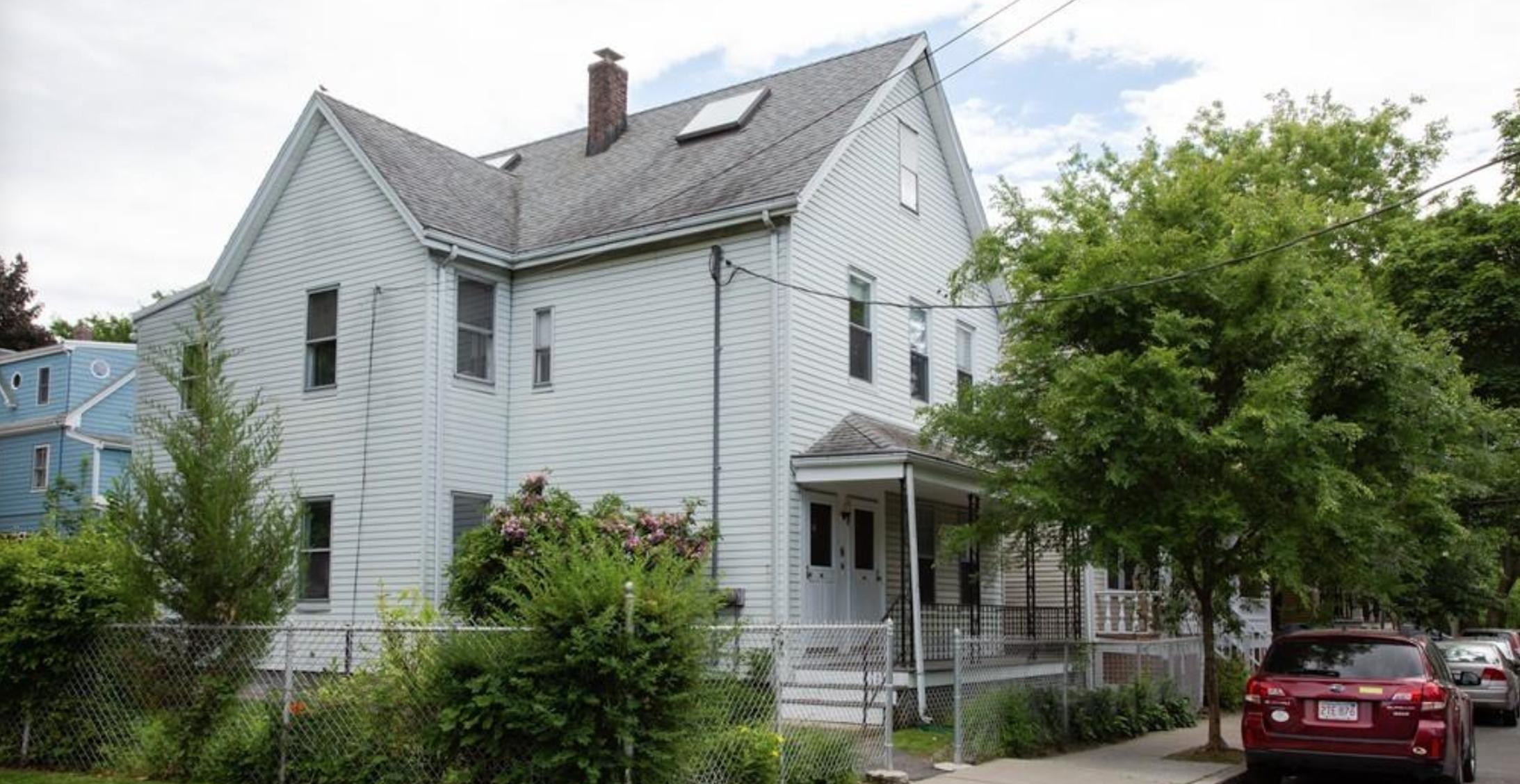
In the early 1990’s, before my family moved to the hinterlands of Cambridge—Strawberry Hill—I looked at a couple of houses on Stearns Street. Not this particular address, but buildings like it. Priced in the $200-$300 thousand range. An astronomical price for century-old workingman’s digs, chopped into mazes, cracked plaster covered with thin wood paneling, creaky floors slathered with shag carpet.
The long-standing family that owned 60 Stearns Street finally sold it in 2018. By then, the city assessed the 4,457 square foot piece of land at $791,300 and the structure at $446,200. Though the city fell far short of the market. A developer bought the property for $1,648,000 and promptly tore the building down. That’s $370 per square foot for land alone.
As the pandemic waned, and I returned to the gym, I noticed a new house on the site in final throes of construction. I traded jokes with the Portuguese guys laying pavers; Hispanics installing the landscaping. We laughed that none of us could ever live there, and wondered what kind of people would.
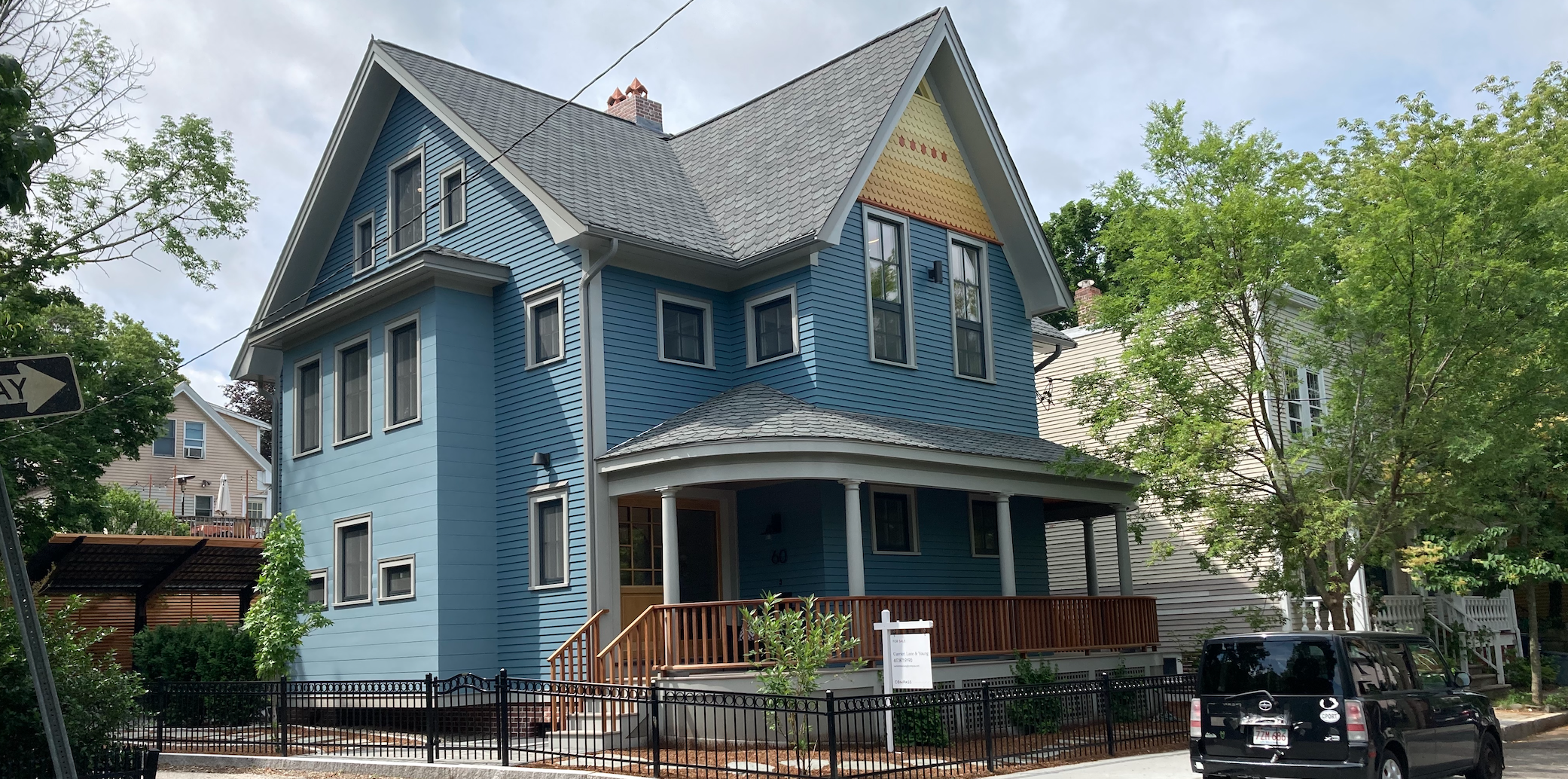
In June 2021, the new 60 Stearns Street came on the market. The 4,200 square foot, single family, five-bedroom, 5.5 bath house is marketed as “the world’s first Victorian passive house.” I guess, when you’re trying to sell a big house on a small plot with no appreciable view for $4.5 million, you’ve got to work the lingo.
Apparently, the lingo works, as the house was featured on Boston.com, June 15, 2021 as ‘Luxury House of the Week,” and merited an article in Harvard Magazine.
As I walked by one recent sunny morning, a father walked onto the second-floor deck with his young daughter, prospective buyers, obviously touring. “Do you think you could be a princess here?” I heard the man say. (Really. I couldn’t make up that line if I tried.) Thereafter, an older gent, the grandfather, stepped onto the deck. And I beheld a vision of generational wealth.
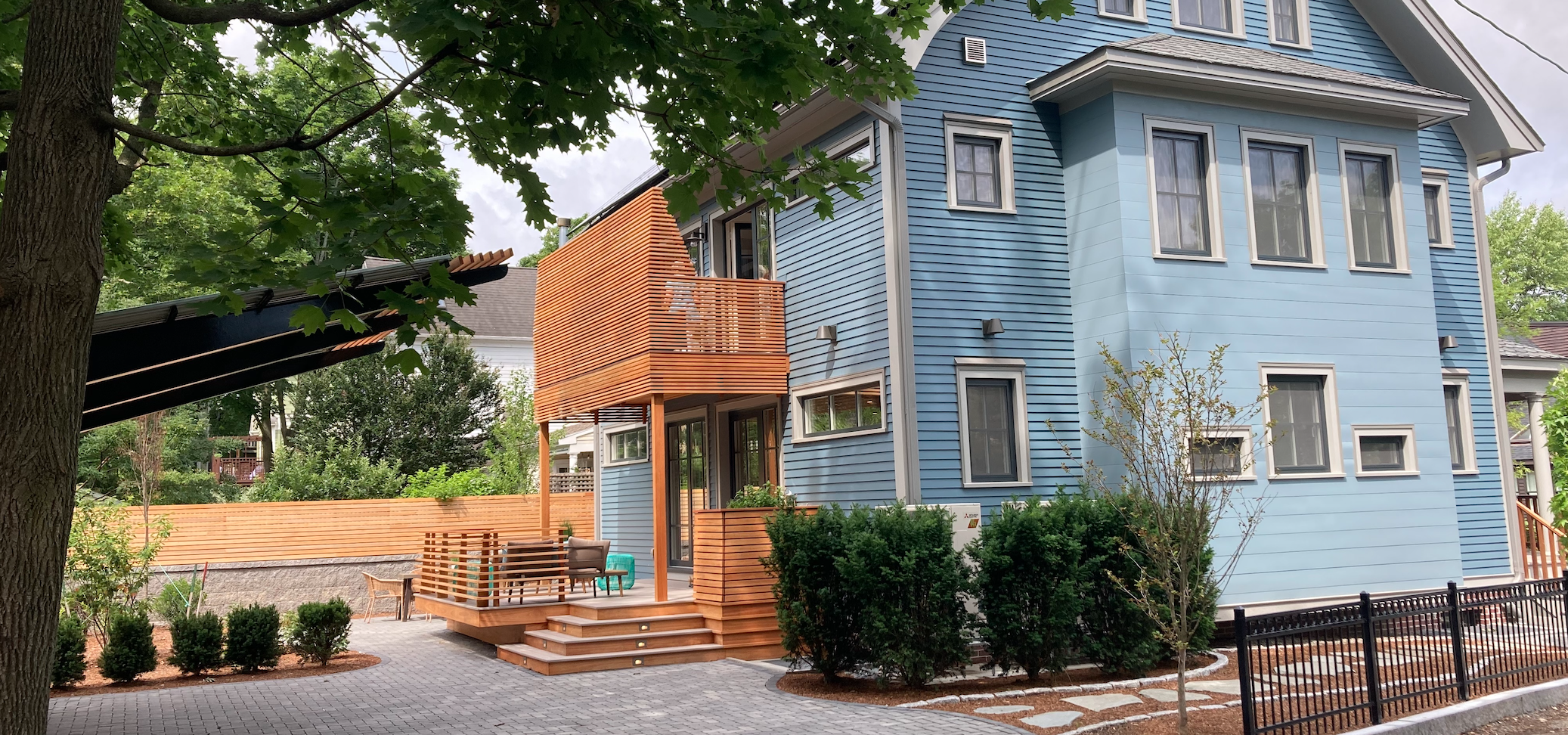
I don’t know whether that family purchased the house. If not someone like them did: 60 Stearns Street went under contract within thirty days. The City of Cambridge will make out well financially: the new property taxes are estimated at $7,439 per year, are almost twice what they were. But socially, culturally, I fear our city will be further diminished, as it becomes more impossible, one property at time, for people of average means—actual workers—to afford to live here.














 The Awkward Pose