Adrienne LaFrance’ cover story “The New Anarchy” (The Atlantic, April 2023) provides an historical perspective on the nature of violence in our country and how it cycles through history. This particular passage, centered on the early 20th century anarchist Luigi Galleani, resonated with me:
The conditions that make a society vulnerable to political violence are complex but well established: highly visible wealth disparity, declining trust in democratic institutions, a perceived sense of victimhood, intense partisan estrangement based on identity, rapid demographic change, flourishing conspiracy theories, violent and dehumanizing rhetoric against the “other,” a sharply divided electorate, and a belief among those who flirt with violence that they can get away with it. All of those conditions were present at the turn of the last century. All of them are present today.
Three of my favorite stories these days fall under the label ‘YA:’ Young Adult. Perhaps I’m regressing. Perhaps I’m catching up to a genre that did not own a label back when I was age-appropriate. Regardless, I love the exuberance, the freshness, the ‘everything is critically important’ intensity that YA captures. The essence of being a teenager. When the world unspools before us in endless possibility, and our mercurial feelings sizzle within our changing bodies; and we lay the foundation of the human beings we will become.
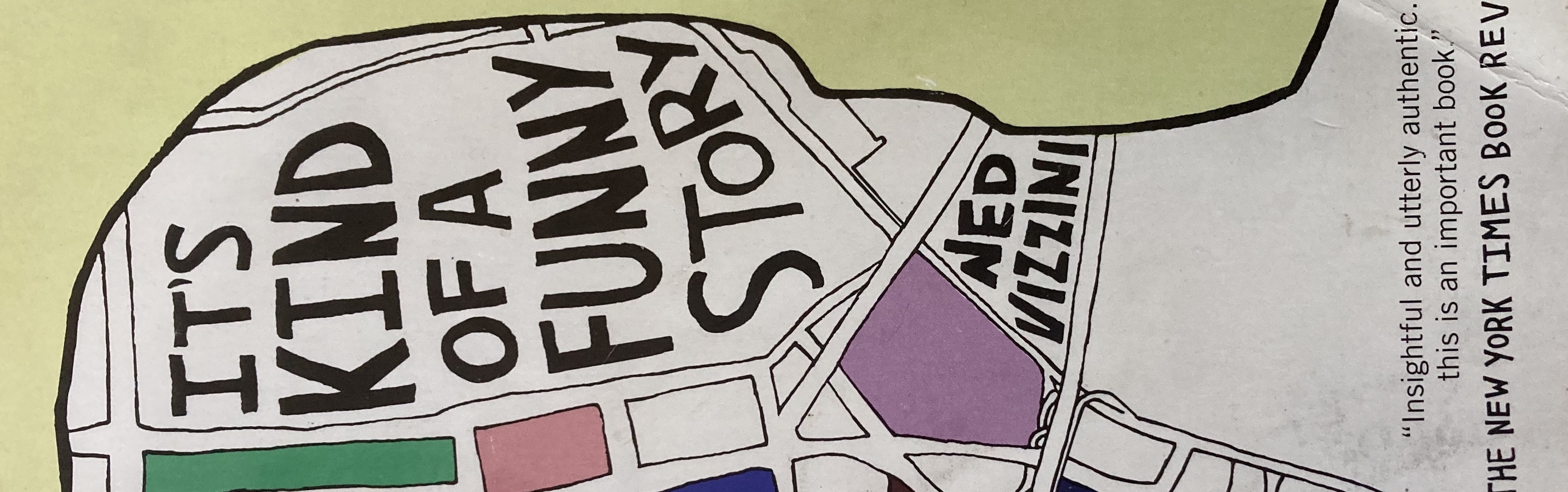
If you want a good read, I suggest It’s Kind of a Funny Story by Ned Vizzini. I’d never heard of this book which I selected from the Little Library in front of my house because I rather liked the cover. Our hero, Craig, is an over-focused junior high student who studies methodically to win a spot in a coveted NYC high school. Once there, he flounders. His floundering spirals into depression, which leads to suicidal ideation, Zoloft, ignoring Zoloft, too much pot, and an extended stay at the local psych hospital. The book is depressing, but also not. The characters on the psych ward are more eccentric and lovable than those in One Flew Over the Cuckoo’s Nest. The staff are human and caring. Craig’s parents are pillars of understanding. You know from the first page (the title, really) that everything is going to work out, but finding out just how satisfactorily it does is worth the journey. The lovely novel takes a notable twist after the last page, where the publisher reveals that the teenage author spent five days in an adult psych ward and wrote the book in just five weeks upon his release. What is truth and what is fiction?
If you prefer movies, one of my recent favorites is The Hate U Give (2018). I know, I know, it was a book first. But I did not read the book; only saw the movie. Perhaps the most balanced portrayal of the police violence against Black people I have seen. The story is told from the perspective of a Black girl, Starr, whose aspirational parents send her to an almost-entirely-white prep school. When a childhood (unarmed) friend is killed by a police officer during a dubious traffic stop—and Starr is the sole witness—the tension between the two communities she inhabits provide the opportunity to explore/expose every facet of the situation.
If streaming is your route, watch Heartstopper, now in its second season on Netflix. It’s kinda corny, very queer, and utterly enchanting. Nick and Charlie are the premier couple in the show, but there’s also Tara and Darcy; Tao and Elle; and even a glimmer of romance for chubby bookworm Isaac. The setting is a pair of gendered British public schools (which in the USofA means private school). Many blazers, ties, and plaids. Much kissing and never anything beyond first base. But isn’t that where all the tensions reside—in those first kisses? I can’t be sure how Heartstopper appeals to a straight audience, though I imagine it translates well. Among gay men of my age, we all watch, appalled still at the struggles young queer people must endure, even as we yearn for how these teenagers can express themselves in ways denied to us. On top of that, Olivia Coleman plays Nick’s ever supportive, ever tender mother. Where was she in 1973?
None of these YA offerings are great art. They’re something more immediate, more essential to everyday life. They each reflect the world as it exists, and illuminate positive paths to move forward in ways that always entertain, but also inform and challenge.
A few years ago my sister, who is both straightforward and accurate, called me a curmudgeon. It smarted for a moment, until I realized the truth in the label.
Since then, whenever I careen in the direction of being another eccentric old fogie, I catch myself for a moment. Then I usually yield to whatever offbeat opinion or socially dubious behavior washes over me. I’m coming around to the reality that my take on most things is simply different from others. The world’s a mess and no one listens to the cornucopia of remedies I know would make it a better place. Still, I try to stay positive. But how did I get so out of step with my fellow humans? Where does this streak of alternative logic come from?
Recently, my same sister moved from her lifelong house; downsizing being all the rage among my set. She sent a group text to all the sibs, “Would anyone want dad’s book?” “Sure” I replied, as I embraced the opportunity to welcome our father’s archives into my still ample home.
My sister and my father in 1979
Throughout much of our childhood, we heard about the book our dad was writing, The Irishman Who Discovered America. He would occasionally reveal snippets of his peculiar take on history, much of which takes place in Alaska, narrated by the lead Husky of a dogsled team. Dad was a guy who often left things unfinished; we never got to read the entire tale. The book, like so many aspects of my upbringing, just drifted away.
Apparently, when our father died, back in the ‘90’s, my sister got his book.
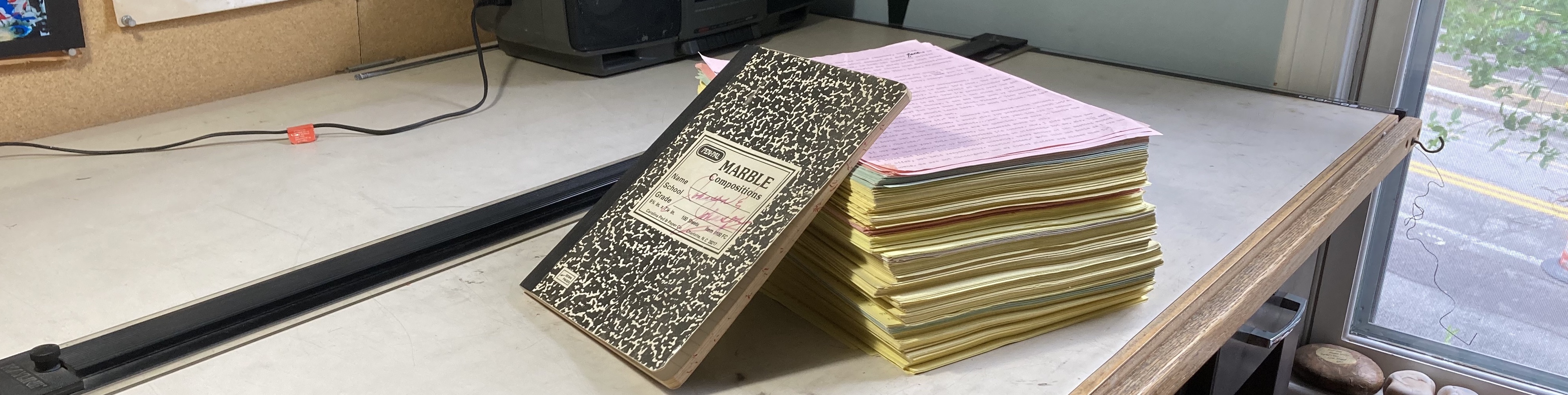
A week after our text exchange, a box appeared on my porch. Dad’s book! Actually, the box contained more than that: a five-inch stack of unbound, typewritten pages plus a Marble Composition Notebook. The kind we carried to school with in fourth grade.
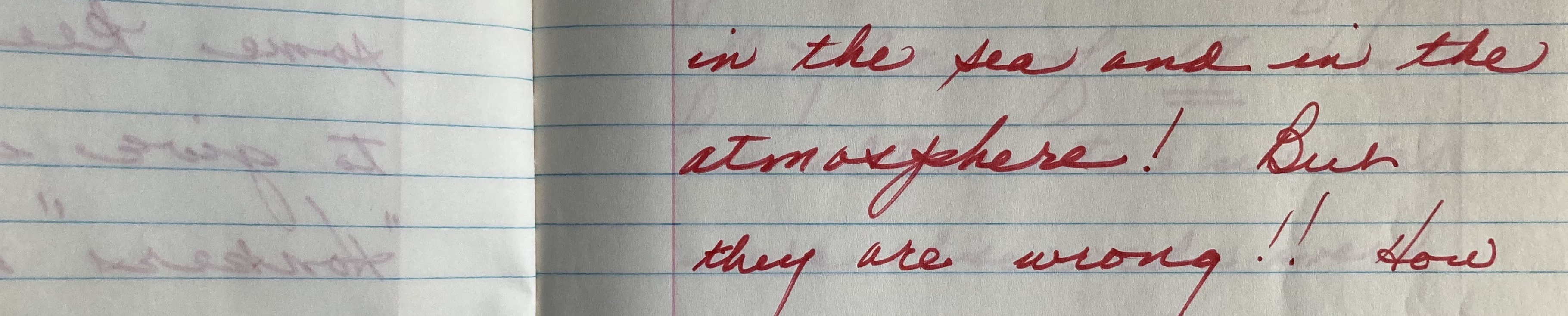
First, I thumbed through the notebook: a novella disguised as a letter to the Manager of Johnson & Johnson’s North Brunswick, New Jersey plant. The plot centers on a large skein of geese near the J&J facility, and envisions them as an air force. The manuscript is rich in references to World War II, the pivotal experience of my father’s life of which he never spoke. The narrator encourages J&J to engage in aerial offense against their pharmaceutical competitors. I didn’t understand it, which I took to be confirmation of my sanity, but I appreciated Dad’s beautiful cursive hand, and his affection for the exclamation point. As a man who lost my ability to write cursive two broken wrists ago, I was mesmerized by the beautiful flow of my father’s fantasy.
On to the five-inch stack. Most of the paper is yellow (the actual color, not because it’s old), a few leaves are pink, hardly any boring old white. The heading on the top sheet reads, “PART II.” Here I am on Page 1 and already behind! The typed sheets, with manual corrections, are not as elegant as the composition book, but what they lack in grace they make up for in volume.
In the opening scene (of PART II) Charlie, Mr. Guanare, Vito, and Soria discuss going to Spain. Apparently they are in Columbia. Apparently I am in the wrong book, as no one seems remotely Irish, or interested in discovering America.
Next scene takes place in a gin mill in North Jersey. Aha! My father finally writes from what he knows. Still, nothing makes any sense. Chalk it up to the whiskey.
At that point, I realize that conveying logical meaning to my father’s meanderings is not the essence of this pile of papers. Rather, I let his bizarre imagination wash over me. Although by and large a functioning human being, my dad was often teetering on some precipice: lewdness, or madness, or drunkenness, or brilliance. The man’s diffuse borders seep onto every page.
I will not bother revealing the plot or characters of the remaining several hundred pages. Only reflect that somewhere in the pile is the woefully underreported history that an Irishman and his Husky sled across the Aleutians and discovered America. Take that in the chops, Mr. Columbus.
As the son who writes, it’s fitting that I am now the keeper of the manuscript. Like my father, my writing is incisive and important—in my head—even as it sometimes counters conventional logic and rarely aligns with our collective consciousness. My prose may be more lucid; my transitions more easily traced, but I can only hope to possess a kernel of my father’s eclectic genius.
I recall my father, buoyant and jovial, whenever he was engrossed in writing his book. I now possess the evidence that he wrote a whole lot more. Which makes me happy. I’m pretty sure every page of his weighty oeuvre provided great satisfaction as well as comprehensive meaning that, a generation on, eludes me. Or anyone else who might wade into his pile. Much in the same way that my own writing vitalizes me, and provides an elevated alternative to our humdrum world.
My father and I both write principally for ourselves, a pair of offbeat curmudgeons creating the world as we choose to see it.
Did you know that the Sierra Club has a handbook called the “Equity Language Guide?” They are not alone. The American Cancer Society, the American Heart Association, the American Psychological Association, the AMA, National Recreations and Parks Association, and University of Washington all have similar guides on what to say when your primary objective appears less to convey a truth, than to avoid any possibility of offending any one in any way.
George Packer is a staff writer for The Atlantic. He’s one of those delightful writers: like Jill Lepore; Elizabeth Kolbert; and Adam Gopnick, whose prose is so sharp, and observations so clear, that I read any article that lists his byline. All of these writers are direct descendants of America’s godfather of non-fiction essays: John McPhee. But I digress…
Dispatches, The Atlantic’s Opening Statement, April 2023: “The Moral Case Against Euphemism,” is a witty yet unsettling exposé on the politically correct (a term no longer correct) language police. We all probably know better than to use the word “Oriental” to describe anything that’s not a rug, or “welfare queen” to describe anyone at all. Yet, the hamstrung writers for Sierra Club cannot use “urban,” “vibrant,” “hardworking,” or “brown bag” because, I gather, each connotes racism. Who knew that all those years I was a hardworking architect living in a vibrant urban community, brown bagging my lunch each day, I was inadvertently offending.
Everyone would benefit by reading the entire article, but are the Cliff Notes:
– banning words won’t make the world more just
– censorship in the name of progressive ideals is still censorship
– the careful tiptoeing of equity language actually distances the speaker/writer from reality
– it is a symbolic gesture that pretends to be a concrete action
“Prison does not become a less brutal place by calling someone locked up in one ‘a person experiencing the criminal justice system.’”
As an example, Mr. Packer offers an equity language translation of a passage from Katherine Boo’s Behind the Beautiful Forevers, a story of Mumbai slum dwellers. The original passage:
The One Leg’s given name was Sita. She had fair skin, usually an asset, but the runt leg had smacked down her bride price. Her Hindu parents had taken the single offer they got: poor, unattractive, hardworking, Muslim, old—“half-dead, but who else wanted her,” as her mother once said with a frown.
Mr. Packer’s equity language translation:
Sita was a person living with a disability. Because she lived in a system that centered whiteness while producing inequities among racial and ethnic groups, her physical appearance conferred an unearned set of privileges and benefits, but her disability lowered her status to potential partners. Her parents, who were Hindu persons, accepted a marriage proposal from a member of a community with limited financial resources, a person whose physical appearance was defined as being different from the traits of the dominant group and resulted in his being set apart for unequal treatment, a person who was considered in the dominant discourse to be “hardworking,” a Muslim person, an older person. In referring to him, Sita’s mother used language that is considered harmful by representatives of historically marginalized communities.
Now, which passage gives us more insight—and empathy—into Sita?
Humans are wanderers by nature. Our innate drive to explore—and conquer—has driven us to invade every corner of our earth, adapt to inhospitable environments, and now that we’ve run out of earth-bound frontiers, dive deep into the sea and reach out to the stars. The success of the human species, often referred to as ‘progress,’ is rooted in our curiosity. We’re always wanting to get away from where we are, and experience someplace new.
The dispiriting reality of the 21st century is that, so much of what used to be considered ‘good’ for us is now considered ‘bad.’ We realize that the highly-mobile, creature comfort driven culture we have created in the pursuit of so-called ‘progress’ will likely spell our doom. Maybe even soon.
But what’s a 21st century American, evolutionarily imprinted to explore, supposed to do on a glorious end-of-summer holiday weekend? We travel!
More than half of all Americans travelled over this past Labor Day Weekend. More than a third took car trips, fourteen percent of us travelled by plane; a measly three percent took public transportation. Most of us took day trips to visit the beach, relatives, or friends, but the number of longer trips increased beyond pre-pandemic years, evidenced by the bump-up in hotel reservations. Legions of TSA officers processed over 14 million people for this, our last summer fling. By the weary end of the weekend, our various travel modes had burned over 500,000,000 gallons of gasoline in our pursuit of leisure.
By and large our travel was successful. Hurricane Idalia petered out beyond urban areas. The National Safety Council figures on traffic fatalities over the weekend fell below 500. A degree of collateral damage we’ve long calculated into our comfort range. I couldn’t find any figures on how public transit fared during the holiday—who would bother to track that?
I don’t often think about travel statistics. As an unconventional traveler, the stats rarely apply to me. And they’re most often reported as estimates in advance rather than facts after the fact: on Tuesday after Labor Day the news cycle stokes new anxieties.
But this Labor Day I couldn’t help but think about the millions of Americans belted into their cars and planes, while my boyfriend Dave and I took a simple hike.
Holden is 44 miles from Cambridge, so I might have been counted as a travelling American. But everyone knows bicycles are just for fun and any who actually uses one to go from A to B is just loony. He doesn’t count.
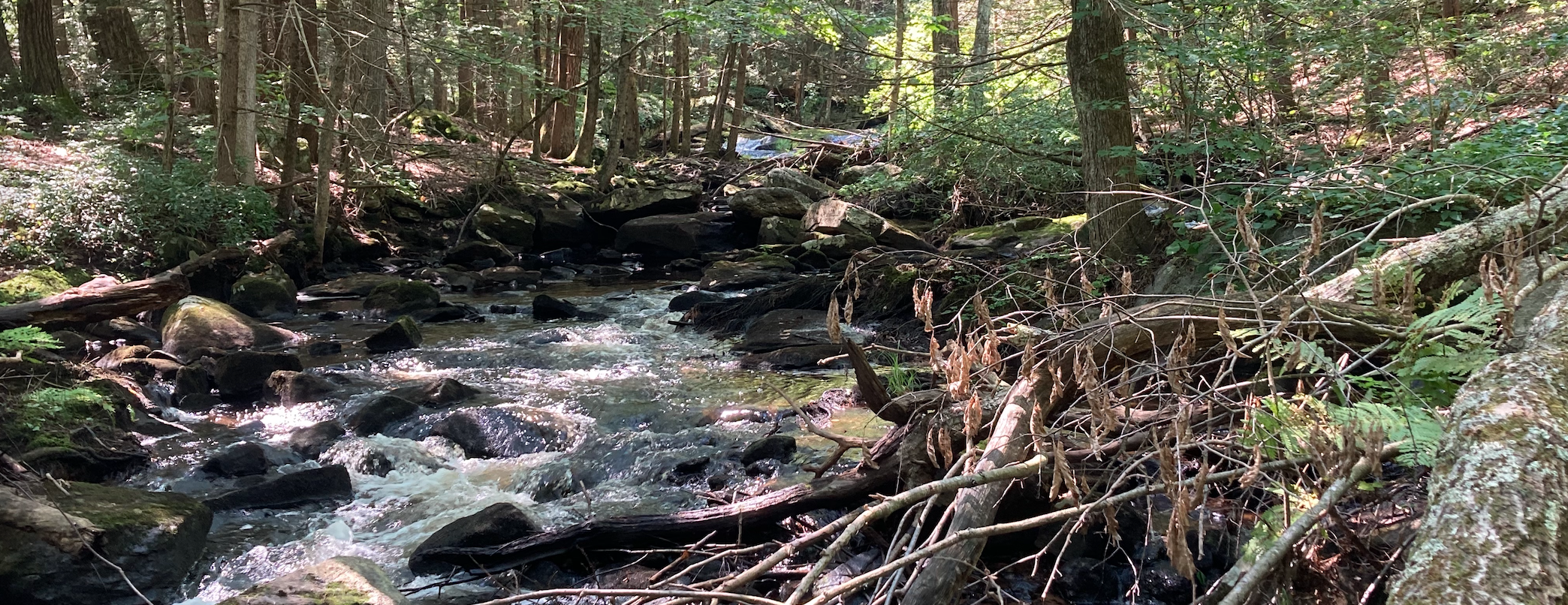
On a clear and breezy day we set off from Dave’s house, on foot, and made a seven-mile trek. The first and last mile were through conventional, indistinguishable suburban landscape. But for five miles we trekked through the Wachusett Watershed on a variety of easy rail trails; forested winding paths, a few glorious meadows, past a lovely lake, and into a rocky ravine neither of us had ever seen before. I christened it Quinapoxet Canyon, after the tributary eating away at eons of granite.
The natural beauty that lies within a mile of my friend’s house is remarkable. But perhaps even more remarkable, on Labor Day Weekend, is that we saw a total of four other people on our entire journey. Just four. While newscasts highlighted the crowds at Cape Cod beaches and New Hampshire lakeshores; while people waited in line to be checked through TSA or sat in steaming traffic on the Southeast Expressway as that invigorating salt water tingle evaporated under the pressures of returning home, we two hiked alone through gorgeous nature. Then we walked home.
Modern technologies make our innate desire to explore easy, though I doubt any of the 14 million holiday flyers discovered any place that is not already well mapped. Ironically, those same technologies contribute to our increasingly hot, hot planet. So it’s likely that sometime soon: within the lives of our children or their children or at best, their children; our ability to travel so easily, so extensively, will burn itself out.
The drive to explore is an intrinsic human quality. I believe it is mostly a good one. But like so many aspects of contemporary life, it’s time for us to reevaluate how we satisfy that fundamental need. We have to realize that there’s no reason to always to drive and fly so far away, when there is so much we have not explored close at hand.
As the world revs up to back-to-work and back-to-school, I want to share this delightful—and sage—piece written by E.B White (author of Charlotte’s Web and other books). It was first published in The New Yorker on January 31, 1953.
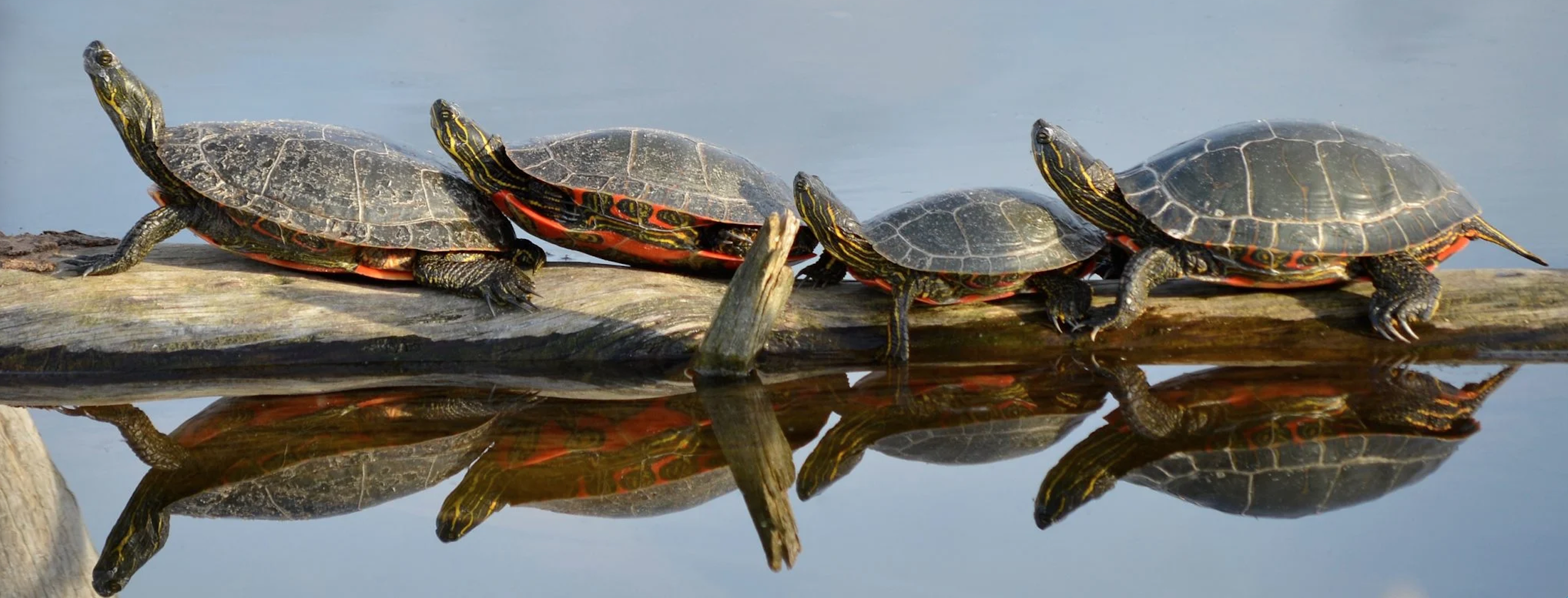
We strolled up to Hunter College the other evening for a meeting of the New York Zoological Society. Saw movies of grizzly cubs, learned the four methods of locomotion of snakes, and were told that the Society has established a turtle blood bank. Medical men, it seems, are interested in turtle blood because turtles don’t suffer arteriosclerosis in old age. The doctors are wondering whether there is some special property of turtle blood that prevents the arteries from hardening. It could be, of course. But there is the other possibility that a turtle’s blood vessels stay in nice shape because of the way turtles conduct their lives. Turtles rarely pass up a chance to relax in the sun on a partly submerged log. No two turtles ever lunched together with the idea of promoting anything. No turtle ever went around complaining that there is no profit in book publishing except from subsidiary rights. Turtles do not work day and night to perfect explosive devices that wipe out Pacific islands and eventually render turtles sterile. Turtles never use the word “implementation” or the phrases “hard core” and “In the last analysis.” No turtle ever rang another turtle back on the phone. In the last analysis, a turtle, though lacking know-how, knows how to live. A turtle, by its admirable habits, gets to the hard core of life. That may be why its arteries are so soft.
After blogging for over a decade, I am humbled to admit that the most popular post I ever wrote was about squat toilets: Personal Hygeine Tips from the Developing World. Published in 2014—so long ago the accompanying photos no longer link.
Proof positive that potty humor is always in vogue.
A few weeks ago I enjoyed a completely opposite, yet notable experience with bathrooms. Forget the questionable sanitation of squatting over a hole along with others in Cambodia. The natives of Boston are equally amusing, cordoning themselves off in the brave new world of gender-free bathrooms.
Gender-free bathrooms are not new. I encountered them in virtually every restaurant in the Pacific Northwest back in 2015. Like most trends, the idea flew back East. Likely, it is seeping this very moment into Middle America, where new ideas grow old and comfy.
It’s all well and good to label a pair of restaurant bathrooms as gender-free, with a vanity and toilet in each room, and a privacy lock on the door. It’s quite another matter to turn large, multi-fixture bathrooms into gender free-for-alls.
I attend lots of live theater, establishments that have large bathrooms that are used by hordes of people all at once. Intermissions. A few years ago, the restrooms at the Calderwood became gender-free. No renovations, just a name change. Women who dared would go into the former men’s room, where the line is always shorter (unless the play is about male homosexuals). I, however, being a man of bashful bladder, started going into the former women’s room. All stalls!
Well!!! You should have the seen the looks, the snickers, the comments. As far as females were concerned the point was for them to be able to use our bathroom – most definitely not the other way around. “It works both ways!” I smiled as the women distracted themselves with unnecessary primping.
A.R.T. in Harvard Square switched over next. No biggy. Cantabrigians are so intrinsically cool that everyone just filed into whatever restroom they pleased without a thought.
This year, The Huntington underwent a tremendous renovation, which included completely renovated, completely gender-free bathrooms. The Huntington’s audience is, shall we say, a tad older, a tad more staid than A.R.T.’s. The Lehman Trilogy is a looooong play. Two intermissions. No geriatric patron, no matter how Brahmin, could avoid having to use the bathroom.
Enter the lower-level lobby and encounter a snaking line of men and women, all looking disturbed and wondering, “Am I in the right place?” Some figure it out and resign to new-fangled ways in silence. Others are less astute. “Where is the line for the women’s room? What do mean, there isn’t a women’s room?” The men are doubly discomforted because first: they never had to wait in line before (The Lehman Trilogy is about many things, but not male homosexuals); and second: they’re missing their accustomed respite from their wife, now standing awkwardly, making small talk, at their side.
Thankfully, the line moves fast. The renovation architects did a good job estimating restroom demand. When we enter the formerly separate restrooms, now combined into one Olympic-worthy stretch of floor-to-ceiling laminate stalls, occupancy lights flash red or green over each door. Each person hesitates, eyes a fresh green light, and makes the dash to their private space. Where they are greeted with a smiley-face sign admonishing you to put the seat down.
It’s all very functional and au courant, but not in the least elegant. I don’t get the sense that anyone likes the new arrangement. Which is irrelevant, since the point of gender free bathrooms is to give everyone, regardless of gender-state, the same experience.
Then I recall another hidden benefit of putting everyone’s bodily functions in the same space. Years ago, after a too-long though important meeting about a new project at Yale-New Haven Hospital, some outstanding issues filtered into the post-meeting chatter among the execs in the men’s room. The few females who had attended the actual meeting missed the finale. We can now all rest assured that won’t happen anymore.
One for the first things an aspiring civil engineer learns how to do when seeking a flat surface upon which to construct a road or a building, is to balance cut and fill. Analyze the topography in three dimensions and determine where to cut down the hills and fill in the valleys. Anyone who’s walked a rail trail in New England will observe how cut and fill works in real time. In the 1800’s we dug away at our craggy hills and filled our steep slides in order to create gentle inclines so railroads could run smoothly at a negligible grade. In the physical world, cut and fill is the great leveler.
In the social world, leveling the playing field is not nearly so precise, nor do the results provide the kind of progress that nineteenth century railroads proclaimed. When we cut back the advantages afforded those at the privileged end of society, the resulting excess does not necessarily raise those at our lower rungs.
Mike Groll/AP
The Cambridge Public Schools have eliminated advanced math classes for middle school students. No algebra for eight graders. Superintendent Victoria Greers states, “We have a huge focus on addressing both the academic gaps and the opportunity gaps in our community.” That may be a noble sentiment, but it is playing out in ways that are disadvantaging all.
Students in advanced math classes tend to be affluent compared to the student body as a whole. Eighth grade algebra is not so important in itself, but students who complete it, can then track to advanced math classes in high school: classes that help boost SAT scores, enable AP exams, and embellish applications to top tier colleges. Therefore, parents with a long-view of their children’s opportunities are choosing to either provide additional math instruction outside of school, or pull their children out of the Cambridge Public Schools completely. After all, they tend to be affluent, so many can afford private school.
With the top-level math students creamed away, the students who remain are robbed of the opportunity to study with—and be challenged by—prime peers.
If the issue was simply, does Cambridge teach basic math to all or advanced math to some, the answer would be obvious: everyone deserves to be taught basic math. But that’s not the question in the City of Cambridge, where the average annual expenditure per pupil is over $35,000 (the highest in Massachusetts, by at least 20%). Cambridge has plenty of money to teach every student at their highest level. The public schools choose not to do that, under a mistaken notion of equality.
I had two children who graduated from the Cambridge Public Schools, about fifteen years ago. Way back, in elementary school, their classes were pretty much 50-50 mixed by race and socio-economic status. Their third-grade teacher had a big sign in front of the room that said, “Equity is not giving each child the same thing. It is giving each child what they need.”
My children went on to middle school, where they studied algebra. By the time they entered high school, the racial mix of the school was 80/20 non-white to white, yet by the time they were juniors and seniors, their advanced classes were 80/20 the other direction. This was not a desirable reality in a school system that strives to provide everyone the opportunity to excel, and fifteen years later, those proportions have hardly budged.
The beauty of the Cambridge Public Schools two decades ago was that every student could get a good education to prepare themselves for whatever future awaited, whether that be auto repair or Ivy League.
It’s terrible that, despite good intention and extravagant resources, we have still have such academic gaps in our community. But it is horrific that the way of dealing with that gap is by eliminating opportunities for academic achievement.
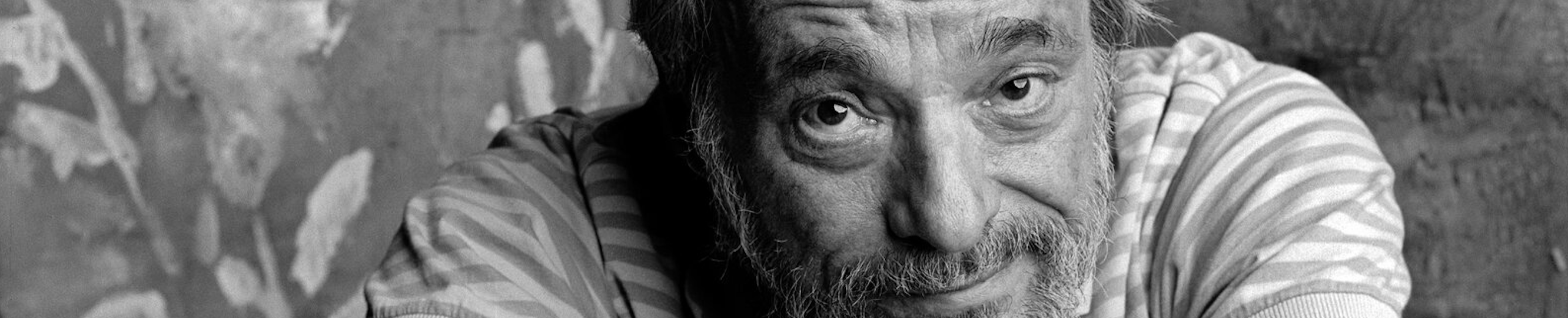
A few weeks ago I watched Six by Sondheim an HBO (kind of) documentary, and (totally) kitsch love poem to the late, great Stephen Sondheim. The accolades to Mr. Sondheim’s talent were eclipsed only by the accolades—from everyone—for Stephen Sondheim the man. This is no case of revising a legend after death. Stephen Sondheim has long been considered the Mensch as well as the Master of Broadway.
I am hesitant to recommend the film to the general public, but to a theater geek like me, it was a sumptuous dive into the creative process; a master class in communicating the human condition through song.
The film also got me thinking about those people whom everyone loves. It’s awesome that everyone who knew Stephen Sondheim, loved Stephen Sondheim, but I must admit, the man is a bit of a niche celebrity. Broadway’s impact on America just ain’t what it used to be.
So, I started asking around: name someone who is both universally known and universally loved.
My exploration soon split into multiple threads.
First, there are the individuals that everyone likes, despite the big organizations they represent. We have the world’s best, friendliest, most conscientious mailman. Everyone in our neighborhood loves him. And I’ve heard many others love their mail carrier too. Which is not to say that any of us are big fans of the US Postal Service.
Second, there are the fabulous folks—the social glue—that bind families and friends. My boyfriend Dave is one of these. I can honestly say that everyone loves Dave. He’s easy going, funny, big-hearted, generous in an everyday way. You might think it’d bother me that he is universally liked (while I am most definitely not). But that’s part of Dave’s charm: no one is the least diminished by his glow.
Still, neither mailman nor boyfriend achieve the scale of affection required for my inquiry. A universally loved person needs both 100% favorability ratings and worldwide recognition. They have to be a celebrity!
Celebrities pretty much come in three flavors: politician, athlete, or entertainer. Given our ideological divide, no politician is universally loved. So that leaves athletes and entertainers.
Tom Brady? Too stand-offish. LeBron James? Too edgy. Tiger Woods? There was that cheating scandal. Michael Jordan comes close. Squawky clean, affable. (How come I don’t know any female athletes? That’s a whole ‘nother problem.)
The range for entertainers is wide. Movie stars, TV personalities, comedians, rock’n’rollers. Not to mention, ‘influencers,’ which I won’t since I don’t know any and therefore dismiss them categorically. Comedians are excluded because these days, if you’re not insulting somebody you’re not funny. Same for rock’n’rollers. Except maybe the Boss. Pretty much everyone likes George Clooney, right? Brad Pitt: the Angelina thing hovers. Tom Hanks, for sure. Denzel Washington: except for that brutal Training Day. On the female side, Meryl Streep is a tad elitist. Oprah’s sincerity is corporate bleached. Jane Fonda’s politics don’t fly, though Lily Tomlin gets a pass for hers. You can’t not like Viola Davis because, let’s face it, she’s soooo good. Barbara Streisand is too much of a diva. Ditto Cher, Adele, Bjork, and anyone with only one name. Except for Selena. Ya gotta love Selena. I am personally and forever in the thrall of Michelle Pfeiffer…but there I go getting niche again.
The entertainment category is definitely the ripest for finding someone whom everybody loves. Yet even there: is there any single person who transcends the divisiveness of our world?
Aha! I found her! The ultimate movie star, musician, goodwill ambassador, and commonsense hero that everyone—and I do believe everyone—loves. Dolly Parton!
Victor Luckerson’s new book, Built from the Fire, a history of the 1921 Tulsa Race Massacre and its reverberations through the last hundred years is unlikely to enjoy wide readership in any Oklahoma Public School.
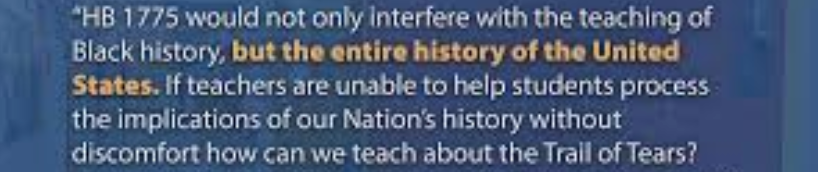
Why? Because Governor Kevin Stitt recently signed Oklahoma House Bill 1775 into law. The general provisions of the law are as follows:
“No teacher, administrator or other school employee shall require or make part of any Course offered in a public school the following discriminatory principles:
(1) One race or sex is inherently superior to another race or sex
(2) An individual, by virtue of his or her race or sex, is inherently racist, sexist or oppressive, whether consciously or unconsciously
(3) An individual should be discriminated against or receive adverse treatment solely or partly because of his or her race or sex
(4) Members of one race or sex cannot and should not attempt to treat others without respect to race or sex
(5) An individual’s moral character is necessarily determined by his or her race or sex
(6) An individual, by virtue of his or her race or sex, bears responsibility for actions committed in the past by other members of the same race or sex
(7) Any individual should feel discomfort, guilt, anguish or any other form of psychological distress on account of his or her race or sex
(8) Meritocracy or traits such as a hard work ethic are racist or sexist or were created by members of a particular race to oppress members of another race”
Oklahoma Policy Institute
Taken at face value, the eight points describe desirable attributes of a colorblind world. However, the thin veil that cloaks this and other recent state laws is a misguided reaction to Critical Race Theory and folks of all colors clamoring to reexamine our nation’s history through a kaleidoscope of lenses. The point of the law is not so much to be colorblind as to keep the blinders on the dominant narrative of our nation’s history.
I learned about Mr. Luckerson’s book and Oklahoma House Bill 1775 on the same day that Supreme Court overturned affirmative action in higher education based on race. After sixty years, affirmative action was not rescinded because it’s promise had been attained. Rather, it was overturned because a group that will likely achieve more plum spots in elite colleges proclaimed that they had become the object of discrimination. It was an ingenious argument, so representative of these times when the privileged, comfortable, and complacent imagine themselves under siege.
I can imagine similarly upside-down arguments to overturn Oklahoma House Bill 1775. Will we be able to teach the original text of our Constitution if a person descended from slaves asserts that the 3/5 clause makes them feel that “one race is inherently superior to another?” Will we be able to teach the post WWII G.I Bill, in which veterans were uniformly discriminated against because of their race? And if a person is not supposed to feel, “discomfort, guilt, anguish or any other form of psychological distress on account of his or her race or sex,” does that mean that the Oklahoma Public Schools must embrace trans students?
The rarely acknowledged purpose of public education is not simply to impart necessary life skills, create productive workers, or nurture engaged citizens. It is to spread and reinforce the cultural norms of a society. That’s why pubic education was so valued a century ago, when a surge of immigrants prompted the powers-that-be to indoctrinate them, while the newcomers themselves wished to adopt American norms. That’s why public education is so embattled now, when our cultural norms are threadbare and we’re in the midst of a national argument over the facts of our own history.
The truth of our history is not fully described by the 1619 Project or the 1776 Project. Our history includes the 1619 Project and the 1776 Project, plus many other voices and perspectives. We don’t learn anything by legislating away discomfort. We learn by being made uncomfortable. By being challenged. By having to listen to others’ points of view, and acknowledge those that are valid.
America is a noble idea, often poorly executed. Particularly when it comes to race. Why are we unable to accept that dichotomy? We can celebrate our experiment in democracy while admitting all the ways we’ve fallen short. So long as we commit to continue to try to right the inequalities and injustices.
Reading Built from the Fire in an Oklahoma public school might well be a good place to start.