
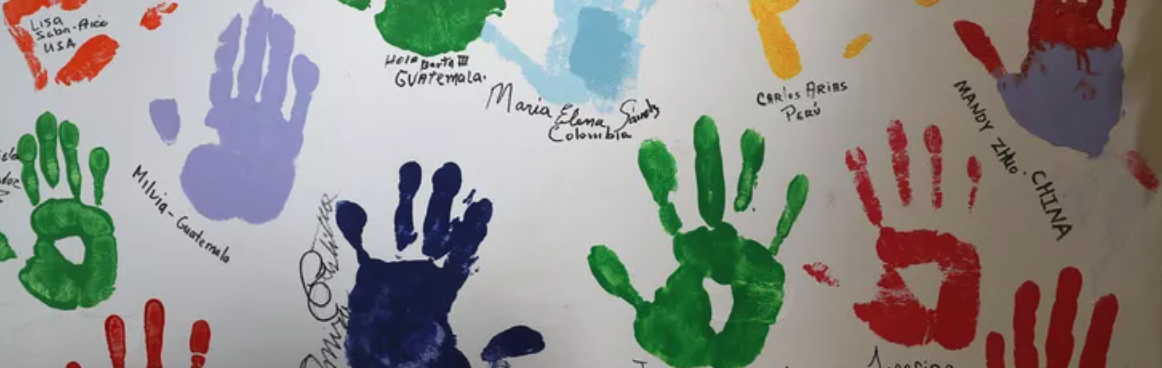
When immigrants arrive in the United States, or anywhere really, they bring the culture and lived experience of their native country with them. As they encounter the realities of a new nation, they must determine—sometimes consciously, more often through a sort of osmosis—which aspects of their former existence they cling to, and which they will abandon as they navigate their new life. The term we use to describe this is: assimilation.
Historically, the process of assimilation follows a predictable pattern. Immigrants arrive. They are shunned and belittled. They work hard, often at menial jobs well beneath their capabilities. Their children fit in better, gain more material wealth and social stature. Their grandchildren strive even higher, often entering professions and become affluent. The fourth generation is fully assimilated, and often slacks. 100% American.
One can look at this pattern as a pebble rippling out from the original English, as immigrants arrived further and further from the London epicenter. The Irish, the Scots, the Scandinavians, the Germans, the Southern Europeans, all endured discrimination and eventually rose above it. More recent immigrants from Asia, Africa, and Latin America are still in the midst of their assimilation journey. There is one significant group of immigrants, African-Americans descended from slaves, whose trajectory in our nation fails this ladder of success. Everything about how they came to be here, and how they’ve been treated for the past four hundred years, makes their experience unique. A black mark on American ideals we grapple with, unsuccessfully, to this day.
The wonderful thing about assimilation is that it’s not a process of 100% acceptance. Most immigrants yield much of their language and customs as they adopt American ways because, in general, the more a person joins the flow, the easier their transition. But for many, clinging to old ways is a critical component of their identity, and so they retain their language, their dress, their food. I’m sure that Asian-Americans who adopt Euro-centric first names, like Susan and Ken, have easier times than the many African immigrants who maintain traditional tribal names, so foreign to many American tongues. Similarly, Muslim women who wear headscarves are notable, but women in full burkas strike a different chord, because, whether true or not, covering your face in our culture connotes something shady.
Thank goodness for the 10%, 20%, 40% retention of immigrants’ native ways. They are the key to what makes our culture so dynamic. Just as every immigrant is influenced by what they encounter here, those of us who’ve been here awhile (3-5 generations in my case) are influenced by the immigrants we encounter. Growing up in small town New Jersey I never encountered an African name or a woman in a headscarf. Now they are commonplace, and though my pronunciation is wobbly, I always appreciate people who understand that their name is unusual, and take the time to help me with correct pronunciation.
Of course, the true richness of American culture’s connection to the immigrant experience is far deeper than names and scarves. Our food, our clothing, our music, our art, our literature, it is all tangled in the saga of the person who quests, travels, becomes changed, and in the process changes where they’ve arrived.
I’m a huge proponent of welcoming immigrants. I would like us to welcome more. Legally. With support. And the understanding that, like their forbears, they will likely have to struggle a bit more than those of us already comfortably settled. But they will have opportunity. The opportunity to assimilate. To prosper. To be shaped by our culture. And shape it in return.


