
The Antiquities
By Jordan Harrison
Directed by Alex Lonati
Speakeasy Stage
March 6-28, 2026
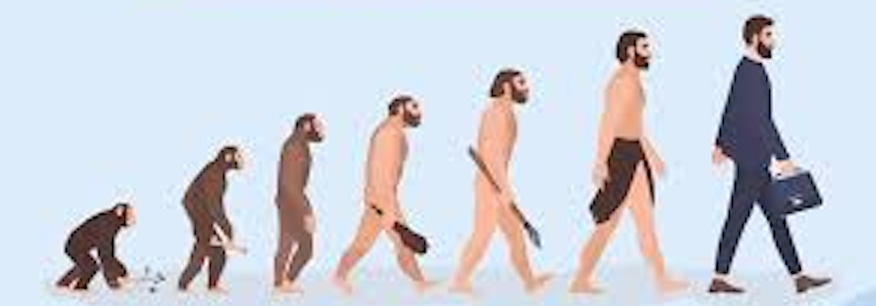
We’ve all seen some variation of an image of human’s evolutionary stages. Some small creature in the lower left, often a chimp, sometimes even a salamander emerging from the sea (for evolutionists who wish to portray a broader time scale). The creature grows in stature and confidence as he stands ever upright towards the right. Culminating with…us. The image never leaves space for what might come after. Yet surely we are not the pinnacle of evolution. We will continue to evolve in ways impossible for us to foretell. Even so, playwright Jordan Harrison takes us on a rollicking good time travel in his thought-provoking play, The Antiquities.
Sometime in the 25th century, we’re invited to visit a museum of human history. The basic premise is a familiar sci-fi trope: humans have disappeared from the earth, replaced by intelligent entities unburdened by physical bodies. Mr. Harrison asks the deserving question, “What will they think of us?” and postulates a museum that features dioramas of humans in action as they begin to intuit what might come next. It’s a quaint concept: a museum, dioramas, actors in period costume, yet reminiscent of so many sci-fi worlds that harken to our own past (consider Blade Runner’s retro city).
A pair of robotic creatures welcome us to the museum and take us on a tour that begins in 1816, (when, on a summer’s lark, Mary Wollstonecraft first conceived of a creature created by man, who became Mary Shelly’s Frankenstein.) The play proceeds chronologically in short vignettes that include farmhands, single moms, AIDS victims, computer programmers, and AI experts, blowing past 2026 to portray directed brains, renegade humans corralled on reservations, and eventually a planet of pure intellect. The play is episodic, and like many museum experiences, leaves the visitor scratching their head about what happens in the years—often decades—between one scene and the next.
Speakeasy’s set is a series of panels, prosceniums really, nested as they retreat upstage. They’re quite elegant, but I couldn’t fathom their purpose beyond defining loci of action on the broad stage. More effective are the square pools of light that establish the center of each diorama. Once we’ve chronicled our way to the 25th century, the smallest proscenium closes to become a display case of human artifacts. A clever voice over describes their archeological importance. So far the play’s okay, though the observations about our past, or where we might go in the future, lay comfortably within familiar contemporary projections.
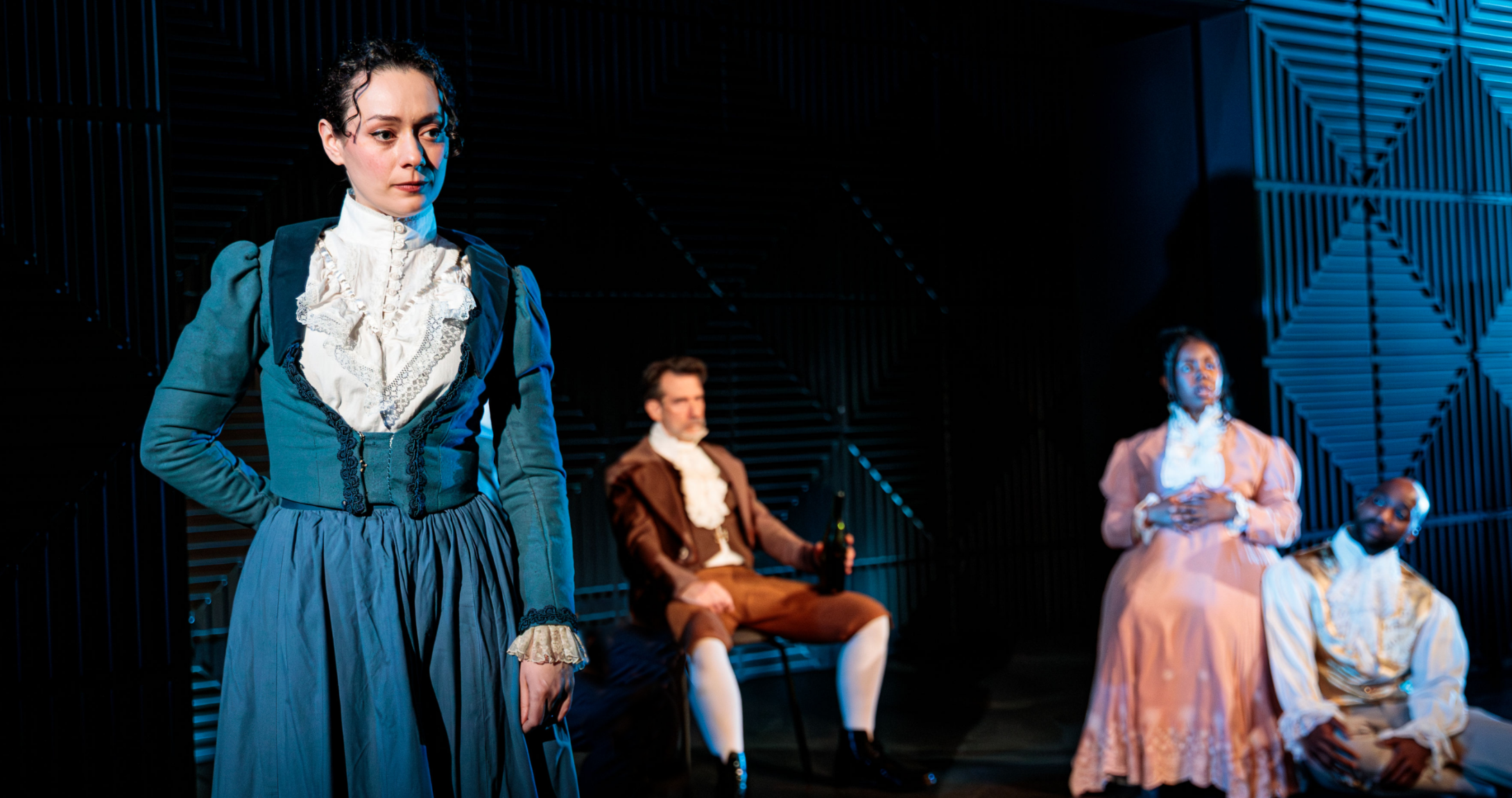
Then the lights reveal an entirely new set of artifacts, none of which has been featured in the earlier scenes. The voiceover concludes, the proscenium reopens, and the dioramas continue. Presented in reverse chronology. There is a pleasure in returning to each diorama; as if the characters are old friends. But also a deeper satisfaction. Because we know the future Mr. Harrison has scripted for us, revisiting ourselves over 500 years allows us to puzzle-fit each vignette, grasp which decision, at what time, contribute to where we end. And what was just human noise. The deconstruction in The Antiquities is totally engaging theater. The point of it, ultimately, is not whether this particular future vision is accurate. Rather, the message is: we do not know how decisions we make today will shape our tomorrow. We are not supposed to know. But shape them they will. So act in care, with consciousness.
As time unfolds, from future to past, one can’t help but make connections with the actors inhabiting their dioramas and the real-world events incessantly clamoring down upon us. It’s a worthwhile evening of theater, that you will ponder long after.

 The Awkward Pose