
We’ve had a full year of Trump 2.0. What’s left to say about the man who’s dominated our news cycle every damn day for over a decade? We all know that he’s mean spirited and thin-skinned; that Roy Cohn’s star acolyte is a Gold-medal Olympian in the trifecta of deflect, deny, distract; that all policy decisions are made to maximize personal enrichment; that constant chaos is a form of control; that the surest way of knowing what he’s up to is to ricochet the accusations he hurls at other back at him; that he’s the only US President whose leadership style is rooted in dividing rather than uniting us.
These characteristics—I’m hard-pressed to call them qualities—suggest to me a way of understanding our current American dilemma that I’ve not found in any media. That our republic, inefficient as it is with it’s supposed checks and balances, fragile as it is depending on the vagaries of an informed electorate, is premised on the naïve assumption that those participating in it, and those leading it, believe in its founding principles. With President Trump trampling the Constitution and ignoring the rule of law, we’ve entered new territory. The demolition of democracy from within.
The United States has survived more violent times. The so-called chaos in our cities that Trump deploys National Guard troops to combat is a trifle compared to the actual urban riots of the 1960’s. The challenge for many of our residents to satisfy basic human needs is great, though hardly as severe or widespread as during the Great Depression. The culture wars of left vs. right are ludicrous, but they’re hate-lite compared to the division over slavery that drove our nation into Civil War. Are we prepared to take up arms over DEI?
I came of age during the 1960’s. I witnessed Newark and Detroit and Watts and Kent State on the nightly news. I was weaned on my parent’s Depression tales, when my mother’s extended family merged to include four adults and seven children under one roof, and my father boasted of eating oatmeal seven days a week. I have no direct connection to the Civil War, beyond the innate understanding that it was fought over the fundamental premise of our nation—that all men are created equal. Yet I believe the threats we face today are more serious than those of the past because those were all, essentially, fights about people wanting to get in; to participate and benefit from the bounty of the American dream.
Today, we face the dissolution of our system of government by the officials we elected to run it.
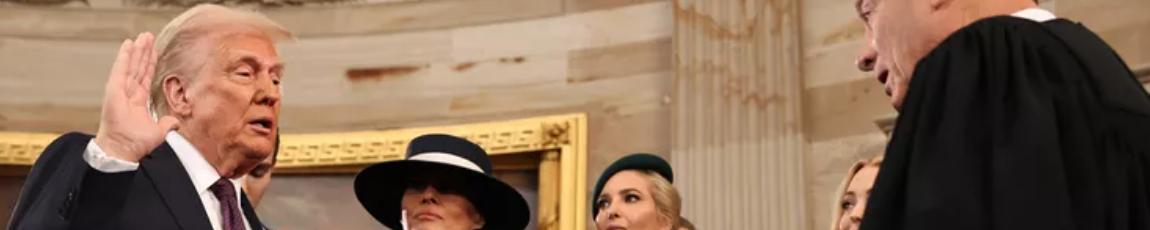
Shame on us for electing them. Shame on them for lying through their oath to uphold the Constitution.
History is littered with factions that sought to carve an outsized share of the American dream by denying it to others. The Trail of Tears. The Antebellum South. The Haymarket Riots. Japanese Internment Camps. The hoses of Birmingham. Yet I believe the most appropriate start date for our current malaise is 1980: the election of Ronald Reagan and the beginning of a national morality based on one thing and one thing only: money. Once a society is reduced to a collection of transactions, it’s easy to lose our common humanity, to demonize the other, to be driven by fear. What have we learned from our forty-five-year nosedive from hostile takeovers through the anti-government Tea Party to aggressively deporting folks whose residency status varies (though their skin is always dark)? We’ve learned that our form of government does not insulate us from those who want to tear it down.
If James Madison and his Constitution-writing cronies had the clairvoyance to anticipate Donald Trump and his cronies, what would have they conceived differently? Would it matter if voting was mandatory? If states had a right to opt-out? If the legislative purse strings were more tightly bound? Probably not. Because, just like it’s easier for criminals to circumvent a law than it is for lawmakers to anticipate the loopholes, there’s always some tsunami of circumstances that can drown a society.
The odds of having a legitimate election in 2028—or perhaps even 2026—are unacceptably long for a functioning democracy to accept. First, the electorate has to stand up, pay attention, and vote our conscience. The elections need to be legitimate. The elected need to honor their oaths. Then we need to crank our laws and our Constitution into a shape that will never enable Trump 2.0 to come again.
The alternative might well be…Trump 3.0.

 The Awkward Pose