
Black Nativity
By Langston Hughes
Directed by Voncelle Ross
Emerson Paramount Center
December 5-21, 2025
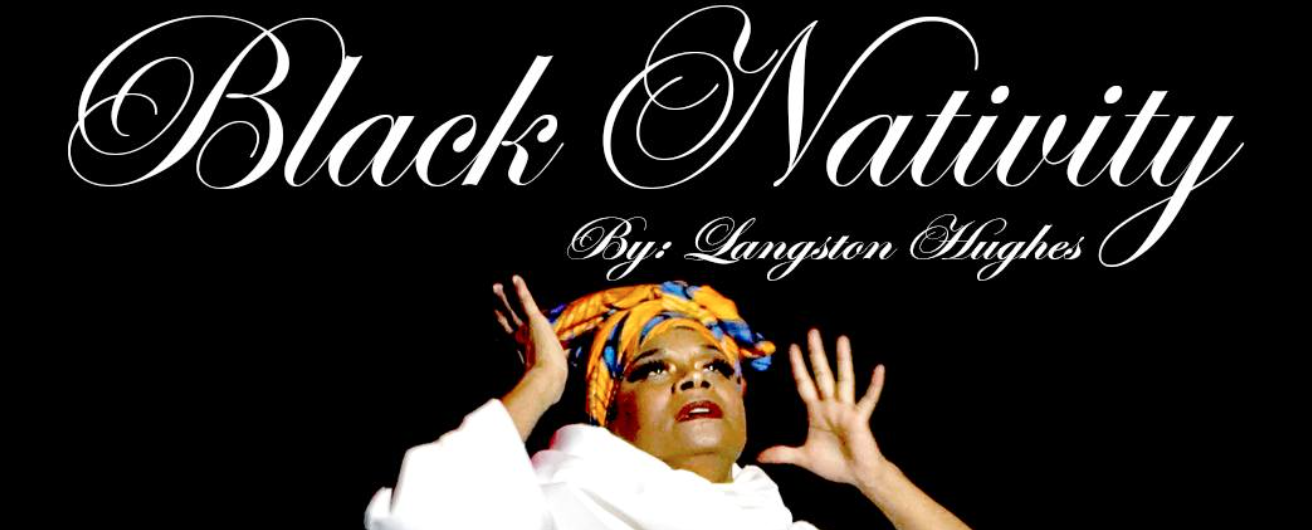
In 1961, as if in anticipation of Black Power, Langston Hughes wrote a Christmas pageant unlike any of that time, telling the familiar birth of Jesus story with a cast of Black actors, portraying that story from the strengths of Black artistry. The singing was Gospel rather than hymnal. The dancing was tribal, rooted. And the Biblical narratives were translated into 20th century eloquence, with a decidedly Black slant.
Miss Elma Lewis, grand doyenne of Boston, founder of The Elma Lewis School of Fine Arts, as well as NCAAA (National Center of Afro-American Artists), staged Black Nativity to Boston in 1970. The pageant has been performed every holiday season since.
As an aging white guy with takes no comfort from either the religious or commercial aspects of Christmas, there wasn’t much drawing me to Black Nativity. But as a Boston theater maven, I figured any production that’s endured 55 years deserves attendance. And from the perspective that, “this is something everyone should experience,” I recommend Black Nativity.
The singing is glorious. Simply glorious. And there’s plenty of it. Twenty musical numbers in all. Every traditional carol is rendered in a unique way; you mine new meaning from “Away in a Manger” and “O Come All Ye Faithful.” Yet there are many more songs that were fresh to me, and all are uplifting.
The costumes are very effective: simple white robes, with dazzling gold bodices. The percussionists are terrific. The dancing, to be honest, is less impressive, though the main dance feat, of Mary giving birth, is a gripping choreography that was powerfully manifested at the performance I attended (Black Nativity has rotating cast for many roles). The narration is lyrical; the more Langston Hughes strays from scripture and speaks in authentic voice, the more I appreciated the storytelling.
There were two big-time surprises (for me) in the production. First, after Mary’s incredible birth dance, she and Joseph come forward with a babe in a cradle. A live baby! I was captivated, and enchanted. When the babe fussed just a bit, Mary lifted him up and nursed him. Turns out, the woman playing Mary that night has a four-month-old baby, who now has a stage credit.
The second surprise came late. I figured that the three strong-voiced men who lead many of the musical numbers would be the wise men. Oh, no. The wise men were new actors descended straight out of RuPaul, swishing their way across the stage in sparkly, flamboyant robes that they toss about with drag enthusiasm. They create a striking contrast to the overall placidity of the pageant. But they’re fun!
The most disappointing aspect of the show is the venue. Emerson Paramount Main Stage is simply too big to fill for a three-week run. I saw the show on a freezing cold Thursday night, when the audience of maybe 150 scarcely populated the place. For many years Black Nativity was performed at Tremont Temple, and it would resonate better in a smaller theater or church.
In 2025, Black Nativity is hardly the radical theatrical was in 1961. It is now a period piece. But one worth preserving, and seeing. So prove me wrong – go buy tickets and sell out the Emerson Paramount this weekend.

 The Awkward Pose