

Ronny Chieng’s Netflix comedy special, “Love to Hate It” is a biting hour political satire worthy of The Daily Show correspondent. The humor is rooted in dichotomy rather than punch lines, and though it leans left, Ronny strikes at the absurdities that pock both sides of our political divide. However, unlike most comedy, which amuses and then flies out of my brain, “Love to Hate It” left me puzzling over some fundamental questions of a citizen’s relationship to their country.
“I love my country. I would die for my country.” Ronny parodies the blind patriotism of the right. Then he skewers it.
First, from an oblique angle. “What do we do for things we love? First off, we give them money.” Ronny lists all the things we love and support: young children, aging parents, sporting events, favorite charities. When we love something, we invest in it. So why, when it comes to the right, do they proclaim a deep love of country, yet disdain having to pay taxes to support it?
He lets that discrepancy hang in the air before tackling the deeper contradiction. “I love my country. I would die for my country.” Really? Who does that serve? If you love your country, wouldn’t you want to be around, to nourish it? Then Ronny riffs on the various challenges facing the US and realizes that what we really need to maintain our edge in the world is a more technically adept workforce. We don’t need people to die for our country. We need people to learn math. But no one has said, “I love my country. I will learn multi-variable calculus for my country.”
Chieng’s delivery of these ideas is much funnier than my writing about them. And the humor is underscored by his essential Asian immigrant perspective that can find parity between mastering math and offering oneself up in nation-affirming war. For that is what Americans truly mean when they say, “I love my country. I would die for my country.” They mean they would die in a war defending our country. Although the notion of ‘defending’ our country is too often writ broad, since virtually all of our wars take place on someone else’s soil.
I love my country, but I would not die for my country. Because I’m a pacifist. Because all wars destroy more than they construct. Because my highest and best contribution to my country is not dying for it; it’s living, constructively, sustainably, resiliently, within its extents.
I may not be the most patriotic person in America, but I am the most patriotic person I know. I pay my taxes, without any fudging, despite how much I despise our Defense budget, and I volunteer as a tax preparer to assist others in paying their dues. I vote in every election, and actually work at my local poll. As a young man I served my country as a VISTA Volunteer; now I help newcomers acclimate to our country by tutoring immigrants in English.
These tangible examples of loving my country are augmented by the extensive ways I’ve met my fellow Americans, listened to their points-of-view, and tried to understand them, no matter how alien they stray from my personal experience. I’ve been to more cities and towns in the US of A than anyone I know, and I relish every place I’ve visited, every person I’ve met. The great benefit of coming-of-age in Oklahoma and being adult in Massachusetts is that I’ve lived both sides of our political divide, and hold some appreciation, and disdain, for each perspective.
So what does it mean to say, “I love my country?” Does it mean you love the land: the purple mountains; the fruited plains? Does it mean you love the people: tailored New York bankers and overalled soybean farmers? Does it mean you love your tribe, the community of folks you call home? Or does it mean, as it does for me, that you love the ideals upon which our nation was founded, however short we perpetually fall in striving to achieve them?
If you’re like me, you demonstrate your love of country, not by dying for it. Rather, by working every day to reach for the lofty goals of a democratic nation in which every person has equal opportunity to reach their full potential.
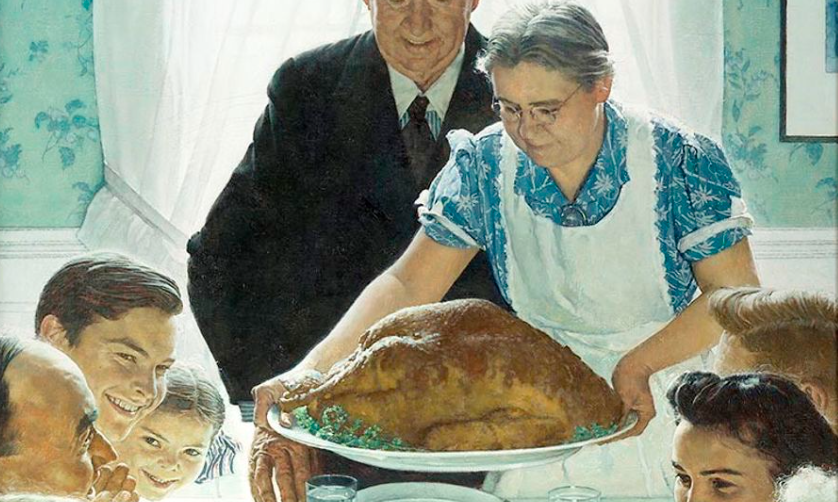
As we approach Thanksgiving, and we reflect upon what we’re thankful for, I hope everyone takes a moment to consider how you love our country, and how your actions reflect that affection.

 The Awkward Pose