
In September, my brother and sister and her husband held a mini-reunion over a nine-day visit to Ireland. I’d been to Ireland before (my daughter and I explored the lesser travelled precincts of Donegal back in 2007), so I knew the joys of visiting the Emerald Isle. The people are so grand!
This trip was different in that it was a guided tour—my first. It could have been titled ‘Ireland 101’ as it hit the usual high points: Dublin; Cork; Killarney; Galway; Blarney Castle; Ring of Kerry; Cliffs of Moher; Jameson; Guinness. Basically, a photo op at every calendar image of Ireland. I had my doubts about being part of a tour bus herd, but the tour proved to be fantastic: excellent food and digs; nice fellow travelers; terrific guides.
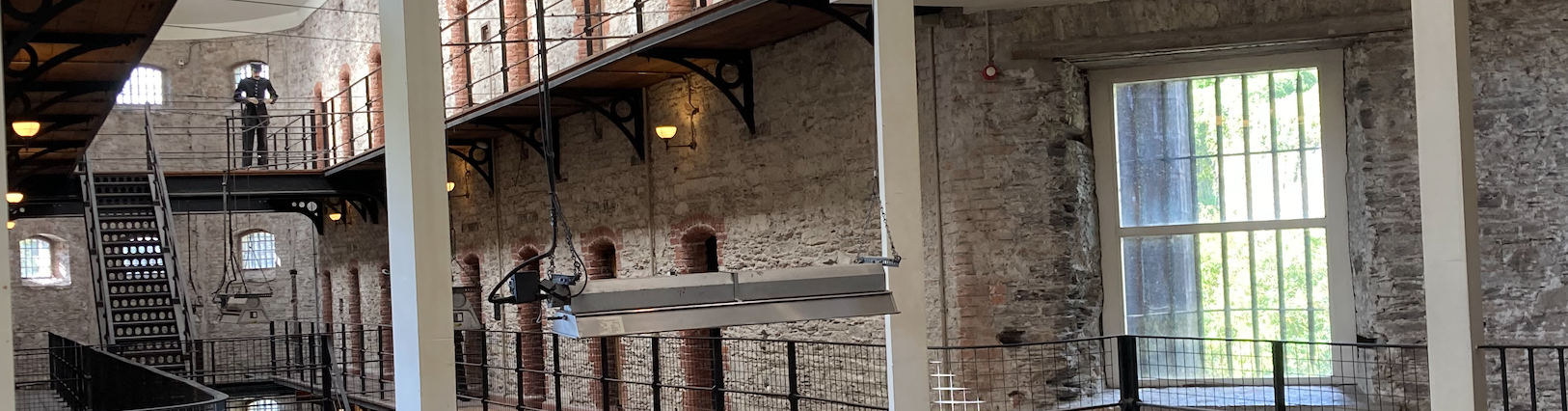
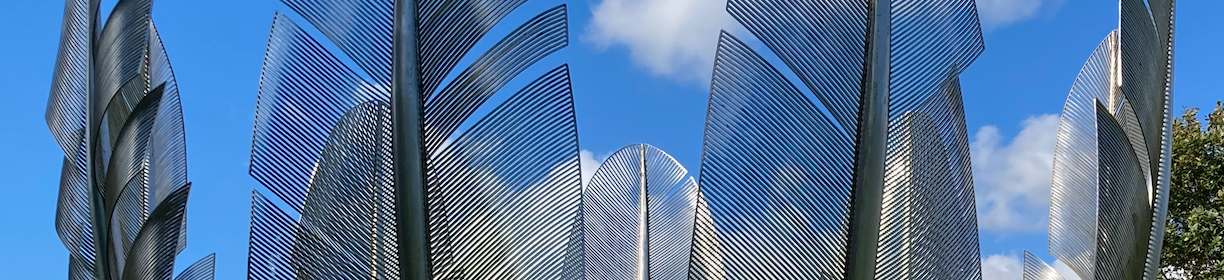
Constance, our guide in Cork, was particularly engaging. After motoring through the city and making a surprisingly interesting visit to the 19th century city jail (Cork was a rough place back then, and tales of the jail’s inhabitants are remarkable), we headed to neighboring Midleton to see the Jameson Distillery. Just before the highway exit, Constance pointed out an unusual sculpture, barely visible through the trees. We arrived in Midleton with a free hour for lunch, so I decided to hoof it back to that sculpture and savor the endearing backstory Constance had told.
When you visit Philadelphia, you get steeped in the Declaration of Independence. In Cambodia, you must go to the killing fields. In Paris you cannot escape Hausman’s boulevards. In Ireland, you have to confront the Great Hunger. More than a million Irish died in the 1840’s. Even more emigrated. Within a decade the population of Ireland was cut in half, only recently returned to pre-famine numbers. The Great Hunger is a tale of blighted potatoes, English cruelty, and the limits of the land to provide. And though it occurred almost two hundred years ago, it is ever present in the Irish psyche. Famine is the benchmark of their national character.

Here is the beautiful story that Constance told.
In 1847, at the height of the Great Hunger, the people of Ireland received a notable gift from an unlikely source. The Choctaw Nation knew a thing or two about hunger, having traversed the Trail of Tears from Alabama and Mississippi to Oklahoma during the 1830’s, experiencing decimation, disease, and famine along the way. When they learned of the famine in Ireland, the Choctaw took up collection and sent $170 to aid the Irish. A huge gift at the time, from one impoverished people to another.
The Irish have long memories of hunger and of generosity. In the 21st century, the Midleton Town Council commissioned Kindred Spirits, the monumental sculpture by Alex Pentek, in appreciation for the Choctaw gift. A delegation of twenty Choctaw travelled to Midleton to attend the sculpture’s unveiling in 2017.
How often in life is the assistance we desperately need delivered by those who, seemingly, have so little to offer.

 The Awkward Pose