

We are what we eat and what we eat is a mighty contributor to our planet getting warmer. It is also a strong indicator of our individual health. From either perspective, beef is the big bad bogeyman of our diet, and the quicker we wean ourselves from it, the better.
But when we move beyond beef, data to guide what’s good for us—and the environment—gets dicier.

Consider this graph featured on the OurWorldinData website. Beef is the worst offender: generating almost three times more greenhouse gas per kilo than its nearest competitor: mutton. In fact, all of the top eight greenhouse producing foods are animal based. Not until we arrive at rice (twenty times less environmentally destructive per kilogram than beef) are any plant-based foods listed. Clearly, meat is terrible for our environment, and the implication is: anything else must be better. Right?
Not so fast. A very similar graph in The Boston Globe includes several foods not listed in OurWorldinData, even though both graphs cite the same research source. Dark chocolate weighs in at number 2: only half as bad as red meat. Coffee shows up at number 5: ahead of cheese and pork and chicken. Cane sugar, tofu, even oatmeal makes the list!
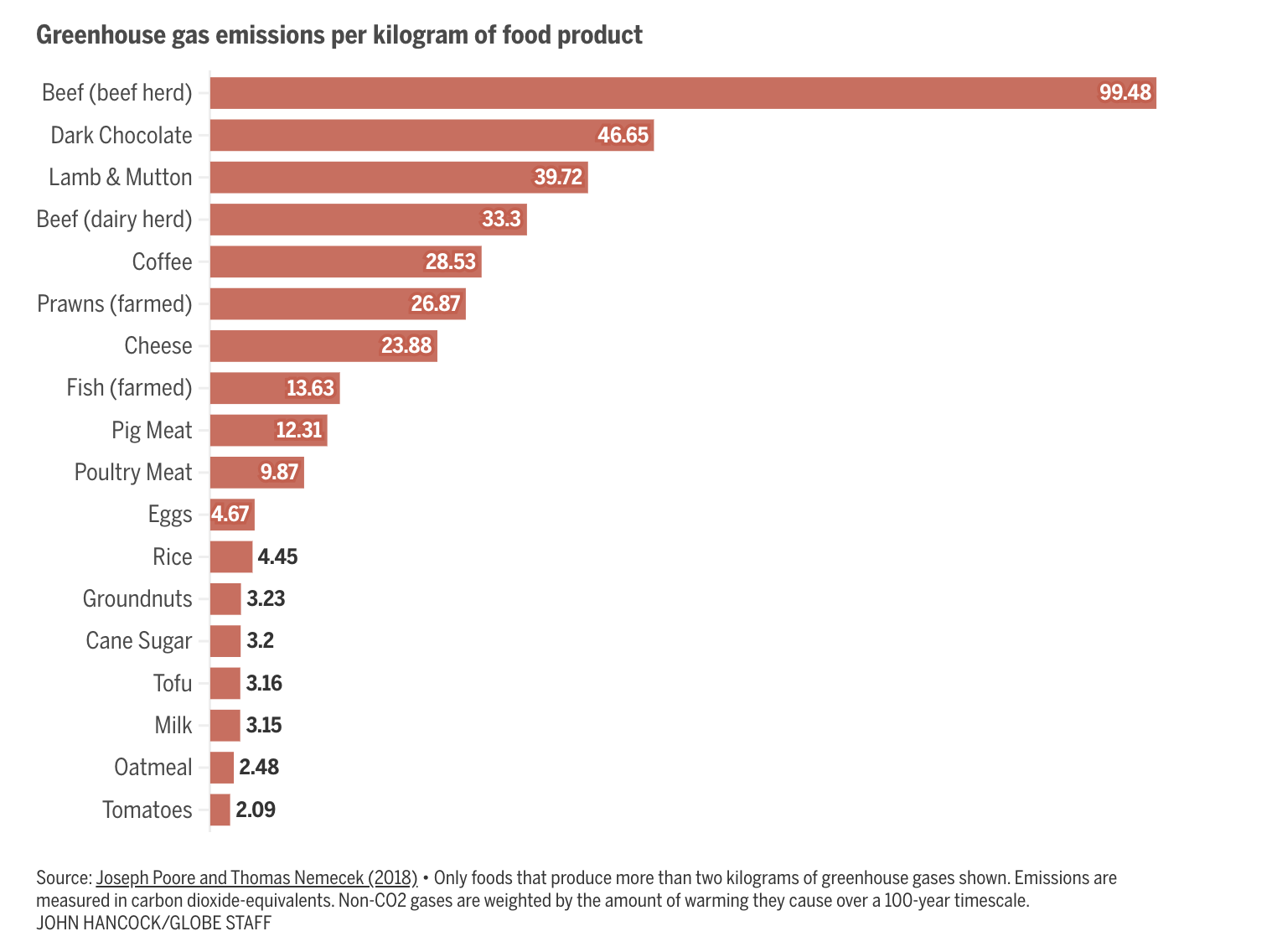
Which diagram is accurate? The key is in a telling footnote beneath the Boston Globe graph that’s missing from OurWorldinData: only foods that produce more than 2.0 kilograms of greenhouse gas per kilogram shown. In other words, The Globe presented the complete list of foods that generate greenhouse gas above a threshold according to a research study, while OurWorldinData cherry picked their results.
At the risk of stereotyping, I suggest that most anyone logging onto OurWorldinData expects to see a list of animal products as the major culprits in the environmental havoc produced by our food. They’re also likely to herald the health benefits of dark chocolate, enjoy coffee, and be keen on tofu and oatmeal.
We all know we live in a world where data is manipulated, edited, contorted to suit the agenda of its distributor. Yet we also believe, regardless of our position on any debate, that the other guy has corrupted his data more than our team. Unfortunately that is not the case. When a frequently cited website with the objective sounding name, OurWorldinData, edits well researched data to suit the tastes of its audience, there’s less and less concrete truth in our world. Perhaps it should be renamed OurWorldinSelectiveData, or OurWorldinDataLiberalsLove.
There’s also that more immediate problem of encountering data that challenges my own preferences. I want to be sustainable, and long ago gave up eating red meat. But I do love dark chocolate.


 The Awkward Pose
Thanks Paul. Very interesting. Also remember most people don’t eat a lot of chocolate at least compared to meat.
Coffee!! Again, we don’t consume coffee like meat but I bet I buy 4kg a year – not nothing.
Going vegetarian or vegan looks like it’s very good for the planet not to mention health.